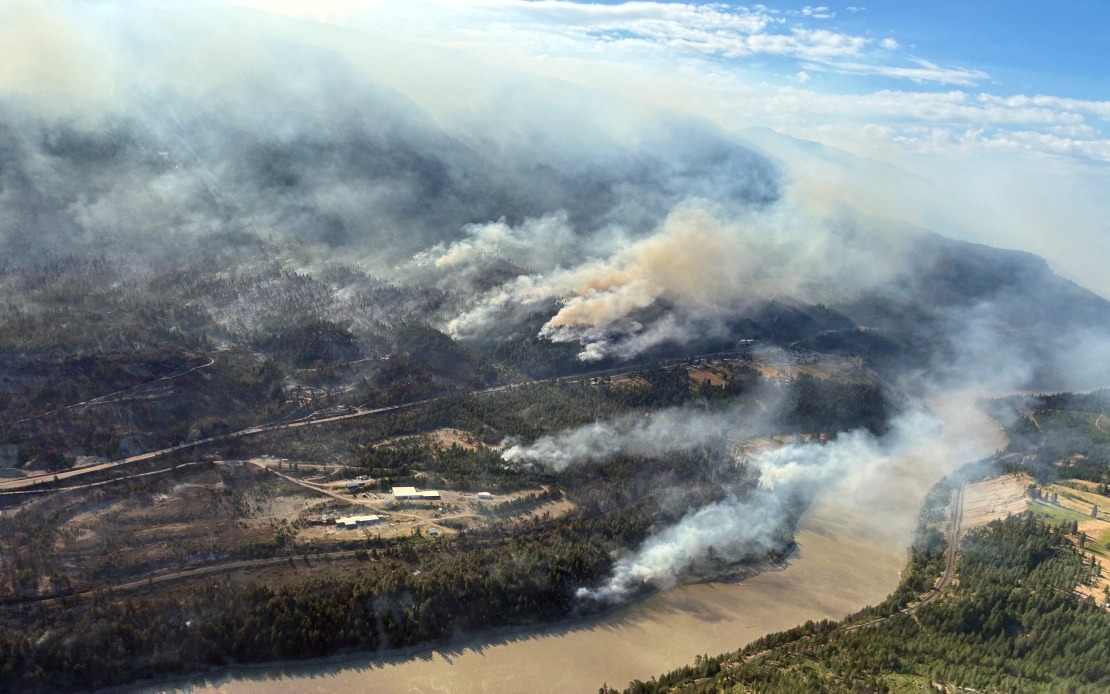
A Cessna O-1 "Bird Dog" aircraft conducting wildfire suppression operations crashed in Canada's Northwest Territories on Thursday, claiming the lives of all three people aboard, authorities confirmed. The mishap occurred near Fort Simpson while the aircraft was actively engaged in firefighting efforts against a blaze designated FS009-26, according to NWT Fire, the region's official wildfire management agency.
The crash, which NWT Fire initially described as a "serious incident," has been formally classified as a fatal accident. The territorial government's wildfire management authority announced the confirmation on social media, stating that the three occupants perished in the collision. The exact circumstances leading to the crash remain under investigation at this early stage.
The Royal Canadian Mounted Police have taken charge of the crash site investigation, working alongside officials from the N.W.T. Environment and Climate Change Ministry to establish what happened and recover information about those aboard. Such multi-agency coordination is standard protocol for major aviation incidents in Canada's northern regions, where remote terrain and harsh weather conditions complicate response operations.
The aircraft had been actively battling the FS009-26 wildfire, which erupted naturally on June 23 in the Marten Hills area of the Dehcho region. This particular fire has grown to roughly 100 hectares and remains completely uncontrolled, presenting an ongoing threat to the sparsely populated but ecologically significant region. Wildfire suppression aircraft like the Cessna Bird Dog play a crucial role in Canada's firefighting arsenal, particularly in remote northern territories where ground access is limited and the fire season can be intense.
The crash adds to an already challenging wildfire season across the Northwest Territories. As of June 25, the region was grappling with 28 active fire incidents affecting approximately 91,400 acres of land. The situation reflects the severity of the current fire conditions, with nearly two-thirds of these blazes classified as out of control. Only four fires are being actively held at their current boundaries, five are considered under control, and eight have been extinguished.
This incident underscores the inherent dangers faced by personnel involved in wildfire suppression operations. Pilots flying low-altitude missions to drop fire retardant or conduct reconnaissance operate in demanding conditions, often dealing with smoke, unpredictable wind patterns, and challenging terrain. For regional readers in Southeast Asia, where countries like Malaysia, Indonesia, and Singapore also experience severe transboundary haze and wildfire issues during certain seasons, the Canadian incident serves as a sobering reminder of the occupational hazards confronting those tasked with containing uncontrolled fires.
The Northwest Territories, which span over 1.3 million square kilometres, contain vast boreal forests and wetlands that are particularly susceptible to wildfires, especially during warmer months. The region's geographic isolation and sparse settlement patterns mean that aerial firefighting assets are essential components of emergency response strategies. The loss of even a single specialized aircraft represents a significant reduction in firefighting capacity during critical periods.
Canada's wildfire management framework relies heavily on aircraft such as the Cessna O-1 Bird Dog, a military-derived observation and support aircraft that has been adapted for civilian fire suppression duties. These platforms provide essential capabilities for reconnaissance, personnel transport to remote fire camps, and coordination of ground-based firefighting efforts. The crash will likely prompt reviews of operational protocols and safety measures governing such missions.
For Malaysia and other Southeast Asian nations monitoring global wildfire management practices, this tragedy highlights the importance of investing in robust safety protocols, comprehensive pilot training programmes, and regular maintenance schedules for specialized aerial firefighting assets. The region's experience with Indonesian forest fires and resulting haze events demonstrates the critical need for effective suppression capabilities and the willingness of personnel to undertake dangerous work to protect communities and ecosystems.
The investigation into the crash will be closely watched by aviation authorities across Canada and internationally, as findings may influence future guidelines for wildfire suppression flight operations in remote regions. The incident also raises questions about resource allocation for wildfire management in an era of increasing fire intensity and frequency, trends being observed across North America and globally.

