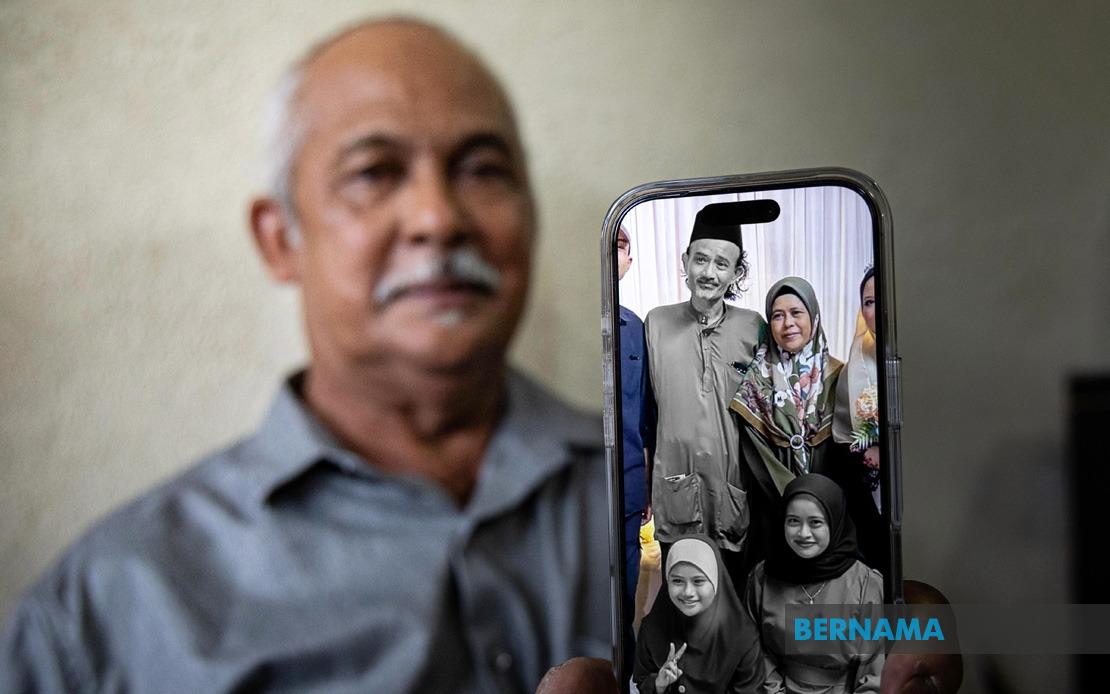
Norhayati Razali, 55, has emerged as the sole survivor of a catastrophic traffic collision in central Kuala Lumpur that took the lives of her husband and two children, but her recovery remains complicated by significant cognitive difficulties stemming from head trauma sustained during the accident. The incident occurred on Jalan Sultan Ismail when a Malaysian Immigration Department Black Maria truck, operating with emergency lights and sirens activated en route to an immigration enforcement operation in Chow Kit, allegedly proceeded through a red traffic signal and struck a Proton Saga before careening into pedestrians and an Inokom Matrix vehicle.
Currently receiving treatment at Kuala Lumpur Hospital, Norhayati has been transferred from intensive care to a regular ward, marking a positive clinical development in her condition. Medical staff report encouraging signs in her physical recovery, as she has regained sufficient strength to consume food and liquids independently without requiring tube feeding. Her brother, Mohd Nadzri Razali, 69, described the transition as evidence of gradual improvement in her overall health status following the traumatic injuries she sustained across multiple body systems.
However, the psychological and neurological impact of her injuries presents an ongoing challenge that extends far beyond her physical wounds. Mohd Nadzri explained that Norhayati continues to experience substantial memory impairment, which has created a distressing situation for both the patient and her relatives. The family faced the harrowing task of informing her that her loved ones had perished in the accident—a conversation that appeared to register only superficially at the time. When family members showed her the bodies of her deceased relatives and explained the circumstances, Norhayati responded with silent acknowledgment but little verbal engagement.
The inconsistency in her recollection has proven deeply troubling for those caring for her. Within hours of seemingly accepting the tragic news, Norhayati began asking about the whereabouts of her husband and children, suggesting that the traumatic information either failed to embed in her short-term memory or that her cognitive processing of the events remains fundamentally disrupted. This pattern of questioning and forgetting represents a common consequence of severe head injury and raises difficult questions about her long-term neurological recovery and quality of life.
Mohd Nadzri detailed the extent of her physical injuries, which encompass damage to her hands, waist, knees, legs, and most significantly, her cranium. The multiplicity of fractures and contusions across her body, combined with the serious head trauma, required immediate stabilisation in the intensive care setting. Medical teams have not yet determined whether her condition permits transfer to a facility closer to her home in Ipoh or the smaller town of Teluk Intan, where family members could more readily provide support and assistance with her rehabilitation.
The uncertainty surrounding her medical timeline has created additional stress for the family, who face the prospect of extended separation and travel difficulties. Mohd Nadzri, who has been unable to visit his sister due to lack of transportation to Kuala Lumpur and unfamiliarity with the capital's road network, expressed hope of making the journey this coming weekend with assistance from someone willing to drive. This logistical challenge underscores how major trauma affects not only the immediate victim but ripples outward to impose burdens on the extended family network.
Beyond the immediate medical and personal dimensions of this tragedy, the family has begun directing attention toward accountability mechanisms. Mohd Nadzri articulated a determined call for transparent and rigorous investigation into the circumstances surrounding the collision. He specifically referenced the presence of traffic cameras at the intersection where the accident occurred, emphasising that electronic evidence should be examined to establish definitively what transpired during those fatal moments. This demand for documentary truth reflects broader public expectations that when a government vehicle causes civilian deaths, the investigative process must operate with complete honesty.
The alleged circumstances of the accident—that the JIM truck proceeded through a red light while operating in emergency response mode—raise complex questions about operational protocols and risk management within government agencies. When officials navigate public spaces with activated sirens and beacon lights, they assume inherent risks that extend to innocent civilians sharing those spaces. The Proton Saga driver, who was legally proceeding through a green light, exercised no control over whether the approaching vehicle would respect traffic signals. This fundamental asymmetry between governmental and civilian responsibility underscores why families of victims demand meticulous investigation and transparent findings.
The broader Malaysian transportation safety context compounds the significance of this incident. Major cities experience regular traffic incidents involving commercial and government vehicles, many resulting in severe casualties. The specific involvement of an immigration enforcement vehicle adds layers of administrative accountability, as agencies operating in enforcement and security capacities must maintain the highest standards of public safety. Any suggestion that emergency lighting justified proceeding through red signals without confirming intersection safety represents exactly the kind of operational attitude that transforms public thoroughfares into danger zones.
Norhayati's prolonged hospitalisation will likely extend considerably beyond the acute medical phase, as recovery from combined physical trauma and neurological injury typically requires months of intensive rehabilitation. The question of whether she will regain full cognitive capacity, and whether she will eventually achieve the psychological fortitude necessary to process the loss of her entire immediate family, remains profoundly uncertain. Her slow journey toward understanding her new reality—a widow and childless survivor of an preventable accident—will proceed alongside her physical healing.
For the family and, by extension, the Malaysian public, this tragedy underscores the human cost of accidents involving government vehicles operating under emergency protocols. While the immigration enforcement mission that motivated the truck's journey represented legitimate governmental function, the manner of execution proved catastrophic. As Mohd Nadzri insisted, proper investigation and transparent findings offer the only path toward genuine justice for Norhayati and the families of the three deceased victims, ensuring that institutional accountability accompanies personal tragedy.

