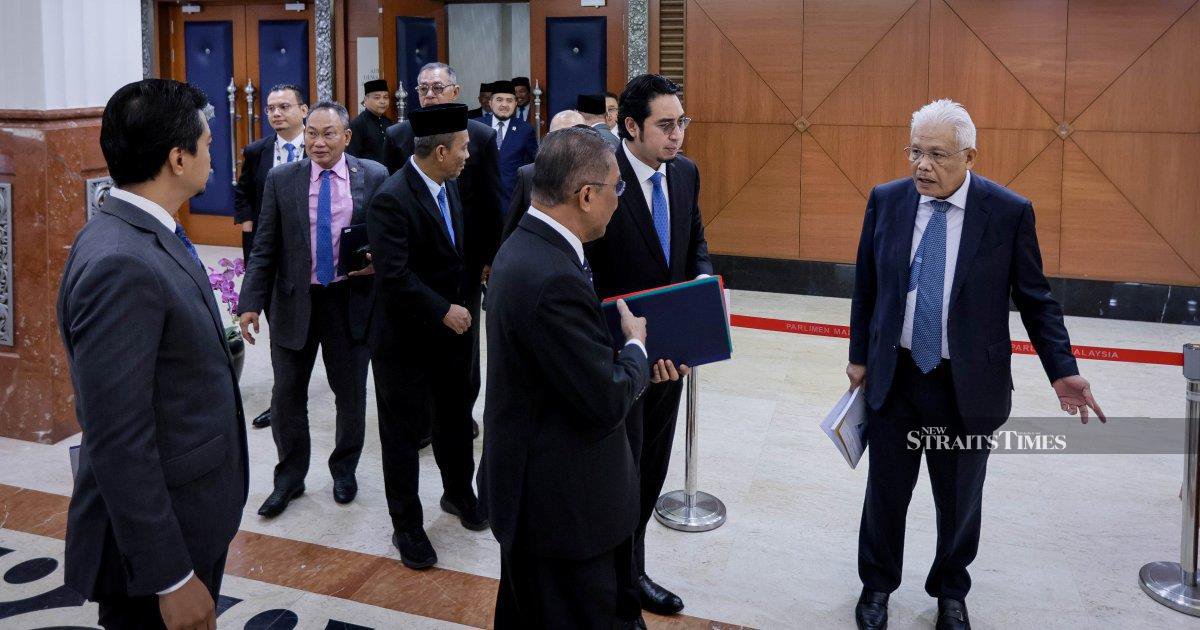
The corridors of Parliament grew tense recently when the opposition staged a walkout during proceedings concerning the Royal Commission of Inquiry report on Tabung Haji, the Islamic pilgrimage fund manager. This dramatic exit drew immediate attention, yet it also crystallised a persistent contradiction embedded within Malaysia's political theatre — a fundamental asymmetry in how lawmakers judge the legitimacy of protest tactics based entirely on their origin and partisan alignment.
Parliamentary walkouts represent one of the few tools available to minority voices within a legislature where numerical disadvantage limits their ability to block legislation or force debate. For opposition lawmakers operating without the numbers to prevent passage of government-backed motions or bills, departing the chamber becomes a visible method of registering dissent and signalling to both the public and their own supporters that they refuse to participate in proceedings they view as unjust or inadequate. When the opposition walks out, they typically characterise the move as principled objection to government actions they believe warrant serious accountability.
The Tabung Haji situation provided particular flashpoints for this tactic. The fund manages over RM80 billion in pilgrimage savings for approximately 1.8 million Malaysian Muslims, making it a deeply consequential institution. Concerns about its governance, financial health, and management decisions have generated sustained public scrutiny, particularly following operational challenges and questions about investment strategies. An official inquiry into these matters carries weight, and the opposition's argument held that serious findings demanded unambiguous parliamentary engagement rather than routine procedural handling.
Yet the government and its allies promptly reframed the walkout as political theatre — a performative gesture designed to generate headlines rather than achieve substantive outcomes. From this perspective, departing legislators abandon their parliamentary responsibilities, deny themselves the opportunity to speak on record, and reduce complex policy questions to spectacle. The irony sharpens considerably when one recalls that government backbenchers have themselves employed identical tactics when opposing previous administrations, a history that government spokespeople conveniently overlook when condemning opposition behaviour.
This double standard reveals something systemic about Malaysian political culture. Different standards apply depending on whether the departing faction holds or seeks power. When ruling coalition members walked out during previous parliamentary sessions, the narrative often portrayed them as defending legitimate interests or highlighting bureaucratic failures. The identical action by opposition members, however, transforms into irresponsibility and obstructionism. No neutral observer can identify a principled distinction between these scenarios based on parliamentary procedure or democratic theory — the difference lies purely in who controls the speaker's gavel and the government benches.
For Malaysian citizens and regional observers, understanding this dynamic matters. Parliament's effectiveness depends partly on good-faith engagement across party lines, even when disagreements run deep. If protest tactics become acceptable only for those in power, the institution's legitimacy erodes. Opposition members increasingly face constraints on meaningful participation — lacking the votes to block measures, they cannot filibuster effectively, cannot form ad hoc coalitions, cannot substantially amend legislation through procedural means. Walkouts represent a signal of last resort, a way of saying their voice matters sufficiently that its absence registers as abnormal.
The Tabung Haji episode also carries implications for governance transparency in Southeast Asia more broadly. Multiple regional governments face similar challenges in managing large public funds, religious trusts, and sovereign wealth vehicles. How these institutions handle accountability — whether through genuine inquiry, transparent parliamentary debate, or merely procedural compliance — sets precedents for institutional confidence. When parliamentary scrutiny appears performative or inadequate, public trust in governance institutions declines, potentially encouraging capital flight or reduced public cooperation with official initiatives.
Indonesia, Thailand, Singapore and the Philippines have experienced comparable controversies involving large state-managed funds, and in each case, the quality of legislative response determined whether public confidence recovered or deepened. Malaysia's walkout suggests that procedural norms alone cannot substitute for substantive engagement when serious accountability questions arise. If parliament becomes a forum where genuine scrutiny happens only through dramatic protest, the institution has failed its purpose regardless of which side initiates the walkout.
The broader question concerns whether Malaysian political culture can establish consistent standards for parliamentary conduct that apply equally regardless of party affiliation. Such consistency would require government members to accept that opposition walkouts sometimes signal legitimate concerns rather than mere obstructionism, and it would require opposition members to ensure their tactics advance substantive accountability rather than merely securing headlines. Neither side has consistently demonstrated this maturity.
Moving forward, parliament might benefit from reformed procedures that guarantee minority voices genuine hearing — structured opposition speaking time on contentious matters, requirements for detailed government responses to commission reports, and mechanisms allowing minority-initiated inquiries into serious governance questions. These reforms would make dramatic walkouts less necessary by creating legitimate channels for meaningful dissent. Until such changes occur, Malaysian politics will likely continue cycling through walkouts, recriminations, and competing narratives about legitimacy based primarily on who occupies which benches.

