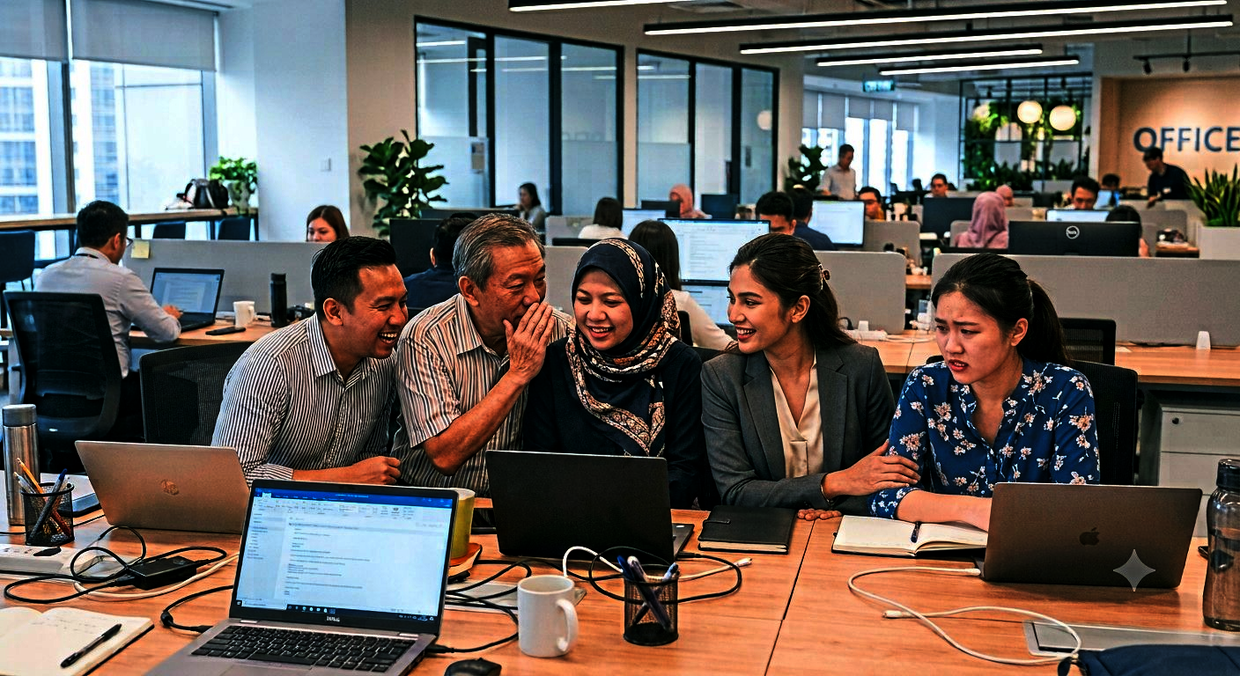
We have all experienced those conversations that begin casually but gradually shift into something heavier. Someone absent from the room becomes the focus, opinions harden into accusations, and frustration transforms into condemnation. We walk away with an unspoken weight we did not intend to carry, leaving behind a lingering unease that persists long after the words are forgotten. Whether these exchanges happen over coffee with colleagues, around family dinner tables, in group chats, or amid the relentless scroll of social media, they follow a familiar and troubling pattern—and increasingly, mental health experts and community leaders are recognising the cumulative toll they take on our emotional wellbeing.
In Malaysia, where family bonds run deep and community remains central to social life, the impact of toxic discourse reaches beyond individual discomfort into the fabric of how we relate to one another. The Malaysian Mental Health Association has documented rising anxiety, burnout, depression, and loneliness, yet these headline-grabbing conditions often obscure a quieter struggle: the small, unremarkable moments of negativity that chip away at our peace day after day. Not every psychological wound originates from a major crisis or singular traumatic event. Many are accumulated slowly, conversation by conversation, remark by remark, until we find ourselves emotionally depleted without fully understanding why.
The power of language to shape our emotional environment cannot be overstated. The tone we establish in our homes, offices, friendships, and digital spaces directly influences how safe, valued, and connected we feel. When conversations consistently veer toward the negative, when criticism dominates discourse, and when judgment becomes the default response, the atmosphere becomes suffocating. Over time, this habitual negativity extracts a real psychological price, leaving people anxious, withdrawn, and emotionally guarded. Yet this need not be the case. Sometimes the wisest response is the simplest one: recognising when a conversation has become toxic and choosing to step away before we absorb its poison.
It is crucial to distinguish between genuinely difficult conversations and those that exist merely to judge and inflame. Honest disagreement, after all, remains essential to societal progress. Constructive criticism strengthens institutions and helps people grow. Meaningful dialogue deepens relationships and builds understanding across divides. The crucial difference lies in intent and impact. Conversations that seek to understand, even when disagreement persists, carry the potential to build people up. Those designed primarily to belittle, condemn, or spread negativity slowly break people down, creating psychological distance and eroding trust.
Malaysian cultural wisdom has long recognised this truth. Proverbs warn that a careless remark spoken in mere seconds can wound for years. Our ancestors understood the power of words without needing modern psychology to validate their insight. Yet contemporary research in mental health and social psychology now confirms what traditional wisdom already knew: toxic speech leaves measurable psychological traces. The impact extends beyond hurt feelings to genuine anxiety, reduced sense of safety, and diminished willingness to be vulnerable.
Consider what happens when gossip takes hold, even when we ourselves remain silent. An internal unease settles over us. We begin to wonder, perhaps without fully articulating it, whether those speaking negatively about another person might turn their critical lens toward us when we are absent. The conversation itself may conclude in fifteen minutes, but the anxiety it generated persists for hours or days. This is not mere imagination; it reflects a real shift in how safe we feel within our social environment. We have unconsciously registered that judgment and betrayal are possible within this space.
The same psychological mechanism operates whenever conversations habitually centre on finding fault. When every discussion focuses on identifying mistakes, criticising parenting approaches, dismissing political views, judging appearances, or condemning personal choices, we absorb a corrosive message: that being human—which necessarily involves making errors—is fundamentally unacceptable. We begin to internalise the belief that compassion has become conditional, extended only to those who never stumble. People in such environments progressively withdraw from honest self-expression. The costs compound: relationships become shallow, creativity diminishes, and anxiety increases because people fear being exposed as flawed.
In the Malaysian context, where collective harmony and family reputation carry significant weight, the pressure to conform and avoid criticism can intensify these dynamics. Young people especially may find themselves trapped between authentic self-expression and the need to maintain family or community standing. When homes and social circles become spaces of judgment rather than acceptance, the pressure to hide, perform, and deny becomes exhausting. Workplace environments with similar patterns see productivity suffer as employees become more concerned with avoiding criticism than with genuine contribution.
Recognising toxic patterns is the first step toward changing them. This requires honest reflection about the conversations we participate in and the emotional climate we help create. It means asking ourselves whether we are contributing to understanding or simply amplifying outrage. It involves noticing how we feel after conversations—whether we leave energised or drained, hopeful or cynical, connected or isolated. These feelings are data; they signal whether a relationship or space is nourishing or depleting us.
The decision to walk away from toxic conversations is not avoidance; it is self-preservation and an act of care toward others. When we decline to participate in gossip, when we redirect judgment toward understanding, when we choose to leave conversations that have become merely destructive, we send a powerful signal. We communicate that such discourse is not acceptable to us, and we create space for different kinds of exchange. This is particularly important in small communities and tight-knit groups, where individual choices ripple outward and influence the broader culture.
Building healthier conversational patterns requires intention and courage. It means speaking up when conversations turn cruel, even when it is uncomfortable. It means defending those who are not present to defend themselves. It means seeking to understand different perspectives rather than dismissing them. In Malaysian workplaces, schools, and families, this shift could significantly improve mental health outcomes and strengthen the social fabric.
Ultimately, the conversations we have shape the people we become and the communities we inhabit. When we choose words that build rather than break, understand rather than condemn, we are not merely being polite—we are actively protecting the emotional wellbeing of ourselves and others. In a region where relationship and community remain central to life, this may be one of the most important contributions we can make to collective flourishing.

