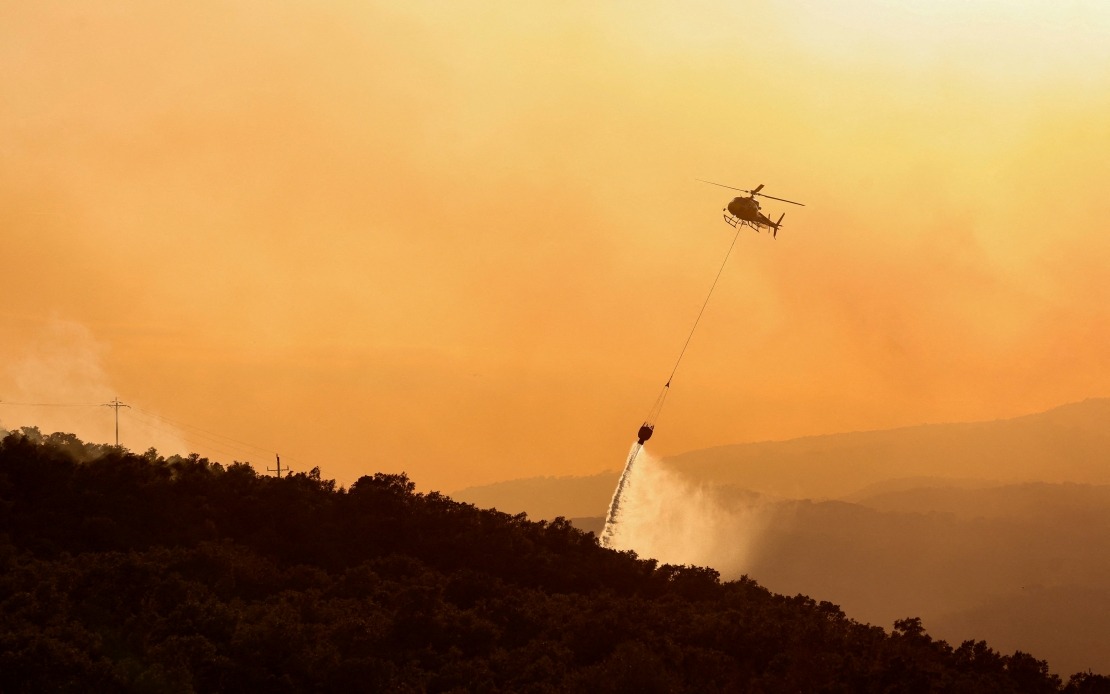
Extreme drought and raging wildfires have compelled dozens of communities throughout the western United States to scale back or abandon their Fourth of July fireworks celebrations, casting a shadow over the nation's bicentennial anniversary festivities. The combination of parched landscapes, active large fires, and volatile weather patterns has created unprecedented fire conditions that officials say demand immediate action to prevent additional property damage and loss of life.
National incident reports released on Friday revealed that 41 significant wildfires remain uncontained across the country, placing the United States at its second-highest wildfire alert status. This elevated preparedness level reflects the severity of conditions currently gripping multiple western states and underscores the scale of the resource commitment required to manage the crisis. The timing of the anniversary celebrations has created additional pressure on emergency management agencies already stretched thin by ongoing firefighting operations.
Utah presents one of the most alarming situations, with Governor Spencer Cox implementing an emergency statewide fireworks restriction in response to catastrophic drought and fire conditions. The directive permits local authorities to establish limited zones where fireworks may be safely discharged through July 5, but otherwise prohibits the activity across the state. Drought statistics paint a grim picture: 94 percent of Utah currently experiences severe or extreme drought conditions. State Forester Jamie Barnes characterised the wildfire environment as fundamentally different from historical patterns, noting that fires propagate at alarming velocities exceeding previous years. The scale of destruction has already outpaced the combined acreage burned over the preceding four years, signalling a dramatic acceleration in wildfire intensity.
Colorado faces similarly challenging circumstances, with more than a dozen active wildfires burning simultaneously this week. Multiple municipalities, including Durango, Vail, and Pueblo, have cancelled their Independence Day displays in response to escalating fire hazards. Vail's decision marks the sixth cancellation since 1998, demonstrating a pattern of increasingly frequent disruptions to normal summer celebrations. Colorado Springs, the state's second-largest city, eliminated all Fourth of July fireworks events, citing extreme fire danger comparable to conditions preceding the 2012 Waldo Canyon Fire, which destroyed more than 300 homes and became the state's costliest wildfire at that time. City officials determined that current risk levels justify the extraordinary measure of cancelling all displays.
Neighbouring states have adopted parallel precautions. Wyoming, Nebraska, and New Mexico have similarly restricted fireworks or issued warnings regarding their use, recognising that drought conditions and wildfire proximity pose unacceptable risks to public safety and property. Notably, most large professional fireworks displays organised by municipal authorities remain scheduled to proceed, suggesting that carefully controlled, professionally executed events conducted with enhanced safety protocols are deemed manageable, whereas consumer fireworks present unacceptable danger.
Meteorological conditions significantly amplify the crisis. The National Weather Service has issued alerts regarding powerful winds and critically low humidity levels forecast for the southwest region, factors that dramatically accelerate fire spread and intensify existing blazes. Simultaneously, much of the eastern and central United States experiences dangerously elevated temperatures, with some locations recording heat indices exceeding 46 degrees Celsius. These dual pressures—extreme heat in some regions and dangerous fire weather in others—create a continental-scale emergency that stretches emergency response capabilities.
Academic research underscores the connection between fireworks and wildfire ignition. Philip Higuera, a fire ecology specialist at the University of Montana, emphasises that fireworks introduce substantial ignition sources during a single calendar day, fundamentally altering landscape fire dynamics. Historical data compiled by Lauren Lowman, an associate professor at Wake Forest University, reveals a disturbing pattern: approximately 15,000 wildfires were recorded on July 4 between 1992 and 2020 across the United States. Additionally, fireworks ignited an estimated 32,000 fires nationwide in 2023 alone, representing a significant proportion of annual fire activity.
The relationship between climate patterns and catastrophic wildfire seasons has become increasingly evident. Lowman's research demonstrates that nearly half of all western US acreage burned since 2001 occurred during or immediately following heat wave events. This correlation suggests that climate change is fundamentally altering fire seasonality and severity, creating longer windows of extreme fire danger and more intense burning conditions. The convergence of record temperatures, prolonged drought, and accumulated vegetation provides ideal conditions for rapid fire propagation.
For Southeast Asian observers and policymakers, these developments carry significant implications. Many regional nations experience their own fire seasons, particularly during dry months, and face increasing wildfire threats exacerbated by climate change and development pressures. The US experience demonstrates the importance of integrated fire management strategies, early warning systems, and community preparation protocols. The willingness of American municipalities to prioritise public safety over traditional celebrations also highlights how climate pressures are forcing difficult societal trade-offs, a reality that developing nations may increasingly confront.
The cancellations represent more than merely postponed festivities; they symbolise the extent to which climate-driven natural disasters now intrude upon fundamental cultural practices and community life. As the western United States marks its 250th anniversary, the dominant theme has shifted from celebratory unity to collective vulnerability before environmental forces beyond immediate human control. Restoration of normalcy will require sustained reductions in atmospheric greenhouse gas concentrations and comprehensive adaptation strategies that acknowledge the reality of an altered climate baseline.

