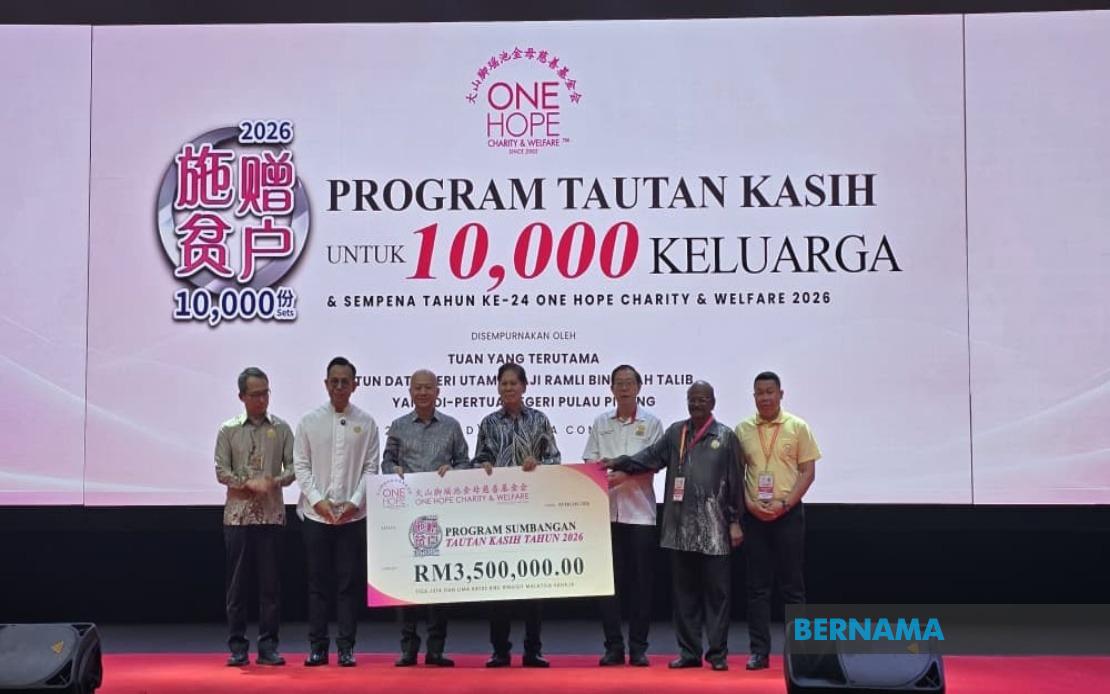
Development and social progress cannot exist in isolation from the welfare mechanisms that protect those facing economic distress, according to Minister of Entrepreneur Development and Cooperatives Steven Sim Chee Keong. Speaking at an event in Butterworth, Sim stressed that strengthening welfare policies represents a fundamental responsibility of government and society, ensuring that Malaysians encountering hardship, misfortune, or challenging life circumstances receive adequate assistance and care. His remarks underscored a broader recognition that national advancement must be measured not merely by economic indicators, but by the resilience and security of the nation's most vulnerable segments.
The minister's assertion reflects growing acknowledgment within Malaysian policymaking circles that prosperity divorced from social protection creates deep fractures within the fabric of national unity. By emphasizing that life trajectories are inherently unequal—some individuals navigate smoother pathways while others confront repeated obstacles—Sim articulated a compassionate framework for understanding poverty and vulnerability. This philosophical grounding becomes particularly relevant in the Malaysian context, where income inequality and uneven regional development continue to generate pockets of acute deprivation despite overall economic growth.
Sim specifically referenced Penang's circumstances, noting that when residents encounter financial strain or personal crises, the state must possess comprehensive welfare infrastructure capable of responding swiftly and effectively. His remarks acknowledged the particular challenges faced by the island state's lower-income households, even as Penang maintains its reputation as a relatively prosperous region. This localized emphasis suggests that federal policymakers increasingly recognize welfare as requiring tailored approaches that account for regional variations in cost of living, employment patterns, and demographic composition.
Crucially, Sim positioned welfare initiatives not merely as poverty alleviation mechanisms but as foundational elements of social cohesion. In a multicultural, multi-religious society like Malaysia, welfare programmes that operate without regard to ethnicity, religious affiliation, or political orientation serve important symbolic and practical functions—they reinforce the principle that all citizens deserve basic dignity and support regardless of background. This framing carries particular weight given Malaysia's historical experiences with communal tensions, suggesting that inclusive welfare architecture represents an investment in long-term stability.
One Hope Charity emerged prominently in Sim's remarks as a contemporary exemplar of this inclusive welfare model. The organisation, which began modestly in Bukit Mertajam, has evolved into one of Peninsular Malaysia's most significant charitable operations, mobilizing corporate donors and individual contributors to support communities across demographic divides. Its scale demonstrates both the demand for welfare services and the capacity of the non-governmental sector to complement official government programmes when provided with adequate support and resources.
The sheer financial commitment undertaken by One Hope Charity underscores the magnitude of welfare needs within Malaysian society. The organisation distributes at least RM20 million annually to vulnerable populations, a figure that dwarfs many individual government allocations and suggests that private charitable action has become essential to Malaysia's social safety net. This reliance on philanthropic intervention, while valuable, also implies that government welfare spending may require substantial enhancement to reduce dependence on voluntary contributions from the business and donor communities.
Recent distribution efforts illustrate the practical mechanics of contemporary welfare assistance. During the most recent cycle, One Hope Charity extended support to more than 10,000 families, with each household receiving a package worth approximately RM320 comprising essential goods and daily necessities, supplemented by RM200 in cash. This mixed approach—combining in-kind assistance with direct monetary transfers—reflects sophisticated understanding of beneficiary needs; while essential supplies address immediate deprivation, cash transfers preserve dignity and allow families to prioritize according to their particular circumstances and preferences.
The five-year period from 2021 through 2025 reveals the organisation's expanded ambitions beyond immediate poverty relief. By channelling more than RM100 million toward medical assistance programmes, hospital support, and medical equipment provision, One Hope Charity has positioned itself at the intersection of healthcare access and poverty alleviation—a strategic choice reflecting recognition that illness and medical costs represent primary drivers of household financial catastrophe across Malaysian society. This diversification into healthcare support acknowledges that vulnerability extends beyond food insecurity to encompass the pervasive threat of medical bankruptcy.
Looking ahead, One Hope Charity's planned initiatives for its 25th anniversary next year signal continued expansion of welfare coverage. The organisation has allocated approximately RM30 million for new and enhanced programmes, including substantial growth of its Medical Assistance Programme. This forward commitment suggests confident projections regarding donor capacity and sustained corporate engagement, while also indicating that identified welfare gaps remain substantial enough to absorb additional resources meaningfully.
For Malaysian readers, the minister's remarks and One Hope Charity's activities carry several implications. First, they validate concerns about gaps in government welfare provision, indicating that private charitable organisations have become indispensable to vulnerable communities. Second, they suggest that conversations about welfare expansion are becoming mainstream within political discourse, potentially creating space for policy reforms. Third, they demonstrate that successful welfare models require sustained private-sector participation and corporate social responsibility, pointing toward hybrid public-private frameworks rather than purely governmental solutions.
The sustainability of reliance on charitable organisations, however, warrants scrutiny. While One Hope Charity's work is commendable, depending substantially on voluntary contributions and philanthropic commitment creates uncertainties about long-term adequacy and consistency of support. Government welfare systems, by contrast, offer legal entitlements and budgetary certainty. The challenge facing Malaysian policymakers involves developing stronger statutory welfare frameworks that reduce dependence on the goodwill and capacity of the philanthropic sector, while still recognizing and supporting the valuable complementary role that organisations like One Hope Charity play within Malaysia's broader social protection landscape.

