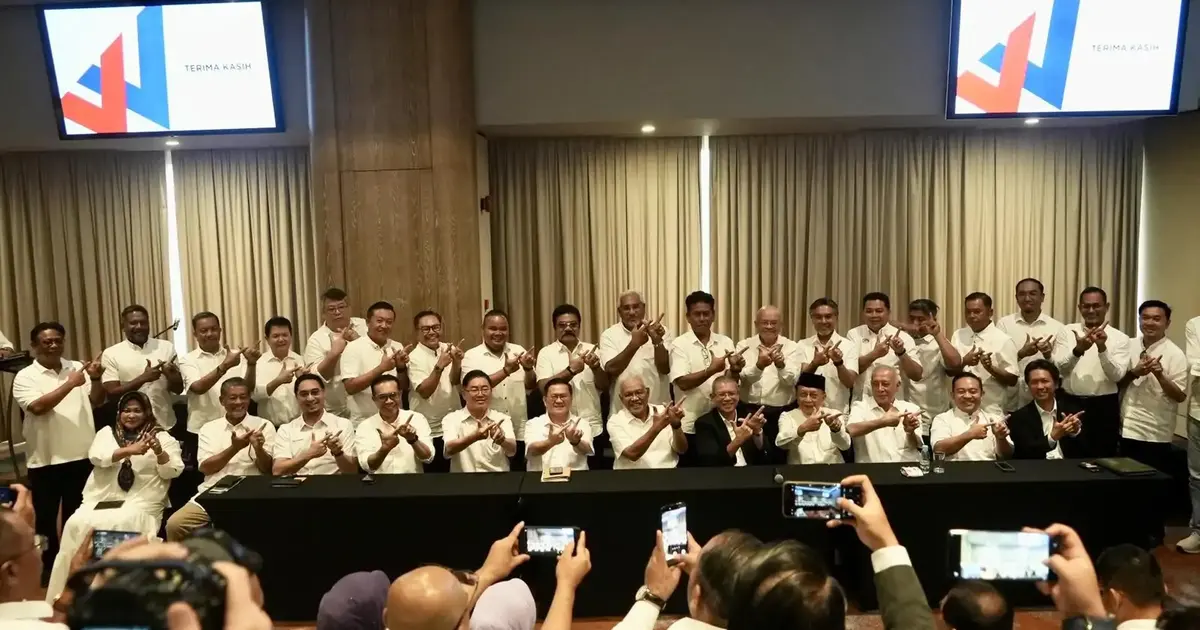
Perikatan Nasional's election director Sanusi Md Nor has stated that the controversial admission of Wawasan into the coalition was determined through a democratic process at the highest decision-making level. While acknowledging that Bersatu, a key member party, had raised objections to the newcomer's entry, Sanusi emphasised that the decision was made by majority vote within the PN Supreme Council, lending it legitimate authority across the coalition's leadership structure.
The clarification comes amid ongoing tension within PN over the expansion of its membership ranks. Bersatu's concerns about Wawasan's incorporation have been formally documented, yet the party ultimately yielded to the broader consensus reached during Supreme Council deliberations. This dynamic reflects the complex interplay of interests and influence within the coalition, where consensus-building often requires accepting outcomes that not all member parties prefer.
Wawasan's integration into PN represents a significant shift in the coalition's composition and electoral strategy. The group brings with it a distinct political base and organisational capacity, potentially strengthening PN's presence in specific demographic or geographical constituencies. However, the manner in which the admission was processed has raised questions about internal decision-making protocols and whether smaller parties wield sufficient influence within the coalition's governance structures.
The timing of Wawasan's entry holds particular relevance for Malaysian political observers. PN has been actively positioning itself as a viable alternative to the ruling Pakatan Harapan government, and expanding its member parties is part of a deliberate strategy to broaden its appeal and consolidate support across diverse voter segments. The coalition's leadership appears intent on presenting a unified front despite internal disagreements about expansion pace and criteria for admission.
Bersatu's reservation about Wawasan warrants closer examination. As the largest party within PN and effectively its backbone, Bersatu's concerns typically carry substantial weight in coalition discussions. The fact that Bersatu's objections were overridden by majority vote suggests that other PN components—potentially PAS and other smaller entities—coalesced around supporting Wawasan's membership. This coalition mathematics reveals how power is distributed within PN beyond the publicly visible leadership pronouncements.
Sanusi's role as election director positions him as a neutral arbiter of coalition mechanics, yet his public confirmation of the decision also serves to legitimise it in the eyes of both party members and the electorate. By framing the admission as a majority decision, he underscores that the process followed established protocols rather than being imposed unilaterally by any single faction. This matters considerably in a political environment where accusations of authoritarian leadership can rapidly damage coalition credibility.
The Supreme Council decision-making process itself merits scrutiny. PN's governance structure purports to balance the interests of multiple parties, but incidents like Wawasan's admission suggest that not all voices carry equal influence. Smaller parties or those less central to PN's strategic vision may find their positions marginalised when larger or more strategically positioned members push for outcomes aligned with their interests. This could create festering tensions that undermine coalition cohesion during critical electoral periods.
For Malaysian voters and political analysts, Wawasan's admission reflects broader patterns in how coalitions operate. PN is neither monolithic nor fully integrated; it remains a confederation of parties with distinct interests that occasionally clash. The ability to manage such disagreements constructively while maintaining public unity is crucial for coalition effectiveness. Sanusi's transparent acknowledgment of the decision process, including Bersatu's objections, actually demonstrates a degree of institutional maturity in how PN handles internal disputes.
The implications extend beyond immediate coalition dynamics. If Wawasan successfully mobilises voters and strengthens PN's electoral prospects, Bersatu's initial reservations will be retrospectively vindicated as overcautious. Conversely, if Wawasan fails to deliver on expected electoral gains or creates internal friction, Bersatu may face pressure from its own membership to demand greater say in future coalition expansion decisions. Either scenario will shape how PN approaches future institutional changes and admission requests.
Looking ahead, this episode establishes an important precedent for PN's expansion strategy. The coalition has signalled that majority vote governs admission, which could invite further applications from political groups seeking alignment with PN. Whether such expansion ultimately strengthens or dilutes PN's identity and electoral appeal remains an open question. What is certain is that maintaining internal equilibrium between integration and individual party autonomy will prove essential as PN navigates the complexities of coalition politics in Malaysia's increasingly fractious political landscape.
Sanusi's statement therefore represents more than a procedural clarification. It is a public assertion of PN's institutional legitimacy and a reminder that even within coalition structures marked by disagreement, democratic processes can yield binding decisions that all members are expected to respect. Whether this principle holds under future strains will largely depend on how equitably the Supreme Council applies its majority vote mechanism and whether excluded voices feel genuinely heard even when outvoted.