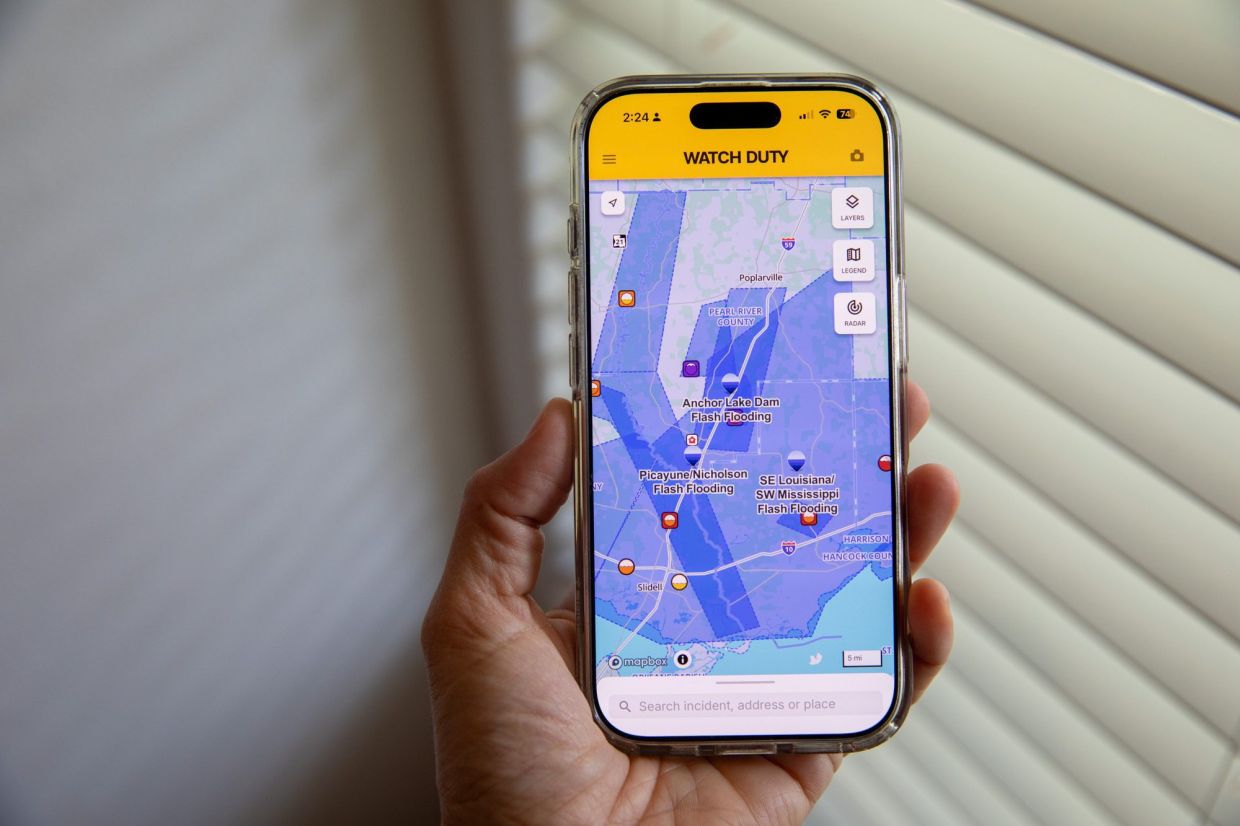
When the Eaton Fire approached Altadena, California, in early January this year, Matt Blea faced an agonising choice familiar to millions living in fire-prone regions: remain in his home or flee the advancing flames. A friend's recommendation to download Watch Duty proved decisive. Through the free application, Blea monitored the fire's perimeter in real time, tracked active evacuation orders, and followed emergency response updates. The access to accessible, organised information compelled him to leave that evening—a decision that likely saved his family's life, as the Eaton Fire subsequently destroyed their residence.
Blea was among more than 2.5 million individuals who relied on Watch Duty during the devastating Los Angeles County fire season of January 2025. Behind this vast network stood roughly two dozen permanent staff members and over 100 volunteers who systematically monitored emergency radio frequencies, aircraft communications, and official agency channels. The scale of the operation underscores a growing recognition that traditional emergency alert systems, constrained by bureaucratic processes and limited communication bandwidth, frequently fail to reach vulnerable populations with timely, actionable information. David Hertz, a Malibu fire brigade captain, described the platform as "a democratisation of data that empowers people," particularly significant given that some communities received virtually no advance warning of the Eaton and Palisades fires that collectively claimed 31 lives.
Recognising that climate change is generating novel disaster patterns beyond traditional institutional planning horizons, Watch Duty launched flood-tracking capabilities in June 2025. This expansion arrives as the United States enters peak flash flood season and nearly marks the anniversary of the July 2024 Texas floods, which killed over 130 people and sparked sustained criticism regarding why communities in the Texas Hill Country received inadequate advance notification. John Mills, chief executive and co-founder of the nonprofit organisation operating Watch Duty, framed the expansion bluntly: "This is painful that this keeps happening. We're not spreading enough information fast enough on as many channels as humanly possible."
Mills established Watch Duty in 2021 after experiencing firsthand the communication vacuum that characterises many emergencies. When a fire approached his Northern California property, he received neither official alerts nor evacuation instructions from authorities. Rather than accept this gap passively, he recognised that critical information often exists within emergency response networks—monitored by radio operators, visible to responders, and discussed across official channels—yet remains inaccessible to the public due to fragmented dissemination and competing communication platforms. While social media initially helped distribute such information through volunteer radio operators, it simultaneously introduced serious problems: misinformation, unrelated content, and the dilution of life-or-death updates amid the perpetual information torrent.
Working with software engineers and volunteer radio operators, Mills built Watch Duty into a nonprofitable platform structured specifically to bridge this institutional gap. The nonprofit status proved instrumental in establishing credibility with the now over 20 million registered users. The organisation secured nearly US$6 million in grants and donations during 2025, enabling expansion beyond California's borders. The model depends fundamentally on approximately 300 volunteer "reporters" who systematically collect, verify, and disseminate information drawn from radio scanners, satellite imagery, security cameras, user-submitted content, and official public announcements. This information reaches audiences across five languages through interactive maps, text feeds, and push notifications configured to activate even when devices are silenced.
Watch Duty meteorologist Pete Curran, himself a retired firefighter, emphasises a crucial operational advantage: the platform's reporters possess a singular responsibility. Unlike government agencies juggling incident management, resource allocation, and multiple jurisdictional concerns, Watch Duty staff concentrate exclusively on information gathering and presentation. This specialisation frequently enables the platform to disseminate alerts faster than official channels. "Our only responsibility is to watch and listen. We're not in charge of the incident," Curran explains, highlighting how organisational focus translates directly into public safety value. Users access consolidated information in plain language without navigating multiple websites—the National Weather Service portal, county emergency management sites, and weather service domains that typically fragment critical guidance.
The transition into flood monitoring reflects both the expanding geographic scope of climate-driven disasters and their increasingly unpredictable character. Dr Lori Moore-Merrell, who served as US Fire Administrator under President Joe Biden and currently chairs Watch Duty's board, describes the underlying challenge: "We are seeing crazy rainfall in places that it's not normal for them. Maybe it's never happened before, but it's happening now, so you need to be aware." The flood-tracking system integrates weather modelling and observational data from the National Weather Service, the National Oceanic and Atmospheric Administration, and the US Geological Survey. Users can monitor National Weather Service flood warnings and watches, observe real-time river gauge measurements, and receive notifications about potential dam or levee failures. Beyond reactive warning systems, the platform enables proactive risk assessment: individuals can determine whether their residence falls within Federal Emergency Management Agency-designated flood zones and understand what river gauge readings would indicate genuine danger.
Despite Watch Duty's remarkable growth trajectory and evident public utility, the platform confronts inherent limitations that no smartphone application can overcome. Chad Berginnis, executive director of the Association of State Floodplain Managers, articulates a critical distinction: "A warning is only as good as the knowledge to do something about it." During the Texas floods, numerous residents received notifications but lacked practical understanding of evacuation routes, assembly points, or transportation alternatives. The Association advocates for community-level preparedness extending beyond theoretical emergency plans to regular practical drills and rehearsals. "One of the massive failures," Berginnis observes, "is not knowing what to do."
Beyond individual preparedness limitations, the broader emergency information infrastructure faces structural vulnerability from budgetary pressures. Federal agencies managing weather monitoring systems and local emergency notification networks confront ongoing funding constraints and proposed reductions that threaten monitoring capacity. Berginnis emphasises this sobering reality: "At the end of the day, if you want eyes and ears out there, you've got to pay for it." Technological solutions, however ingenious, cannot substitute for the physical infrastructure—satellites, ground-based weather stations, seismic monitors—and personnel that constitute effective environmental surveillance systems.
Mills himself acknowledges Watch Duty's circumscribed role within the broader emergency management ecosystem. The platform explicitly does not replace official weather services, fire departments, or emergency management agencies; rather, it complements and accelerates their communications. He emphasises that individuals should maintain enrollment in their local jurisdiction's official alert systems, recognising that Watch Duty supplements rather than supersedes governmental responsibility. This positioning reflects both pragmatic recognition of the application's limitations and appropriate deference to established institutional authorities.
Fundamental accessibility barriers also constrain Watch Duty's reach. The platform provides value exclusively to individuals who have both downloaded the application and possess sufficient cellular coverage to receive notifications and stream real-time map data. Rural communities and economically disadvantaged populations frequently lack reliable broadband or cellular infrastructure, rendering sophisticated digital emergency systems inaccessible regardless of their sophistication. Berginnis advocates for maintaining technological redundancy, noting that inexpensive NOAA weather radios continue providing crucial emergency information when digital systems fail or remain unavailable. "Sometimes we get so focused on tech," he reflects, "we forget the easy stuff." This observation carries particular relevance for Southeast Asian nations including Malaysia, where uneven digital infrastructure and diverse emergency management capacities require multilayered alert systems rather than singular technology-dependent approaches.
For Malaysian and Southeast Asian stakeholders monitoring these developments, Watch Duty's expansion illustrates broader international trends reshaping disaster response governance. As climate change intensifies rainfall variability and flood patterns deviate from historical norms, institutional emergency management systems require supplementation through crowdsourced information networks and rapid-response data platforms. The success of volunteer-powered information systems across California suggests potential applications for regional disasters, though implementation would require culturally adapted approaches, multilingual capacity, and integration with existing governmental structures rather than circumvention of them. The Watch Duty model ultimately demonstrates that technological innovation addressing communication gaps cannot substitute for adequate public funding of environmental monitoring, community preparedness investment, and clear institutional accountability for emergency response.

