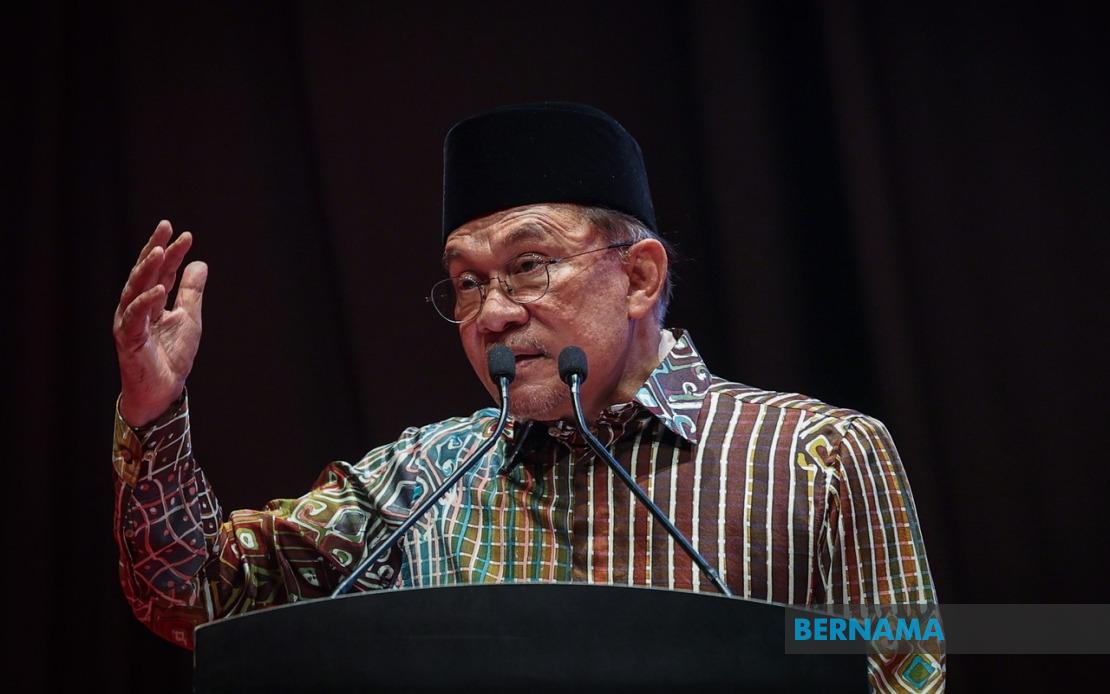
Prime Minister Datuk Seri Anwar Ibrahim has called on Malaysia's waqf institutions and Islamic dakwah bodies to embrace technological advancement and digital transformation as essential tools for maintaining institutional relevance in an increasingly connected world, while emphasising that such progress must never come at the expense of foundational religious and ethical principles.
Addressing attendees at the closing ceremony of the 2026 International Waqf Dakwah Convention at the Kuala Lumpur Convention Centre, Anwar articulated a delicate balancing act that contemporary Islamic organisations face. The challenge, he explained, lies in navigating rapid technological evolution—spanning artificial intelligence, quantum computing, and advanced information systems—without allowing the pursuit of innovation to undermine the spiritual convictions, character development, and humanitarian values that define Islamic civilisation.
The Prime Minister warned against what he characterised as the inherent danger of technological adoption divorced from ethical moorings. Advanced systems including AI and quantum computing, when deployed without grounding in moral frameworks and values-based decision-making, risk corroding human dignity, ethical conduct, and the very essence of what makes societies cohesive and purposeful. This concern reflects growing global anxiety about technology's capacity to disrupt social fabric when implemented without thoughtful consideration of human and spiritual dimensions.
Anwar introduced a metaphorical framework to guide this approach: institutions must simultaneously reach for the skies through innovation while remaining firmly rooted to the ground through strengthening of faith, beliefs, moral character, cultural identity, and historical consciousness. This dual commitment requires deliberate institutional strategy that treats technological adoption not as an end in itself but as a means to strengthen core Islamic values and community cohesion. Malaysian organisations must therefore build competency in emerging technologies whilst simultaneously deepening engagement with classical Islamic learning, ethical traditions, and cultural heritage.
The Prime Minister specifically commended the Malaysian Islamic Welfare Organisation (PERKIM) and the Regional Islamic Da'wah Council of Southeast Asia and the Pacific (RISEAP), under the leadership of Sarawak Premier Tan Sri Abang Johari Tun Openg, for demonstrating what progressive yet thoughtful dakwah work resembles in practice. Both organisations have shown that modern approaches to Islamic outreach and community development need not compromise traditional values; rather, they can amplify them. Their commitment to addressing contemporary challenges including Islamophobia through contemporary methods while strengthening Muslim unity offers a model for other institutions seeking similar balance.
The convention itself produced three substantial resolutions that translate Anwar's vision into concrete institutional action. Delegates adopted proposals establishing a working consortium dedicated to strengthening waqf institutions across the region, implementing technology and digitalisation frameworks within waqf management systems, and enhancing the overall waqf ecosystem through improved governance structures and coordinated collaboration among diverse stakeholders. These resolutions acknowledge that waqf—the Islamic endowment system central to community welfare and religious education—requires modernisation to function effectively in contemporary contexts.
Anwar indicated that the government views these resolutions not merely as academic recommendations but as substantive proposals warranting serious policy consideration. The conventions' outcomes will undergo governmental study before advancing to Cabinet deliberation and ultimately to the Conference of Rulers for consideration. This institutional pathway demonstrates commitment to translating grassroots Islamic organisational expertise into formalised policy frameworks, ensuring that religious and civil society leadership influences state-level decisions affecting Islamic institutions.
For Malaysian stakeholders, the implications extend beyond domestic religious affairs into regional positioning. Southeast Asia's waqf and dakwah sectors represent significant vehicles for Islamic knowledge dissemination, community development, and interfaith engagement across a religiously diverse region. Modernising these institutions through technology while preserving their ethical foundations strengthens Islam's contemporary relevance across the ASEAN community and enhances regional stability through community-based social cohesion work.
The emphasis on technological literacy within religious institutions also addresses practical operational challenges. Contemporary waqf management involves complex asset administration, donor coordination, beneficiary identification, and transparency requirements that digital systems can substantially improve. Similarly, dakwah organisations increasingly compete for audience attention in crowded information environments; effective digitalisation enables them to reach younger demographics whilst maintaining message integrity and religious authenticity.
Anwar's message implicitly challenges a false binary often presented in public discourse—the notion that modernisation inherently means secularisation or value erosion. His framework suggests instead that thoughtful technological adoption, guided by clear ethical principles and institutional values, strengthens rather than weakens religious institutions' capacity to serve their communities. This positioning holds particular relevance for Malaysia, where navigating between tradition and modernity while maintaining a Muslim-majority society with significant non-Muslim populations requires sophisticated institutional and cultural leadership.
The convention's focus on regional cooperation through RISEAP membership also reflects recognition that waqf and dakwah challenges transcend national borders. Southeast Asian nations share similar demographic trends, technological adoption patterns, and religious pluralism contexts. Coordinated approaches to modernisation, supported by shared best practices and collaborative governance frameworks, enable smaller regional economies to achieve technological sophistication that might prove costlier if pursued independently. This regional dimension transforms what might appear as purely domestic institutional concerns into matters of broader Southeast Asian development strategy and interfaith stability.

