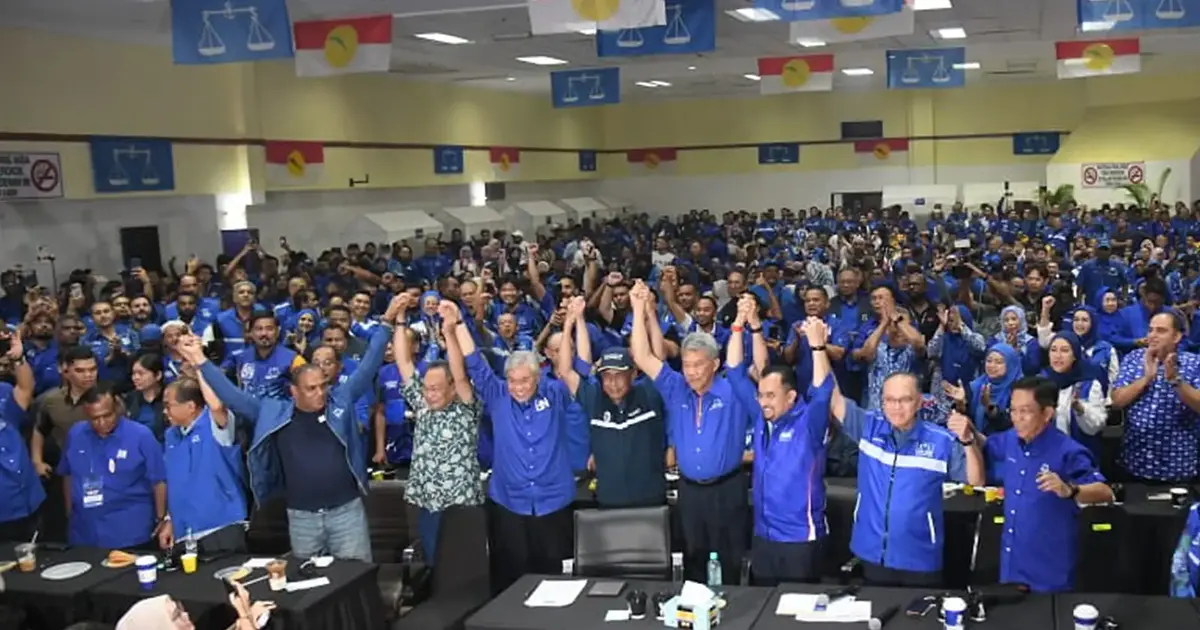
Wan Fayhsal, the information chief for Wawasan, has raised the prospect of a sweeping electoral realignment in Malaysia's next general election, warning that eroding public confidence in the Pakatan Harapan government has created conditions favourable to the Barisan Nasional-Perikatan Nasional alliance. The prediction, cast in terms of a "blue tsunami," reflects a pronounced shift in political sentiment that could fundamentally reshape the parliamentary landscape when Malaysians return to the polls for GE16.
The characterisation of a potential electoral wave carries particular weight given the rapidly changing dynamics since the 2022 general election. That contest produced a hung parliament and triggered a sequence of coalition negotiations that ultimately elevated Anwar Ibrahim's Pakatan Harapan to lead a government comprising multiple ideologically diverse partners. While the unity government was heralded as a stabilising force following the 15th election's fragmented outcome, the governing arrangement has faced sustained pressure from competing interests and policy disagreements among its constituent parties.
Wan Fayhsal's assessment underscores deepening fractures in public support for the current administration. Beyond headline political events, ordinary Malaysians have grown increasingly frustrated with persistent economic pressures, including rising cost of living, stagnant wage growth relative to inflation, and uncertainty surrounding employment prospects. These material concerns have translated into declining approval ratings for the government and its leadership, creating space for opposition blocs to appeal to voters seeking alternatives. The economic headwinds affecting Malaysia are not unique to the country; they reflect broader regional and global inflationary pressures, yet the government bears responsibility for how effectively it addresses citizen grievances.
The BN-PN coalition, positioned as the primary alternative to Pakatan Harapan, has capitalised on this discontent by offering itself as a coherent opposition force capable of restoring stability and addressing public concerns. The Barisan Nasional, led by the United Malays National Organisation, retains substantial grassroots machinery and historical associations with governance spanning decades prior to 2018. Perikatan Nasional, a more recent configuration incorporating elements formerly aligned with UMNO and the Malaysian Islamic Party, brings a complementary mobilising capacity. Together, they present a consolidated challenger that contrasts with the fragmented nature of multiple opposition voices.
Public opinion surveys and political commentary from multiple quarters have detected this apparent swing toward the opposition alliance. While specific electoral projections remain inherently uncertain, the trend line suggested by observers like Wan Fayhsal reflects genuine shifts in voter sentiment rather than speculative commentary. Crucially, this repositioning affects not merely urban voters or particular demographic cohorts but appears to span geographic regions and social strata, suggesting the movement carries potential for substantive parliamentary consequences.
For Malaysian politics, a decisive electoral outcome favouring the BN-PN alliance would represent a dramatic reversal from the 2018 general election, when Mahathir Mohamad's Pakatan Harapan swept to power on a wave of reform sentiment following the 1Malaysia Development Berhad scandal. The subsequent years have complicated that narrative: the coalition fracture and political instability of 2020-2022, the prime ministerial transition from Mahathir to Ismail Sabri Yaakob, and ultimately Anwar's ascension to leadership have tested voter patience with political uncertainty. Many Malaysians, exhausted by administrative instability and ministerial reshuffles, may view the BN-PN combination as offering clearer governance prospects despite its own internal tensions.
The economic dimension remains central to understanding this political realignment. Despite the unity government's efforts to maintain fiscal discipline and pursue infrastructure investment, wage earners and small business operators continue reporting diminished purchasing power. Food price volatility, electricity tariff pressures, and housing affordability challenges resonate powerfully among working-class and lower-middle-class constituencies that are fundamental to any electoral coalition. Opposition parties have effectively framed these challenges as symptoms of governmental mismanagement, even though exogenous factors substantially drive regional economic dynamics.
Regionally, Malaysia's electoral trajectory carries implications for broader Southeast Asian political trends. The country's shifting alignments influence ASEAN dynamics, cross-border investment flows, and regional security configurations. Should the BN-PN alliance consolidate power, the new administration's policy priorities regarding Thailand relations, Myanmar, South China Sea positioning, and Great Power relations with China and the United States would reshape Malaysia's regional footprint. Additionally, internal Malaysian political stability—or instability—affects investor confidence and the wider regional business environment.
Wan Fayhsal's warning also reflects internal coalition dynamics within the opposition alliance itself. Both Barisan Nasional and Perikatan Nasional contain multiple interest groups, regional powerbrokers, and ideological factions that require careful management. A decisive electoral victory could embolden particular constituencies within the broader coalition, potentially creating governance challenges comparable to those currently afflicting the unity government. The complexity of modern Malaysian coalition politics means that large parliamentary majorities do not automatically translate into coherent policy implementation.
Moving toward GE16, the contest will likely hinge on voter perceptions of economic stewardship, governmental competence, and which coalition appears best positioned to deliver tangible improvements in citizens' material circumstances. The Pakatan Harapan-led government must demonstrate visible progress on cost-of-living mitigation and employment generation to reverse current sentiment trajectories. Simultaneously, the BN-PN opposition must articulate concrete policy alternatives rather than relying solely on protest votes against incumbent fatigue. The electorate's final verdict will reflect judgements regarding which coalition better deserves custodianship of the nation's economic and political future.

