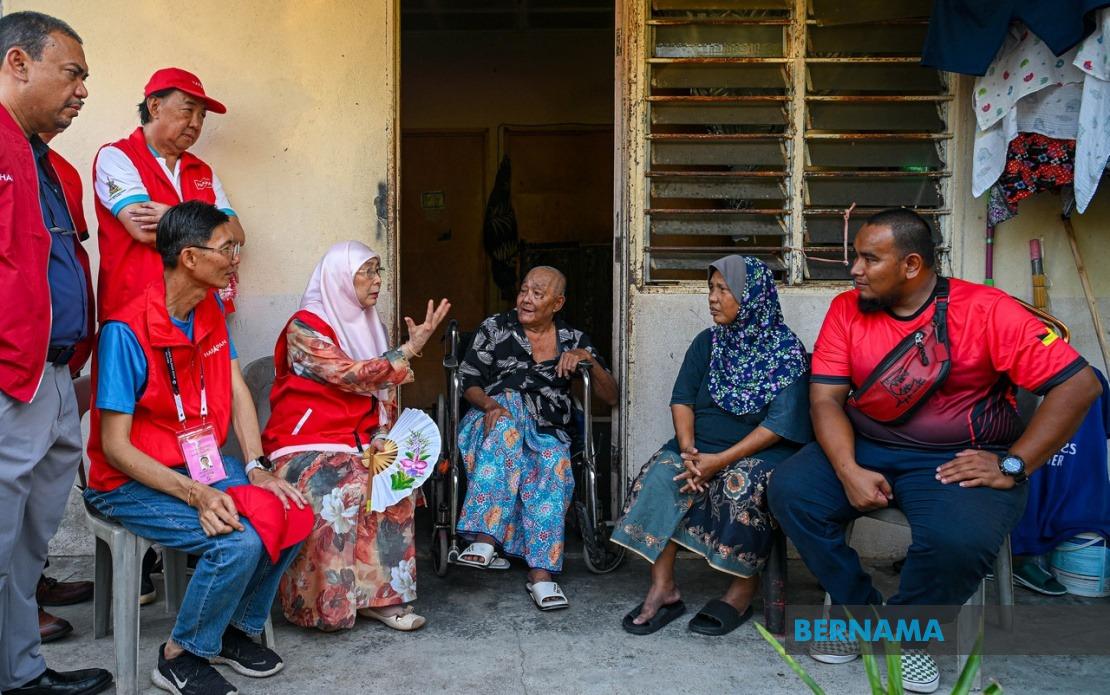
Pakatan Harapan's bid to secure Chuah in the upcoming Negeri Sembilan state election took a grassroots turn this week when party leader Wan Azizah Wan Ismail made an unscheduled visit to the home of an elderly couple battling both chronic illness and economic hardship. Accompanied by the PH's state assembly candidate Datuk Yew Boon Lye, the high-profile politician spent approximately 20 minutes with Zaiton Hasan, 60, and her husband Paimin Sapari, 71, listening directly to their concerns and assessing their living conditions firsthand. The visit underscores a pattern of direct engagement that opposition parties have increasingly emphasised during campaign season, particularly in constituencies where healthcare access and welfare support remain contentious issues.
The couple's circumstances reflect broader challenges facing Malaysia's ageing population, particularly those living outside urban centres. Zaiton and Paimin manage competing health complications that strain household resources—she contends with high blood pressure whilst he battles diabetes, conditions that typically demand consistent medical monitoring and pharmaceutical intervention. For pensioners or those dependent on irregular income, the dual burden of chronic disease and financial constraint creates a precarious situation that often forces difficult choices between medication, nutrition, and basic living expenses. The visit's timing suggests PH strategists recognise that elderly welfare constitutes a significant electoral concern in state-level contests, where local grievances can determine narrow margins.
The emotional resonance of the encounter was evident in Zaiton's reaction following Wan Azizah's departure. Speaking to Bernama, she expressed profound gratitude and admitted feeling surprised by the visit's significance. Her comment that this marked the first occasion a prominent political figure had entered her home speaks to a troubling accessibility gap whereby ordinary citizens, particularly those in modest circumstances, rarely experience direct contact with senior party figures. This gap itself becomes a campaign asset: by manufacturing such moments, opposition parties can generate goodwill and demonstrate attentiveness to constituent concerns, actions that resonate powerfully in predominantly working-class or low-income constituencies.
Beyond the symbolic dimensions of the visit, tangible assistance accompanied Wan Azizah's engagement. The Port Dickson People's Spirit Welfare Association presented Paimin with a wheelchair, addressing an immediate mobility constraint that likely affects both his independence and the household's overall quality of life. Wheelchairs represent more than functional aids; they signify recognition of need and practical problem-solving that voters interpret as competence and care. For an elderly man managing diabetes, enhanced mobility potentially improves his capacity to seek medical care, maintain social connections, and reduce the physical burden on his wife as primary caregiver.
The Chuah contest itself carries strategic weight within Negeri Sembilan's political landscape. Datuk Yew Boon Lye, the PH standard-bearer, faces a direct challenge from Pau Jeou Ching, the Perikatan Nasional nominee. Straight fights—contests involving only two significant candidates—tend to clarify voter choice and can amplify the impact of ground-level campaign activities. In such contests, personal connections and demonstrated commitment often outweigh national narratives, making Wan Azizah's presence alongside Yew particularly valuable for building momentum in the weeks preceding polling.
Negeri Sembilan's 16th state election represents a critical juncture for both PH and PN, with control of the state assembly potentially shifting depending on aggregate performance across all state seats. The Election Commission has scheduled early voting for July 28, providing a window for advance participation that some elderly voters or those with mobility limitations may prefer. The actual polling day on August 1 follows, allowing three days for final campaign pushes and voter mobilisation efforts. These compressed timelines intensify the value of high-visibility campaign activities, particularly those generating positive news coverage and grassroots word-of-mouth.
The welfare association's involvement in the wheelchair donation reflects the ecosystem of civil society organisations that operate alongside political parties in Malaysian elections. Such groups, whilst ostensibly non-partisan, frequently collaborate with political movements, particularly opposition parties that emphasise grassroots engagement and community partnership. This alignment, whether formal or informal, extends campaign reach beyond what party structures alone could achieve and provides venues for targeted assistance that might otherwise lack visibility without media attention.
For voters in constituencies like Chuah, particularly elderly residents managing chronic conditions on modest incomes, such visits carry disproportionate weight. In many Malaysian communities, especially smaller towns and rural areas, the physical presence of senior political figures remains rare, making even brief encounters memorable and politically significant. Zaiton's astonishment that a major leader would visit her home reveals the depth of disconnection many Malaysians experience from political decision-making processes, a gap that opposition parties can exploit by demonstrating accessibility and responsiveness.
The broader implications for the election remain uncertain, but the visit illustrates how contemporary Malaysian campaigning increasingly blends national party strategies with localised, personalised engagement. For PH, accumulating such encounters across multiple constituencies creates a narrative of attentiveness that contrasts with incumbent or government-aligned parties, which may rely more heavily on administrative apparatus and development announcements. For voters, particularly those historically marginalised from political attention, such visits represent tangible evidence of consideration and care—considerations that often prove decisive in closely contested races where every vote matters.

