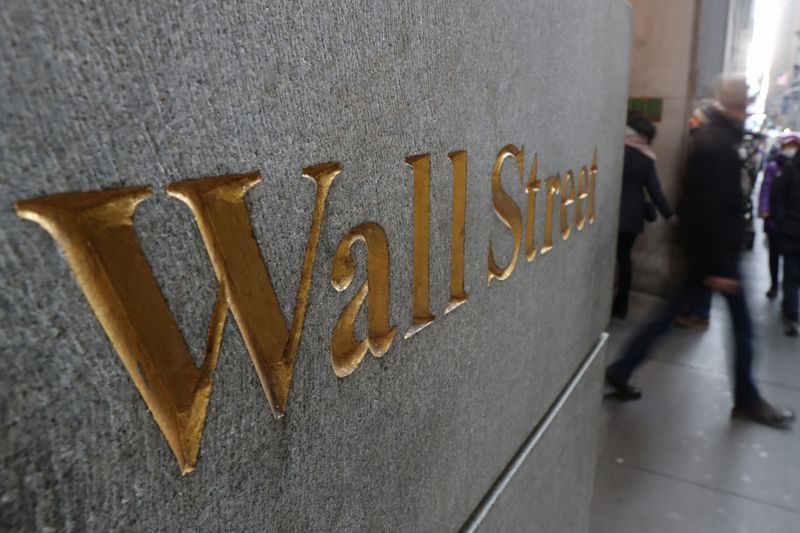
Wall Street's opening week of August delivered a resounding rally that propelled major indices to fresh peaks, driven primarily by optimism surrounding potential de-escalation between the United States and Iran. The momentum began when U.S. President Donald Trump announced on Sunday that negotiations would commence on Monday to reopen the Strait of Hormuz, a critical waterway whose closure would disrupt global energy flows and supply chains. Though Iran subsequently disputed whether formal talks had been scheduled, the mere prospect of diplomatic engagement proved sufficient to shift investor sentiment decisively toward risk-taking positions across equities.
The geopolitical thaw translated directly into commodity market relief. Crude oil prices retreated approximately 5% during the session, shedding the risk premium that had accumulated following earlier escalations. This decline in energy costs rippled through fixed-income markets, pushing U.S. Treasury yields lower and reducing the financial pressures on both consumers and corporations. For investors in Southeast Asia and beyond, such moves matter considerably because oil price stability influences everything from transportation costs to manufacturing competitiveness throughout the region's export-dependent economies. A sustained decline in crude would ease inflationary pressures that central banks across Asia have been wrestling with for months.
The three major benchmarks delivered impressive performances that underscored broad-based enthusiasm. The Dow Jones Industrial Average ascended 693.38 points—a 1.32% gain—to reach 53,178.41, marking a new closing record. The S&P 500 climbed 110.78 points, or 1.48%, settling at 7,600.50, while the Nasdaq Composite surged 540.04 points, representing a 2.13% advance to 25,913.90. These gains occurred despite an economically sensitive week packed with earnings reports, Federal Reserve communications, and critical labor market data that kept participants focused on competing macroeconomic narratives.
Communication services emerged as the week's standout performer, jumping 4.3% as investors gravitated toward technology and digital platforms. This strength reflected renewed confidence in mega-cap growth companies, particularly Meta Platforms and Alphabet, which had faced months of scrutiny over artificial intelligence spending and competitive dynamics. Conversely, the energy sector underperformed, declining 1.2%, as lower oil prices compressed margins for producers and reduced the allure of commodity-linked investments. This divergence illuminates a fundamental tension in current markets: while lower energy costs benefit most of the economy and reduce inflation risks, they simultaneously pressure the profitability of extraction companies and nations dependent on energy revenues.
Market strategists pointed to the outsized importance of oil prices and Treasury yields as bellwethers for investor confidence. Art Hogan, chief market strategist at B. Riley Wealth in Boston, observed that participants wake each morning scrutinizing crude valuations and 10-year bond yields to gauge market direction. When both move downward, risk appetite strengthens; when they rise, anxiety grips markets and stocks falter. This framework reveals how geopolitical shocks now dominate traditional fundamental analysis, a dynamic that will resonate throughout Southeast Asian markets where energy imports and commodity exposure remain structurally significant.
Corporate earnings provided genuine support for valuations, though geopolitical uncertainty prevented the usual relief that earnings season typically offers. Among the 304 S&P 500 companies reporting through Friday, earnings growth reached 29.3% according to LSEG data, with an impressive 85.2% exceeding analyst expectations. Such performance suggests underlying economic resilience despite months of concerns about recession risks, artificial intelligence implementation costs, and Federal Reserve policy trajectories. Amazon exemplified this momentum, advancing 4.6% following strong quarterly results that propelled its market capitalization beyond $3 trillion for the first time, a milestone reflecting investor confidence in digital transformation and cloud computing dominance.
Technology companies with significant exposure to artificial intelligence developments commanded particular attention. SpaceX surged 5.6% following its market debut in mid-June, though the stock had traded below its $135 initial offering price for nearly three weeks before this rally. Advanced Micro Devices, SanDisk, and Western Digital were among AI-adjacent companies scheduled to report this week, and investors closely monitored their commentary for insights into semiconductor demand trajectories and data center expansion plans. For Malaysian technology investors and those tracking regional export competitiveness, these developments matter because many Southeast Asian firms operate in electronics manufacturing and semiconductor assembly, making them sensitive to demand dynamics these earnings reports reveal.
Pharmaceutical sector movements highlighted merger speculation's continuing influence on valuations. Bristol Myers Squibb edged up 0.2% on reports of preliminary merger discussions with AstraZeneca that could create one of the world's largest drugmakers, potentially worth nearly $400 billion. Meanwhile, Marriott International slumped 7% after issuing third-quarter profit guidance that disappointed analysts, underscoring how hospitality businesses remain sensitive to macroeconomic headwinds and consumer spending patterns. The sharp divergence between these performances illustrates how earnings season continues delivering winners and losers regardless of broader index movements.
Federal Reserve communications added another layer of complexity to market interpretation. New York Federal Reserve President John Williams expressed optimism that inflation pressures would gradually diminish, a dovish signal that relieved some bond market anxiety. However, reports that Fed Chair Kevin Warsh had proposed reducing the frequency of rate-setting meetings created uncertainty about future policy clarity. Markets are currently pricing a 64.5% probability that the Federal Reserve will raise rates by at least 25 basis points at its September meeting, according to CME FedWatch data, suggesting investors anticipate continued tightening despite disinflationary signals.
Breadth indicators confirmed that enthusiasm extended well beyond the largest companies. On the New York Stock Exchange, advancing issues outnumbered decliners by a 2.62-to-1 ratio, while on the Nasdaq this spread widened to 3.01-to-1, demonstrating that smaller-capitalization and mid-market stocks participated meaningfully in the rally. The S&P 500 produced 15 new 52-week highs against just one new low, while the Nasdaq Composite registered 121 new highs alongside 96 new lows, suggesting a market where momentum supported breadth but some pockets of weakness persisted. Volume reached 19.36 billion shares traded across U.S. exchanges, exceeding the 20-day average of 17.66 billion shares, indicating genuine participation rather than algorithmic or passive flows alone.
The week ahead promises additional catalysts for volatility, particularly several labor market readings culminating in Friday's employment report. For global investors monitoring U.S. economic health—crucial since American demand remains essential for Southeast Asian exporters—these data points will help determine whether the Fed maintains its tightening bias or pivots toward accommodation. The intersection of geopolitical de-escalation, strong earnings, dovish Fed communications, and approaching labor data creates a complex environment where near-term market direction remains genuinely uncertain despite this week's powerful rally.

