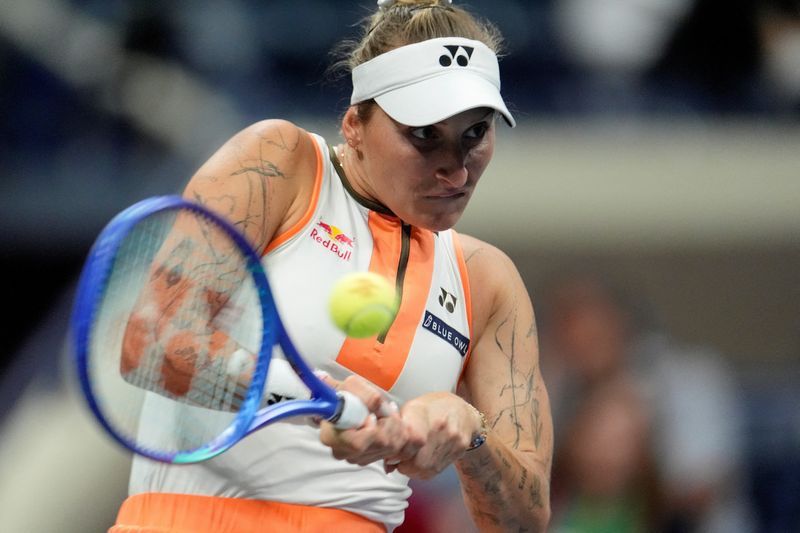
The tennis world finds itself engulfed in a contentious debate over player autonomy and testing protocols following Marketa Vondrousova's four-year suspension, handed down by the International Tennis Integrity Agency for declining to provide a sample during an unannounced out-of-competition test at her home last December. The severity of the punishment against a player with no previous positive test result has reignited long-simmering tensions between governing bodies and athletes, with the Professional Tennis Players Association calling for systemic reform that grants competitors meaningful input into the rules they must obey.
Vondrousova's case carries particular resonance because the Czech player, a former Wimbledon champion, articulated specific concerns about personal security when an officer arrived unannounced at 8:15 p.m. demanding immediate testing. She later revealed that her reluctance to open her door stemmed from legitimate safety anxieties rooted in the 2016 knife attack on compatriot Petra Kvitova at her home—a reminder that for female athletes, random testing can pose genuine security risks beyond mere inconvenience. The incident highlights how blanket anti-doping protocols, designed with good intentions, may not adequately account for the real vulnerabilities that some players face.
The PTPA's response to Vondrousova's suspension went beyond defending this individual player, instead positioning her case within a broader critique of inconsistent enforcement that has plagued professional tennis. The association pointed out that higher-ranked competitors like Jannik Sinner and Iga Swiatek received significantly lighter sanctions for actually testing positive for banned substances, creating a perception that the sport's anti-doping system operates with troubling inconsistency. This disparity fuels player frustration and undermines confidence in the fairness of enforcement, suggesting that factors beyond the facts of each case may influence outcomes.
International Tennis Integrity Agency leadership has defended the rigor of its testing protocols, with CEO Karen Moorhouse emphasizing that all cases are evaluated based on evidence rather than athlete status or profile. The agency operates within the framework established by the World Anti-Doping Agency, which applies uniform standards across all Olympic sports. Moorhouse stressed that unpredictable testing remains essential to maintaining competitive integrity and protecting clean athletes, and that the independent tribunal overseeing Vondrousova's case reached its conclusion through proper legal channels rather than arbitrary judgment.
The safety dimension of Vondrousova's complaint has prompted the ITIA to detail its procedural safeguards designed to protect both players and testing officers. The agency confirmed that testing witnesses are carefully selected to match player gender, that all personnel carry proper identification which players can independently verify, and that staff receive specialized training in professional conduct. These measures represent genuine attempts to address concerns about invasive late-evening visits to private residences, though their effectiveness ultimately depends on consistent implementation and player awareness.
Vondrousova's broader struggle with the testing experience reflects mounting pressure on professional athletes navigating the demands of modern competitive sport. The player had described reaching a breaking point after enduring months of physical and mental stress, suggesting that the cumulative burden of anti-doping procedures—layered atop injury recovery, travel schedules, and performance pressure—can become psychologically overwhelming. For elite athletes already subject to intense scrutiny and demanding work conditions, the randomness and intrusiveness of testing compounds existing stressors in ways that perhaps policy-makers have not fully appreciated.
The PTPA's lawsuit against tennis governing bodies, filed previously over privacy rights concerns, demonstrates that player dissatisfaction with current protocols runs deeper than individual grievances. The association argues that athletes deserve real participation in crafting the rules that govern them, not merely compliance with regulations imposed by authorities operating outside the player community. This reflects a broader movement across professional sports toward athlete empowerment and greater democratization of decision-making structures that directly affect competitors' lives and careers.
Vondrousova's current injury status adds another layer of complexity to her situation. The 26-year-old has not competed since January due to a shoulder problem, meaning she faces a four-year ban during what may prove to be a critical period for her career rehabilitation and return to competition. The timing of her suspension, coinciding with physical recovery, raises questions about whether the anti-doping framework adequately considers athletes' circumstances or applies rules uniformly regardless of external factors affecting their situations.
The case serves as a crucial inflection point for professional tennis, forcing stakeholders to confront uncomfortable questions about whether current anti-doping systems appropriately balance the legitimate need to protect competitive integrity against genuine player concerns regarding privacy, safety, and fairness. Tennis operates within a global anti-doping framework, but the sport's particular structure—with individual athletes competing across numerous jurisdictions—creates unique implementation challenges that generic sporting rules may not adequately address. The PTPA's call for athlete voice in governance reflects recognition that sustainable anti-doping compliance likely requires buy-in from the players themselves rather than pure top-down enforcement.
Vondrousova retains the option to appeal her suspension to the Court of Arbitration for Sport, potentially giving her an opportunity to challenge the tribunal's decision through additional legal channels. However, regardless of the outcome in her specific case, the broader conversation sparked by her ban will likely persist throughout professional tennis. The tension between rigorous anti-doping measures and player autonomy, between security protocols and personal privacy, and between consistent enforcement and perceived disparities cannot be resolved through isolated tribunal decisions but instead demands systemic dialogue among all stakeholders.
For Malaysian and Southeast Asian tennis fans and emerging players in the region, Vondrousova's experience carries important implications. As the sport develops across Asia, with increasing numbers of regional competitors entering the professional circuit, questions about anti-doping fairness, privacy protection, and athlete representation will become increasingly relevant. The case demonstrates that global sporting governance structures, while designed for universal application, must remain flexible enough to accommodate legitimate concerns from diverse player populations while maintaining the integrity that clean competition demands. The path forward requires not resistance to testing itself, but rather a genuine commitment to making anti-doping systems fairer, more transparent, and genuinely inclusive of player perspectives.