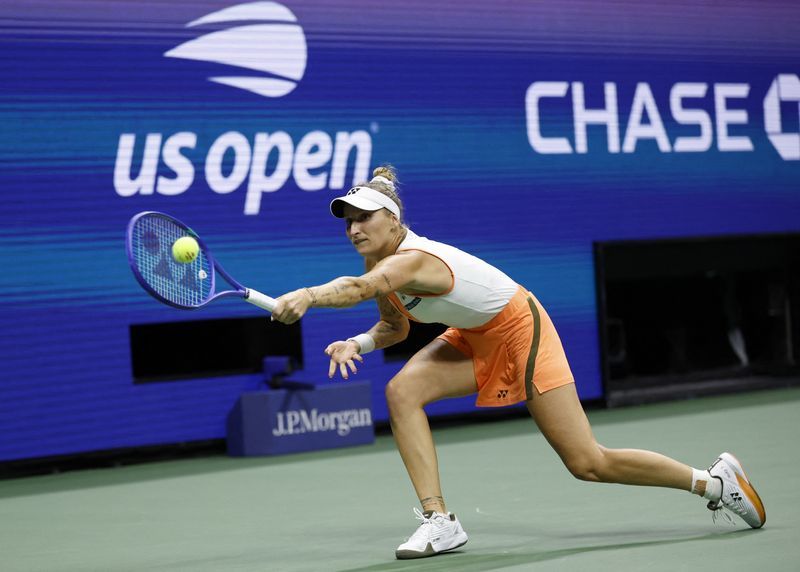
Former Wimbledon champion Marketa Vondrousova has escalated her fight against a four-year doping suspension by filing an appeal with the Court of Arbitration for Sport, tennis's highest judicial body. The move represents a significant challenge to the International Tennis Integrity Agency's decision to sideline the Czech player for what officials determined was a failure to comply with an out-of-competition testing protocol at her home in December.
Vondrousova's suspension was formally handed down in June following the incident that unfolded when a doping control officer arrived unannounced at her residence late in the evening. According to the athlete's account, the officer appeared at 8:15 p.m. and demanded an immediate sample collection, an intrusion she characterised as a serious violation of her personal privacy. She maintained throughout the process that she has never engaged in doping and that a test conducted just three days after the December 3 incident returned a negative result, casting doubt on any suggestion of rule-breaking.
The timing and nature of the testing procedure formed the crux of Vondrousova's objections, which she articulated publicly in April when she disclosed that she had reached a psychological breaking point after enduring months of mounting physical and mental strain. The circumstances surrounding the December encounter, combined with the severe penalty imposed, have resonated across the tennis world as questions about the balance between anti-doping enforcement and athlete welfare have intensified. Her appeal represents not merely a personal fight for reinstatement but also touches on broader questions about testing protocols and their implementation.
CAS confirmed receipt of the appeal on Tuesday and indicated that a formal hearing date has not yet been scheduled. The legal process ahead could determine whether the suspension stands or whether Vondrousova might return to professional competition earlier. If the four-year ban is upheld, she would be prohibited from competing until June 21, 2030, at which point she will have turned 30, effectively derailing what could have been her peak competitive years.
The career implications for Vondrousova are substantial and irreversible in many respects. The 27-year-old has been largely absent from competitive tennis since withdrawing from the Adelaide International in January, citing a shoulder injury that required recovery and treatment. During this enforced absence, her world ranking has plummeted dramatically from a career high of number six to 153, a decline that underscores how swiftly an athlete can lose competitive standing when unable to participate in tournaments and maintain match fitness.
Vondrousova's achievements prior to this suspension underscore what she has lost through this episode. She captured the 2023 Wimbledon title at the height of her powers, demonstrating her ability to perform at the sport's highest level under intense pressure. Her career trajectory had been impressive since breaking through on the international stage, including a runner-up finish at the French Open in 2019 and a silver medal at the Tokyo Olympics in 2021. These credentials established her as one of tennis's rising stars and a player expected to challenge for multiple Grand Slam titles throughout her career.
The case also highlights the ongoing tensions within professional tennis between strict anti-doping compliance requirements and the practical realities of athletes' lives. Out-of-competition testing is acknowledged as necessary to prevent doping during periods when competitors are not under tournament supervision, yet the enforcement mechanisms—particularly unannounced evening visits—create genuine friction between testing officials and athletes concerned about their privacy and autonomy. Vondrousova's willingness to contest the ban suggests a belief that the procedures employed were unjust or disproportionate.
For Malaysian and Southeast Asian readers, this case carries relevance beyond tennis. It illustrates how international sporting bodies exercise authority over athletes, the complexities of due process in arbitration proceedings, and the vulnerability of individual sportspeople when facing institutional power structures. The appeal process at CAS represents a critical opportunity for reviewing whether procedures were followed correctly and whether penalties matched the severity of alleged violations.
The outcome of Vondrousova's appeal could also set precedent for how similar cases are handled in future, potentially influencing testing protocols and compliance procedures across professional tennis. Her challenge to the ban is not merely a personal matter but one that could reshape how the sport balances enforcement against privacy considerations and athlete wellbeing. The coming months will reveal whether CAS determines the four-year suspension was proportionate or whether Vondrousova's arguments about the circumstances and her subsequent clean test result prove persuasive to the arbitrators who will review her case.

