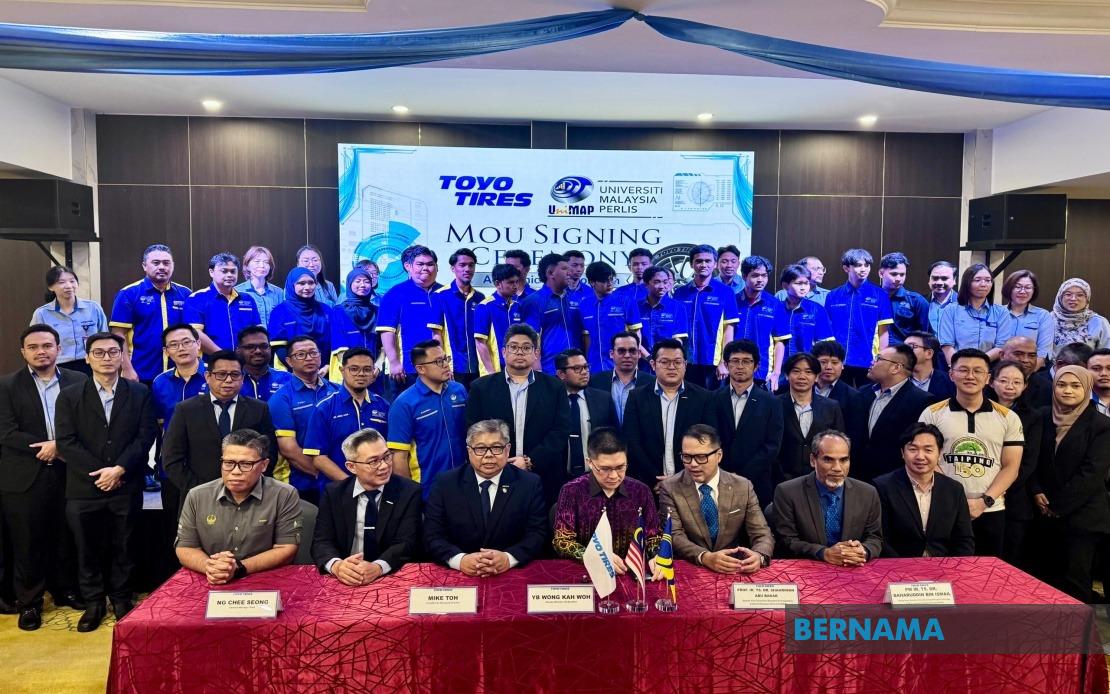
The Malaysian education landscape is experiencing a notable transformation as applications for Ministry of Education Vocational Colleges (KV) have climbed to 67,045 nationwide, substantially outpacing available capacity of just 19,567 positions. Deputy Education Minister Wong Kah Woh disclosed this striking disparity while attending an industry partnership ceremony in Taiping, noting that the total was projected to surpass 68,000 by the midnight application deadline. The overwhelming response represents a fundamental shift in how young Malaysians and their families view educational pathways, moving away from an exclusive focus on university degrees towards recognition of vocational training's tangible economic value.
The government's concerted push to rehabilitate the reputation and accessibility of technical and vocational education training (TVET) appears to be resonating powerfully with the public. Wong attributed this surge to coordinated initiatives by the MADANI Government and the Ministry of Education aimed at elevating the TVET sector's standing and relevance. Rather than treating vocational colleges as second-tier alternatives, policymakers have actively marketed them as pathways to secure employment and meaningful careers. This repositioning reflects a maturation in Malaysia's understanding that not all career success requires a tertiary degree, and that hands-on technical skills remain perpetually in demand across sectors ranging from manufacturing to services.
A compelling evidence base underpins this messaging. Vocational college graduates achieved an extraordinary 99.95 per cent employability rate in 2023, maintaining a consistent track record with employment rates hovering between 98 and 99 per cent in preceding years. These figures dwarf typical university graduate employment outcomes in most countries and represent a powerful validation of the vocational pathway. Young people contemplating their futures increasingly recognise that completing a KV programme virtually guarantees employment prospects, eliminating much of the uncertainty that shadows academic degree holders navigating competitive job markets.
The exceptional employability performance does not emerge by accident but reflects deliberate structural alignment between educational institutions and industry needs. Wong emphasised that close collaboration between the Ministry of Education and private sector employers ensures that vocational college curricula remain tethered to actual labour market demands. Rather than allowing educational programming to ossify in academic theory disconnected from workplace realities, KV offerings evolve continuously in response to industry feedback. This adaptive approach means students acquire not theoretical knowledge but immediately deployable competencies that employers actively seek.
The partnership model exemplified during Wong's announcement—a Memorandum of Understanding between Toyo Tyre Malaysia and Universiti Malaysia Perlis—illustrates this institutional integration. Major employers increasingly recognise that collaborating with educational institutions to shape curriculum and training methodologies serves their strategic interests by ensuring a pipeline of graduates meeting their specific technical requirements. For institutions, industry partnerships validate their relevance and provide tangible endorsement to students. This symbiotic relationship stands in marked contrast to academic institutions operating in isolation from market realities.
From a regional perspective, Malaysia's vocational education expansion carries significance for Southeast Asian economies grappling with skills mismatches. The ASEAN region faces persistent shortages of trained technical workers across manufacturing, construction, automotive repair, hospitality, and emerging sectors including renewable energy and digital infrastructure. Malaysia's success in channelling substantial cohorts towards vocational training creates a demonstration effect for neighbouring economies and illustrates how strategic messaging and institutional reform can reshape educational preferences within a generation.
The application numbers also suggest growing parental acceptance of vocational pathways. In many Asian societies, cultural preferences have traditionally favoured university education as the prestige route, sometimes regardless of individual aptitudes or labour market realities. The surge in KV applications indicates that parents increasingly evaluate educational choices through an employment and earnings lens rather than status considerations alone. This pragmatic reorientation accelerates human capital development towards economically productive outcomes.
However, the massive surplus of applicants relative to available places—approximately 3.4 applicants per position—raises important questions about accessibility and equity. While the MOE can accommodate only a fraction of interested candidates, disparities in geographical distribution, socioeconomic background, and prior educational attainment may influence who ultimately secures places. Ensuring that admission processes fairly allocate the limited capacity and that outreach efforts reach underrepresented communities remains essential for inclusive skills development.
Looking forward, the demonstrated demand for vocational education should prompt policy consideration regarding capacity expansion. If 67,000 applicants sought fewer than 20,000 positions, expanding KV infrastructure and educator capacity could absorb significantly larger cohorts. Investment in additional facilities, trainer development programmes, and industry partnerships would likely yield substantial returns through enhanced employability outcomes and economic productivity gains. The existing bottleneck represents an untapped pool of motivated learners ready to enter the workforce.
The vocational education surge also carries implications for Malaysia's broader economic development strategy. As advanced economies and regional competitors increasingly automate routine manufacturing, Malaysia must position itself as a source of highly trained technical talent capable of operating sophisticated production systems, managing complex maintenance and repairs, and contributing to value-added activities. A robust TVET ecosystem feeding workers into these roles strengthens Malaysia's competitive positioning and provides employment security for millions of households across diverse communities.

