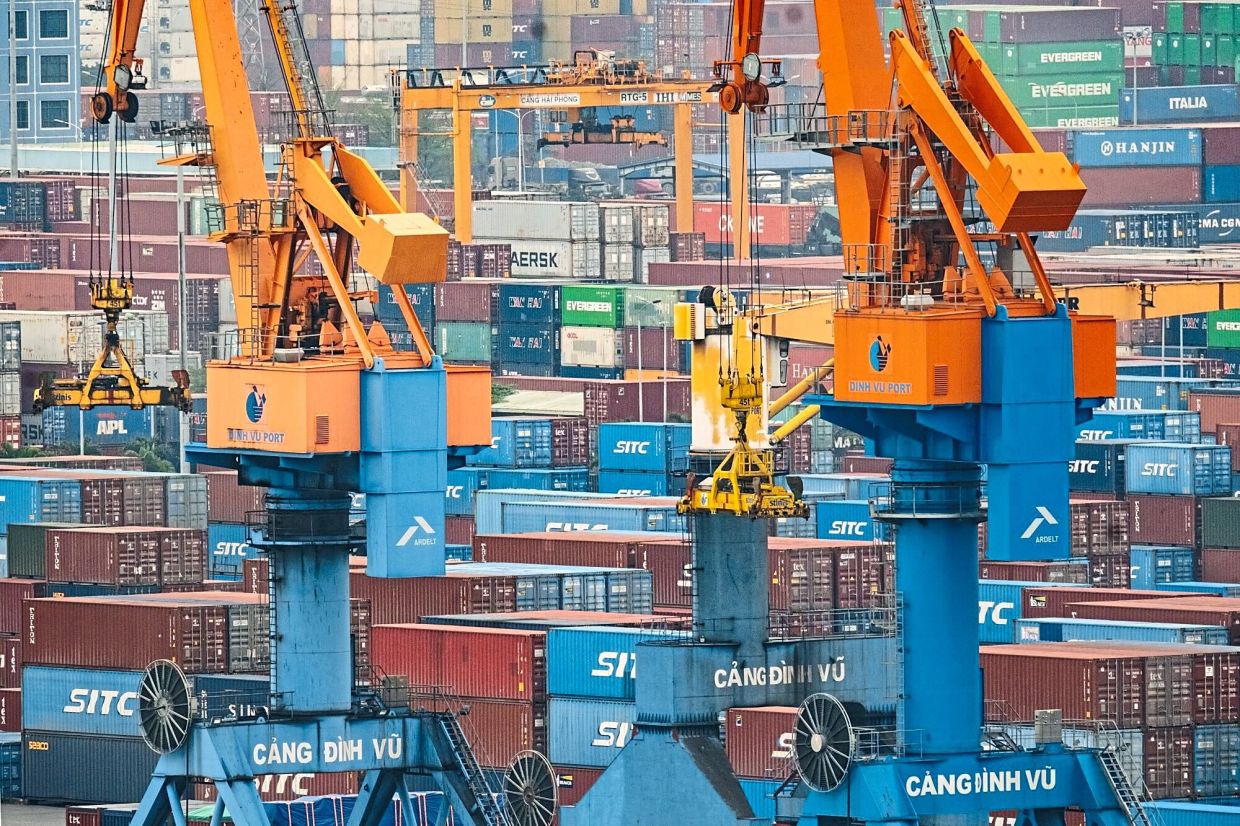
Vietnam is moving to accelerate stalled trade negotiations with the United States by demonstrating flexibility on contentious issues that have clouded commerce between the two nations. Deputy Prime Minister Nguyen Van Thang travelled to Washington to meet US Trade Representative Jamieson Greer, where he underscored Hanoi's readiness to engage in what both sides characterised as "open, constructive" dialogue aimed at finalising a reciprocal trade agreement after months of protracted discussions.
The diplomatic engagement reflects growing urgency in reaching consensus on tariff schedules and trade enforcement mechanisms. The two countries had previously reached a framework agreement in October, yet negotiations have stalled over multiple technical and procedural matters. Greer conveyed to Thang that the United States is keen to conclude the agreement expeditiously, signalling that Washington views the current momentum as a critical window for resolution. Vietnam's willingness to address American concerns openly suggests both parties recognise the commercial value of moving forward rather than allowing disagreements to deepen.
Central to the American negotiating position is concern about Vietnam's role as a potential conduit for goods of illicit origin, particularly products sourced from China. US trade officials have launched three concurrent investigations under Section 301 of American trade law examining Vietnam's adherence to intellectual property protections, border enforcement, and supply chain transparency. The Trump administration has consistently flagged the movement of unauthorised Chinese merchandise through Southeast Asian ports as a mechanism to circumvent American tariffs, and Vietnam's geographic position and manufacturing infrastructure make it particularly relevant to this concern.
The scale of Vietnam's trade surplus with the United States underscores why resolving these issues has become urgent for both economies. In the first half of 2026, Vietnam recorded the largest bilateral trade gap with America at US$114 billion, exceeding deficits with China, Mexico, and Taiwan. This substantial imbalance, largely driven by Vietnamese exports of electronics and consumer goods to American markets, creates political pressure within the United States for enforcement action if structural concerns about trade practices remain unaddressed. Vietnamese manufacturers increasingly rely on American consumers, making predictable market access essential for domestic economic stability.
Thang's explicit acknowledgment of Hanoi's readiness to tackle transshipment issues—the illegal or improper routing of goods through third countries to obscure their true origin—represents a meaningful concession. This has been a persistent irritant in bilateral relations, with American officials viewing insufficient Vietnamese border controls and customs procedures as enabling the circumvention of tariffs. By signalling willingness to strengthen these controls, Vietnam is essentially agreeing to implement measures that increase operational costs for smugglers and enhance visibility into import-export flows moving through its territory.
Counterfeit goods and online piracy also figure prominently in the negotiations. In April, Greer's office officially designated Vietnam a "priority foreign country" under American intellectual property enforcement frameworks, citing inadequate efforts to combat the production and distribution of counterfeit merchandise and insufficient digital piracy enforcement. This classification carries significant weight, as the investigation findings scheduled for November could trigger unilateral tariff increases or other trade remedies. By engaging constructively on these matters, Vietnam seeks to prevent escalation before the investigation concludes.
Beyond tariff mechanics and enforcement, Thang's visit encompassed a broader investment promotion agenda. The deputy prime minister met with executives from multinational corporations including Qualcomm Inc., Visa Inc., Axon Enterprise Inc., and Caterpillar Inc. to encourage expanded American capital flows into Vietnam. This dual-track approach—addressing trade concerns while simultaneously attracting investment—reflects Hanoi's strategy of deepening economic interdependence with the United States. For Vietnam, increased American investment in manufacturing, technology, and financial services creates constituencies within the US business community with interests aligned with stable, predictable trade relations.
Vietnam's economic model has become increasingly dependent on exports to developed economies, particularly the United States. The country has successfully positioned itself as an alternative production location for companies seeking to diversify away from China, especially for electronics, textiles, and consumer goods destined for American shelves. However, this reliance creates vulnerability to American trade policy shifts. Vietnamese manufacturers importing components from China and producing finished goods for American consumption must navigate overlapping regulatory frameworks and enforcement priorities from both Beijing and Washington.
The informal leverage available to the Trump administration through Section 301 investigations and potential tariff actions has concentrated minds in Hanoi. Unlike formal dispute resolution mechanisms through the World Trade Organization, which operate on longer timelines, unilateral American actions can rapidly disrupt Vietnamese export flows. This asymmetry explains why Hanoi is willing to make substantive commitments on border enforcement and intellectual property protection that might otherwise impose costs on local businesses and government agencies.
For regional observers in Southeast Asia, Vietnam's negotiating approach offers lessons about managing relationships with larger economic powers. By avoiding confrontation, demonstrating problem-solving orientation, and offering specific concessions, Hanoi aims to preserve market access while satisfying American concerns without capitulating on fundamental economic policies. Other ASEAN countries facing similar trade pressures—including Malaysia, Thailand, and Indonesia—are likely monitoring how Vietnam resolves these discussions as they navigate their own relationships with Washington.
The November deadline for completion of the Section 301 investigations creates a natural pressure point for finalising the reciprocal trade agreement. Both sides have incentives to reach a comprehensive arrangement before investigation findings are published, as such findings could create new legal or political obstacles to finalising broader trade terms. Vietnam's willingness to engage constructively, combined with American eagerness to conclude negotiations, suggests that a deal remains within reach, though outstanding disagreements over specific tariff rates and enforcement mechanisms likely remain substantial.

