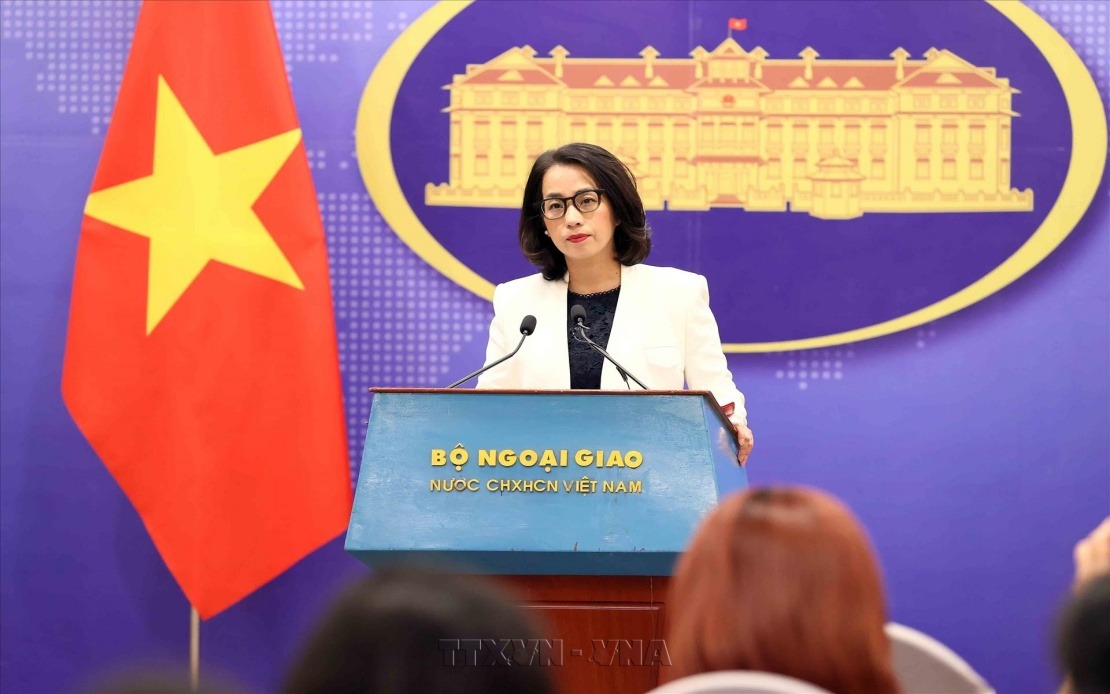
Vietnam's government has pushed back against fresh US tariffs imposed under Section 301 trade investigations, arguing that American authorities have failed to acknowledge its commitment to eliminating forced labour from its economy and supply chains. The Vietnamese Foreign Ministry spokesperson Pham Thu Hang made the position clear in late July, emphasising that Hanoi strictly prohibits all manifestations of coerced work and adheres to the standards set by the International Labour Organisation, alongside the international treaties and free trade agreements to which the country is bound.
The escalating trade friction centres on a new 12.5 per cent tariff announced by the Office of the US Trade Representative, which targets goods originating from multiple economies that are currently under investigation for labour practice violations. This move represents a tightening of American scrutiny over supply chains, reflecting broader concerns in Washington about the use of forced labour in manufacturing. The timing and scope of the tariff signal a more aggressive stance by the Trump administration in using trade policy as a lever to enforce labour compliance.
To demonstrate its resolve, Vietnam's government issued Decree 292/2026/ND-CP on July 22, establishing a formal prohibition on the importation of any goods that have been wholly or partly extracted or manufactured using forced labour. This legislative action is significant because it represents a domestic legal framework designed to prevent Vietnamese territory and companies from being used as entry points for exploited-labour products, effectively mirroring requirements that Western trading partners demand. The decree underscores that Vietnam recognises the reputational and economic risks of being associated with labour violations.
From Hanoi's perspective, the US decision to proceed with tariffs despite these efforts amounts to an incomplete assessment of ground realities. Pham Thu Hang argued that Washington has not adequately factored in Vietnam's concrete steps to prevent, reduce and eliminate forced labour from its manufacturing base, nor its ban on importing compromised goods. This friction reveals a fundamental disagreement over what constitutes sufficient evidence of good-faith compliance with international labour norms. Vietnam believes its legislative and enforcement machinery demonstrates commitment; the US appears unconvinced that implementation matches intention.
The broader context matters significantly for Southeast Asian economies like Malaysia. Vietnam's position in this dispute illustrates how trade tensions can escalate when labour standards become embedded in tariff mechanisms. Malaysia, also a major exporter to the United States and home to substantial manufacturing operations, faces similar scrutiny over labour practices. The Vietnamese case shows that domestic legislation alone may not satisfy Washington's expectations; consistent enforcement and demonstrable results are increasingly prerequisites for avoiding tariffs.
Vietnam's decision to engage constructively while simultaneously urging the US to recalibrate its approach reflects the difficult balancing act that developing nations must perform in their economic relationships with Washington. By maintaining a diplomatic tone while criticising the decision as insufficiently nuanced, Hanoi preserves space for further negotiation without appearing defiant. This approach suggests that both sides may be preparing for discussion rather than a permanent trade rupture, though the fundamental disagreement over labour verification methodologies remains unresolved.
The decree issued in July signals that Vietnam is not passively accepting these accusations but rather attempting to demonstrate proactive governance. However, the question for international observers is whether such measures are sufficient or whether US officials have set a higher evidentiary bar that requires independent verification and sustained compliance records over multiple years. For Malaysian readers and businesses, this dispute underscores the importance of robust internal labour practices and transparent supply chain management, as American trade policy increasingly reflects domestic political pressure to address labour exploitation concerns.
The implications extend beyond bilateral US-Vietnam relations. If the US continues to pursue tariffs despite Vietnam's legislative responses, it signals that Washington will not easily accept domestic laws as proof of compliance; instead, it may demand third-party audits, binding international agreements, or other verification mechanisms. This precedent could influence how other Southeast Asian nations approach labour reform and how they communicate their efforts to prevent forced labour within their jurisdictions.
Vietnam's insistence that the US take account of its adopted measures when adjusting tariffs reflects a plea for proportionality and acknowledgment of incremental progress. The country argues that reform is a process, not an instantaneous transformation, and that penalising economies that are making genuine efforts may actually slow reform by reducing resources available for enforcement and worker protection programmes. This argument resonates with other middle-income nations struggling to upgrade labour standards while maintaining competitiveness in global supply chains.
The underlying challenge for Vietnam, and indeed for Malaysia and other Southeast Asian exporters, is that labour compliance increasingly affects access to premium markets. Companies sourcing from regions perceived as high-risk for labour violations face consumer pressure, regulatory scrutiny and potential liability. Vietnam's new decree attempts to address this by creating a legal shield against accusations that it knowingly imports or tolerates forced labour, but the effectiveness of such measures depends entirely on how rigorously they are enforced and how transparently enforcement outcomes are communicated to international partners.

