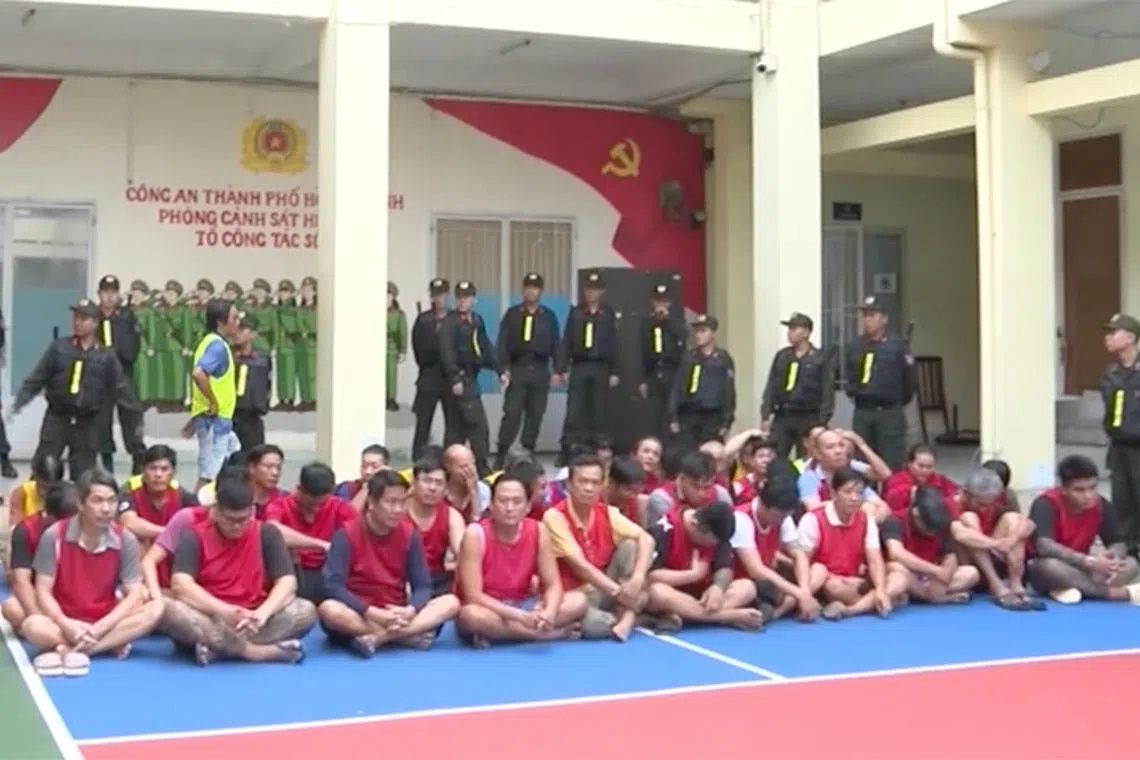
Vietnamese law enforcement authorities have dismantled what officials describe as two exceptionally sophisticated betting operations that collectively processed more than US$133 million in illegal wagers, marking a significant escalation in the government's efforts to suppress underground gambling networks during the World Cup season. Police in Ho Chi Minh City announced the arrests of 85 suspects on Tuesday following coordinated raids conducted in late June, targeting what they characterised as highly organised criminal enterprises with established hierarchies and strict operational protocols.
The two rings under investigation had accumulated an estimated US$133 million in illicit transactions since October 2025, according to statements released by local authorities. This figure underscores the enormous scale of Vietnam's underground gambling market, where despite comprehensive legal prohibitions, criminal syndicates continue to flourish by exploiting global sporting events as opportunities to expand their customer base and increase betting volumes. The timing of these operations alongside the World Cup represents a deliberate strategic choice by these networks, capitalising on heightened public interest in international football matches.
What distinguishes these particular operations from routine illegal gambling enterprises is their structural sophistication. Leaders confessed to establishing complex distribution chains whereby they obtained premium betting accounts from individuals operating across the Cambodian border, then systematically subdivided these master accounts into multiple tiers of agent and member accounts. This hierarchical architecture allowed the rings to reach thousands of individual gamblers while maintaining organisational control and ensuring that profits flowed upward through the network. The arrangement exploited the relative openness of Cambodia's gambling sector to channel unlicensed betting services into Vietnam's more tightly regulated environment.
The crackdown extends well beyond these two targeted operations. Vietnam's Ministry of Public Security reported that police had dismantled 73 separate gambling enterprises nationwide during the first three weeks of the World Cup, resulting in the arrest of 346 individuals suspected of involvement in illegal gambling and football betting. The cumulative financial scale of these operations dwarfs the two major rings alone, with authorities estimating that transaction volumes across all confiscated operations total thousands of billions of Vietnamese dong—equivalent to several hundred million dollars. This demonstrates the pervasive nature of underground betting in the country and the tremendous enforcement challenge officials face.
For Malaysian readers, the Vietnamese situation reflects broader patterns visible across Southeast Asia, where rapid internet penetration has transformed illegal gambling from a localised vice into a transnational digital enterprise. Like Vietnam, Malaysia maintains strict prohibitions on most forms of online gambling while battling sophisticated networks that exploit technological advantages and cross-border financing to sustain their operations. The Cambodian connection highlighted in Vietnamese investigations mirrors similar regional trafficking patterns, where countries with more permissive regulatory frameworks serve as operational bases for supplying services to neighbouring markets with stronger prohibitions.
Colonel Bui Tuan Anh of Vietnam's public security ministry characterised the enforcement response as part of systematic efforts to eliminate gambling infrastructure during high-profile sporting events. The government recognises that international tournaments create windows of vulnerability, when legitimate excitement about football matches provides perfect cover for illegal betting promoters to recruit new customers and process unprecedented transaction volumes. By concentrating enforcement resources during these periods, authorities attempt to disrupt the supply side of the market, though evidence suggests that organised networks quickly adapt and resume operations once immediate enforcement pressure subsides.
The involvement of Cambodia in these operations highlights the regional nature of Southeast Asian gambling networks. The fact that betting account providers based in Cambodia can directly supply infrastructure to Vietnamese syndicates demonstrates how porous national boundaries have become in the digital economy. Criminal enterprises exploit regulatory arbitrage, positioning themselves in jurisdictions with minimal oversight while serving customers across the entire region. This transnational dimension complicates enforcement efforts, as Vietnamese authorities have limited jurisdictional reach beyond their borders and must rely on diplomatic channels to address the supply side of their gambling crisis.
Vietnamese government officials have prioritised crackdowns during sporting events as a visible demonstration of state authority and commitment to combating organised crime. However, the recurring nature of these operations—the government conducts periodic mass arrests but gambling networks consistently re-emerge—suggests that enforcement alone cannot eliminate the underlying market demand. The profitability of illegal gambling remains extraordinarily high given the combination of restricted legal betting options, widespread public interest in sports, and the technical ease with which digital betting platforms can be deployed. Until Vietnam considers expanding legal, regulated gambling options or addressing the root causes driving demand, supply-side enforcement will likely remain a repetitive cycle.
The 2026 World Cup tournament being hosted across Canada, Mexico, and the United States will undoubtedly generate further intensity in betting activity globally. For Southeast Asian law enforcement agencies grappling with similar underground gambling markets, the Vietnamese experience provides both a cautionary tale and a strategic roadmap. The coordination demonstrated across multiple Vietnamese provinces, the sophisticated targeting of operational infrastructure, and the sustained focus on hierarchical criminal networks offer lessons for other regional governments. Yet the sheer volume of money involved—hundreds of millions of dollars flowing through underground channels—suggests that even successful enforcement operations represent merely temporary disruptions to fundamentally resilient criminal enterprises.

