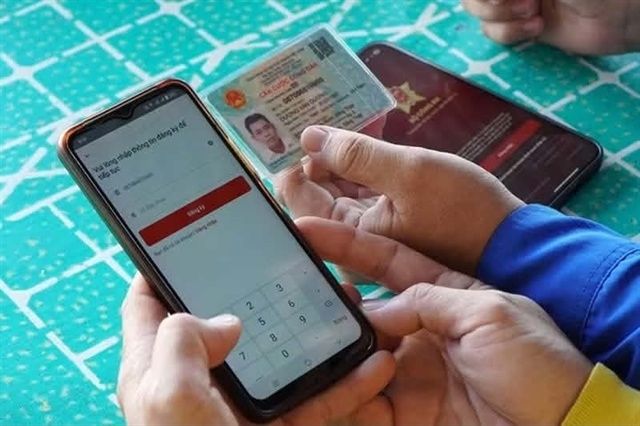
Vietnam has moved to expand access to its electronic identification system by permitting foreign nationals with lawful residence status to establish e-ID accounts at multiple security levels, according to a fresh government directive announced by the Vietnam News Agency. The policy change represents a significant modernisation of the country's digital authentication infrastructure, positioning it more favourably for international business and cross-border transactions that increasingly depend on reliable digital identity verification.
The amended legislation clarifies eligibility pathways for different categories of users across Vietnam's tiered e-ID framework. Vietnamese citizens aged six years and above who hold valid national identity cards qualify for either Level 1 or Level 2 electronic identification status upon application. Younger citizens under six who have been issued identity documentation may register for Level 1 accounts, which represents the foundational tier of the system. This age-based approach acknowledges the practical reality that children in Vietnam now routinely receive identification documentation earlier than in previous decades.
Foreign nationals residing lawfully within Vietnam's borders gain equivalent privileges, able to request electronic identification at any hierarchical level within the system. This provision extends considerable benefit to the substantial expatriate communities in Ho Chi Minh City, Hanoi, and other urban centres, as well as to international investors and business professionals conducting operations in the country. The removal of nationality-based restrictions signals Vietnam's intent to facilitate smoother integration of foreign residents into digital governance systems and reduce administrative friction for international commercial activity.
The decree fundamentally alters how Vietnamese authorities handle documentation requirements by introducing a principle of non-duplication. When personal or organisational data have already been captured and incorporated into official systems, agencies are prohibited from demanding that citizens or entities resubmit identical paperwork. This administrative innovation directly tackles a persistent source of frustration in many Southeast Asian bureaucracies, where citizens frequently encounter requests for documents already held by other government departments. The consolidation reflects best practices increasingly adopted by advanced digital societies seeking to reduce citizen burden and administrative overhead.
A particularly transformative aspect of the new rules concerns the national identification application's expanded capacity to house diverse credential types. The government has compiled an extensive roster of 66 categories of documents applicable to individuals that may now be integrated and made accessible through the digital platform. These encompass vital records such as birth certificates and residence verification letters, travel authorisation documents including ordinary passports and visa endorsements, and economic credentials like driving licences, vehicle registration papers, and investment authorisations. This consolidated repository effectively positions the national e-ID app as a multipurpose digital wallet.
Organisations and agencies operating or registered within Vietnam face similarly streamlined pathways, with 140 distinct document categories now eligible for incorporation into their electronic credentials. Business entities can store seal specimen registrations, entity identification certificates, operational licences, and trade authorisation documents within the centralised system. This extensive range of corporate documentation substantially reduces the need for businesses to maintain parallel document management systems or repeatedly furnish credentials to different regulatory bodies across Vietnam's government structure.
The inclusive approach to organisational participation extends beyond private enterprise to encompassing all agencies and organisations formally established or registered for operations within Vietnam's jurisdiction. Such entities may request electronic identification accounts at any operational level without regard to their sector or ownership structure. This democratised access principle removes potential barriers that might otherwise exclude civil society organisations, social enterprises, or state-owned enterprises from enjoying the administrative benefits of digital identification.
For Malaysian businesses and investors with operations or aspirations in Vietnam, this regulatory development carries tangible implications. Malaysian firms operating joint ventures, manufacturing facilities, or regional headquarters in Vietnam will likely experience smoother documentary processes, reduced requirements to maintain extensive hard-copy filing systems, and potentially faster contract execution and regulatory compliance cycles. The interoperability benefits become particularly pronounced for multinational corporations managing cross-border transactions that demand credible digital verification of parties and their authority to transact.
The September 28, 2026 implementation date provides Vietnamese authorities and potential users with approximately eighteen months to prepare for the transition. This timeline allows government agencies to complete system integration work, testing, and staff training. Private sector organisations and individual users will have adequate runway to familiarise themselves with updated account creation procedures and the expanded functionality of the e-ID application. The phased approach to rollout reflects lessons learned from previous large-scale digital government initiatives across Southeast Asia.
Broader Southeast Asian context suggests Vietnam is following a regional trajectory toward comprehensive digital identity ecosystems. Neighbouring Thailand, Indonesia, and the Philippines have pursued comparable modernisation initiatives, though with varying degrees of success and differing scope. Vietnam's inclusive approach—particularly the deliberate inclusion of foreign nationals—potentially positions the country favourably for attracting international talent and investment, as digital convenience increasingly factors into expatriate location decisions and foreign investor confidence calculations.
The consolidation of 206 document categories into a unified digital platform represents substantial infrastructure consolidation. Rather than requiring citizens to visit multiple agency offices or maintain parallel record systems, Vietnam is constructing a unified source of truth for credentials. This centralised repository improves data accuracy by eliminating inconsistencies that arise when identical information exists across fragmented databases, while simultaneously enhancing security by concentrating authentication functions. The approach aligns with digital transformation principles increasingly adopted across the ASEAN region and internationally.
For Southeast Asian policymakers observing Vietnam's implementation, the decree offers instructive lessons about administrative reform design. By removing unnecessary documentation requirements, extending digital access to foreign residents, and consolidating diverse credential types within unified platforms, Vietnam addresses multiple governance inefficiencies simultaneously. The success or failure of this integration will likely influence how other regional governments approach their own digital identity modernisations, particularly regarding the strategic choice of whether to extend digital privileges to international residents as a competitive differentiator.

