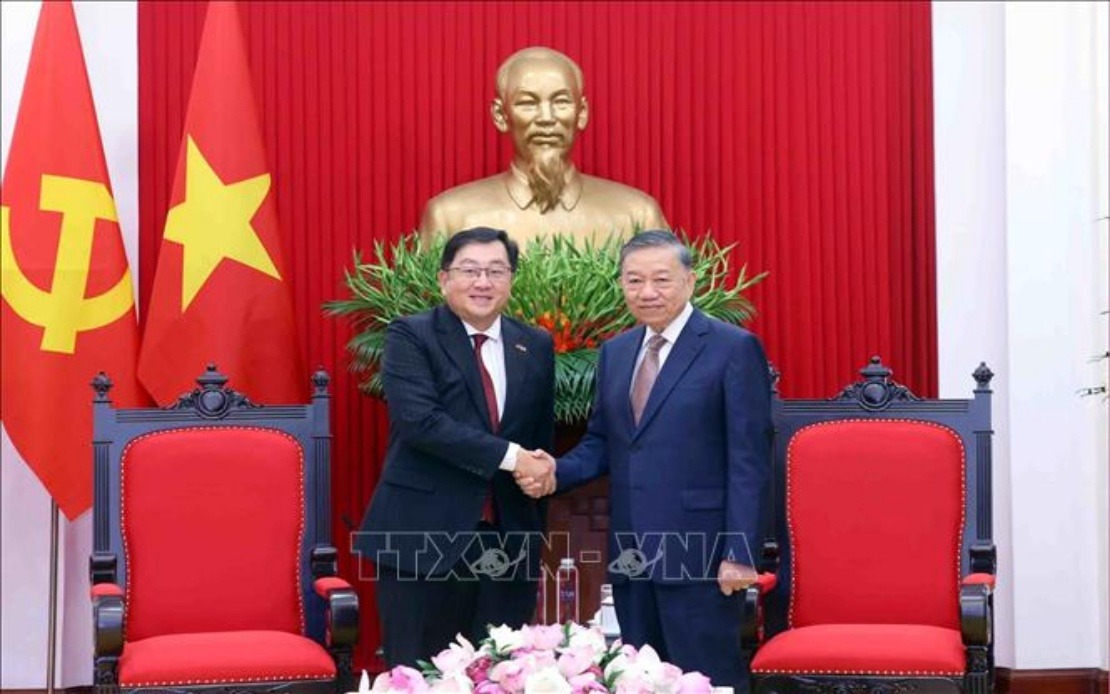
Vietnamese President To Lam has described the relationship between Vietnam and Malaysia as increasingly dynamic, characterized by deepening political trust and burgeoning economic cooperation. The assessment came during his meeting with outgoing Malaysian Ambassador to Vietnam Datuk Tan Yang Thai on Wednesday, where the Vietnamese leader took the opportunity to extend diplomatic regards to His Majesty Sultan Ibrahim, King of Malaysia, and Prime Minister Datuk Seri Anwar Ibrahim. President Lam extended an invitation for both leaders to visit Vietnam, signalling Hanoi's commitment to nurturing high-level engagement with Kuala Lumpur.
The timing of this diplomatic exchange carries significance for Southeast Asian observers monitoring intra-ASEAN dynamics. Vietnam's explicit recognition of Malaysia's importance within its broader foreign policy architecture reflects a strategic realignment in how Hanoi prioritizes relationships within the regional bloc. By emphasizing the Comprehensive Strategic Partnership framework, President Lam underscored that the two nations view their collaboration as extending beyond transactional economic interests into the realm of substantive geopolitical coordination. This positioning is particularly noteworthy given the complex security environment across Southeast Asia, where multilateral cooperation mechanisms serve as stabilizing forces.
Economically, the bilateral relationship has demonstrated remarkable momentum. Two-way trade between the nations reached US$10.8 billion during the first half of 2026, representing a striking 40 per cent increase compared to the corresponding period the previous year. This growth trajectory suggests that despite global economic uncertainties and shifting supply chain patterns, Vietnamese and Malaysian businesses continue finding mutual benefit in deepening commercial ties. For Malaysian investors, Vietnam's expanding manufacturing base and growing consumer market present compelling opportunities, while Vietnamese exporters benefit from Malaysia's established logistics infrastructure and regional trade networks.
Malaysia's investment position within Vietnam underscores the depth of economic integration between the two nations. As the third-largest investor among ASEAN member states and tenth-largest overall among 154 countries and territories with capital commitments in Vietnam, Malaysia occupies a pivotal position in Vietnam's inbound foreign direct investment landscape. This standing reflects decades of accumulated business relationships, cultural familiarity, and regulatory predictability that have allowed Malaysian firms to establish substantial operations across Vietnamese manufacturing and services sectors. The consistency of Malaysian investment flows, even during periods of regional economic volatility, demonstrates confidence in Vietnam's investment environment.
Beyond conventional trade metrics, both nations have identified strategic convergence around emerging economic domains. Digital economy development, green economic transition, energy and electricity connectivity, and maritime cooperation have emerged as priority areas for bilateral collaboration. These thematic focuses align with broader ASEAN sustainability commitments and reflect recognition that the region's future prosperity hinges on managing the twin challenges of economic development and environmental stewardship. For Malaysian policymakers, Vietnam's progress in renewable energy integration and digital infrastructure offers both competitive benchmarks and partnership opportunities within a shared regional context.
President Lam's enumeration of achievements during Ambassador Tan's tenure provides insight into the mechanics of Vietnam-Malaysia engagement. Political relations have intensified through regular high-level and official visits channelled through party, state, government, and parliamentary mechanisms, indicating that relationship-building extends across multiple institutional vectors rather than concentrating solely within foreign ministries. This diversified engagement approach creates redundancy and resilience in bilateral ties, ensuring that diplomatic relationships can weather disruptions in any single channel. The establishment of effective bilateral cooperation mechanisms suggests both nations have invested in institutional frameworks capable of addressing issues systematically.
People-to-people exchanges constitute another dimension of deepening ties frequently overlooked in analyses focusing primarily on governmental and commercial interactions. Growing contact between citizens of both nations—through tourism, education, cultural activities, and professional networks—creates constituencies within each country with personal interest in stable, cooperative bilateral relations. These grassroots connections often prove more durable than state-level agreements, as they develop organic support networks resistant to short-term political fluctuations. Malaysian students studying in Vietnam, Vietnamese workers in Malaysian industries, and bilateral cultural events all contribute to mutual understanding and goodwill.
President Lam's suggestions for strengthening the relationship moved beyond vague aspirations toward specific actionable domains. Enhancing defence and security cooperation, coupled with intensified maritime affairs collaboration, acknowledges the geopolitical dimension underlying economic partnerships. The South China Sea remains a contested space where Vietnam and Malaysia both maintain interests in upholding international law and preventing unilateral actions. Deepening security dialogues between Hanoi and Kuala Lumpur can enhance mutual understanding of respective strategic concerns and create frameworks for coordinated responses to regional challenges. Such cooperation serves broader ASEAN interests in maintaining regional stability.
Ambassador Tan's parting remarks reaffirmed Malaysia's commitment to strengthening ties while articulating particular enthusiasm for digital economy, green economy, and renewable energy collaboration. This emphasis reflects Malaysia's own strategic priorities under current leadership, particularly the Madani framework's focus on creating inclusive prosperity while addressing climate imperatives. The convergence of Malaysian and Vietnamese policy priorities around these domains suggests ample room for complementary initiatives that could benefit both economies while contributing to ASEAN's collective sustainability goals. Ambassador Tan's pledge to leverage his professional experience and affection for Vietnam in promoting bilateral relations suggests continued momentum in Vietnamese-Malaysian relations regardless of personnel changes.
The reciprocal nature of diplomatic courtesies extended during this engagement—with President Lam receiving a Malaysian royal invitation to visit Malaysia—indicates both nations view their relationship as reciprocal partnerships rather than hierarchical arrangements. This egalitarian framing carries symbolic importance for Malaysia, affirming that despite Vietnam's larger population and manufacturing prowess, the bilateral relationship rests on mutual respect and recognition of each nation's independent agency. For regional observers, such balanced diplomatic language suggests neither nation seeks to establish dominance or extract concessions unilaterally, establishing a model of ASEAN cooperation grounded in genuine partnership principles.
Looking forward, the trajectory of Vietnam-Malaysia relations will likely influence broader ASEAN cohesion and effectiveness. As the regional organization navigates complex geopolitical pressures and competing visions for regional architecture, strong bilateral relationships among member states provide the foundation for collective action. Vietnam and Malaysia, representing different ASEAN constituencies and strategic perspectives, have demonstrated capacity to identify common ground and expand cooperation across multiple domains. Their evolving partnership suggests that beneath surface-level disagreements on regional issues, Southeast Asian nations retain fundamental interest in cooperation and mutual prosperity.

