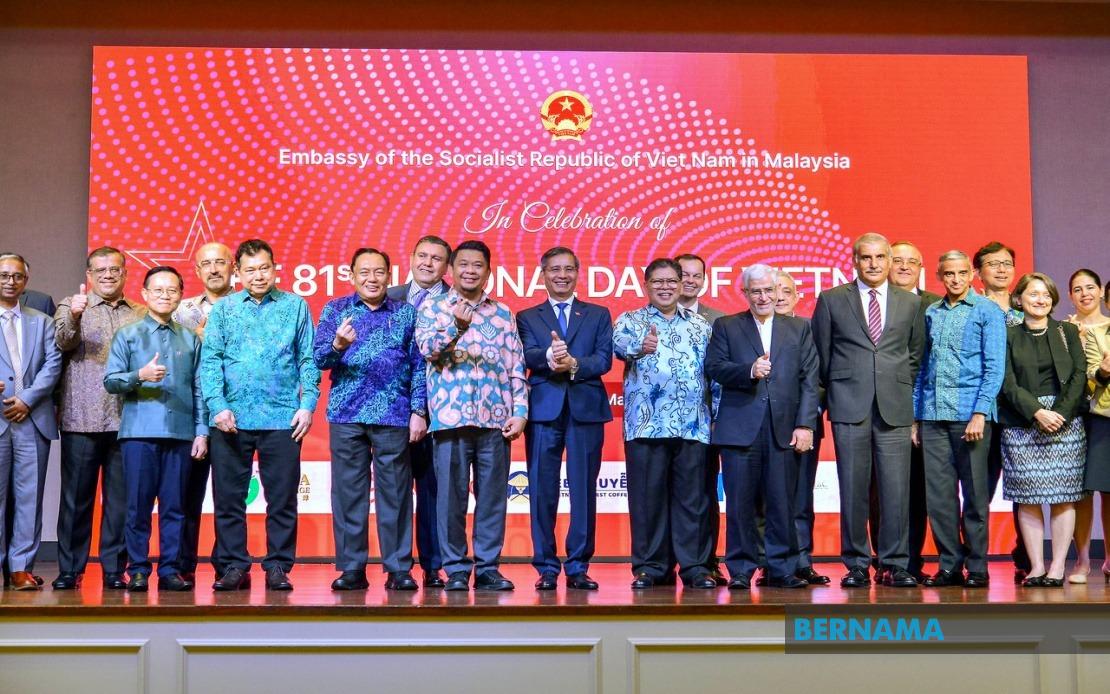
Vietnam and Malaysia stand at a turning point in their diplomatic relationship, with bilateral ties accelerating under a newly elevated Comprehensive Strategic Partnership that promises to reshape cooperation across multiple sectors. Ambassador Dinh Ngoc Linh used Vietnam's 81st National Day celebration in Kuala Lumpur to underscore the strategic importance of the partnership, emphasising that Malaysia represents a valued anchor for Vietnam amid an increasingly volatile geopolitical landscape. The elevation of relations to CSP status in November 2024 marks the culmination of five decades of steady diplomatic engagement, transforming what was once a standard bilateral relationship into a more institutionalised framework for deeper collaboration.
The breadth of cooperation between the two nations extends far beyond traditional diplomacy. Over the past year, both countries have expanded their engagement across trade and investment channels, agricultural partnerships, educational exchanges, and cultural initiatives that bring their populations closer together. Tourism has emerged as another growth area, reflecting the increasing ease of travel and people-to-people connections between Southeast Asia's most dynamic developing economies. These multifaceted linkages suggest that the CSP framework is not merely symbolic but represents a genuine commitment to structural integration across economic and social dimensions that will benefit businesses and citizens in both nations.
Defence and security cooperation constitutes a particularly significant pillar of the partnership, according to the ambassador. This dimension of the relationship carries particular weight given the complex security environment across Southeast Asia, where maritime disputes, great power competition, and transnational challenges require close coordination among regional states. By prioritising defence cooperation, Vietnam and Malaysia are building mutual confidence and demonstrating their shared commitment to rules-based stability in the region. Such security partnerships often serve as foundation stones for broader diplomatic alignment, creating trust that extends into trade negotiations, investment protection, and crisis management.
The parliamentary exchange programme highlighted by Ambassador Dinh deserves special attention for Malaysian policymakers and observers. These legislative-level interactions create direct channels of communication between elected representatives, fostering understanding beyond the executive branch. For Malaysia, such exchanges strengthen relationships with a neighbouring nation of over 100 million people that shares ASEAN membership and increasingly intertwined economic interests. The emphasis on generational continuity in these exchanges suggests that both governments view the partnership as a long-term strategic commitment rather than a transactional arrangement dependent on individual leaders or temporary political circumstances.
Regionally, the partnership positions both nations as anchor states within ASEAN's broader architecture. Ambassador Dinh's remarks about strengthening ASEAN unity, resilience, and centrality reflect shared concerns about preserving the bloc's relevance and cohesion as external powers compete for influence in Southeast Asia. Vietnam and Malaysia, despite their geographical distance within the region, share interests in maintaining ASEAN's central role in regional diplomacy and resisting pressures that might fragment the organisation. This commitment becomes particularly important as ASEAN navigates competing interests from China, the United States, India, and other powers seeking to shape regional outcomes.
Malaysia's strategic positioning benefits considerably from this deepened partnership. As a country with significant Chinese diaspora communities, important maritime interests, and a role as a voice for moderate Islam within ASEAN, Malaysia can leverage enhanced relations with Vietnam to strengthen its position within the bloc while maintaining equidistance from competing power blocs. The partnership also offers Malaysian businesses expanded opportunities in Vietnam's rapidly growing economy, particularly in sectors such as infrastructure development, manufacturing, and services that complement Malaysia's existing competitive advantages.
The ambassador's personal dimension to his remarks—noting his impending conclusion of three years' service—should not be dismissed as mere ceremonial flourish. Career diplomats like Dinh often serve as institutional memory and relationship custodians, and his expressed commitment to following bilateral developments demonstrates the personal investment many officials place in Southeast Asian partnerships. His successor will inherit a relationship framework that the outgoing ambassador has helped strengthen, suggesting continuity in the deepening trajectory of Vietnam-Malaysia ties regardless of individual personnel changes.
Economic dimensions of the partnership warrant closer examination for Malaysian stakeholders. Vietnam's emergence as a manufacturing hub, particularly following supply chain diversification away from China, creates opportunities for Malaysian firms in intermediate goods, technology transfer, and joint ventures. Conversely, Malaysia's advanced services sector and established financial infrastructure offer avenues for Vietnamese investment and partnership. The CSP framework provides a structured environment for exploring these complementarities, potentially reducing transaction costs and regulatory uncertainties that often hamper bilateral business expansion.
The timing of this strategic elevation also reflects broader trends in Southeast Asian diplomacy. As great power competition intensifies and the region faces transnational challenges from pandemics to climate change, bilateral partnerships have become more sophisticated and multifaceted. The CSP approach demonstrates that both nations recognise benefits in comprehensive cooperation rather than compartmentalised relationships. For Malaysian policymakers, this suggests that Vietnam is likely to be a consistent partner in addressing regional challenges, from maritime security to economic integration initiatives.
Cultural and educational exchanges deserve particular attention in the CSP framework. These soft power dimensions often generate the political goodwill necessary for cooperation in more sensitive areas. Malaysian universities hosting Vietnamese students, cultural performances, and tourism exchanges create constituencies in both countries with personal investment in healthy bilateral relations. Deputy Foreign Minister Datuk Lukanisman Awang Sauni's attendance at the National Day celebration signals Malaysia's official commitment to this partnership, reinforcing its importance beyond individual ministries.
Looking forward, the CSP framework should enable both nations to coordinate more effectively on issues ranging from maritime delimitation to humanitarian assistance and disaster relief. The South China Sea remains a potential flashpoint, and having robust bilateral mechanisms helps prevent misunderstandings while creating pathways for joint problem-solving. For Malaysia, maintaining a strong partnership with Vietnam provides diplomatic flexibility and reinforces its ability to shape regional outcomes in consultation with key stakeholders rather than accepting positions dictated by external powers.
The elevation to Comprehensive Strategic Partnership status ultimately reflects mature appreciation within both governments that bilateral relations serve mutual interests and enhance each nation's ability to navigate regional and global challenges. Malaysia gains a strong, committed partner in one of Southeast Asia's most important economies, while Vietnam secures relationships with a moderate ASEAN voice respected across the region. This strategic convergence suggests that both nations will continue deepening cooperation across multiple dimensions, creating a durable partnership that shapes Southeast Asian dynamics for decades ahead.

