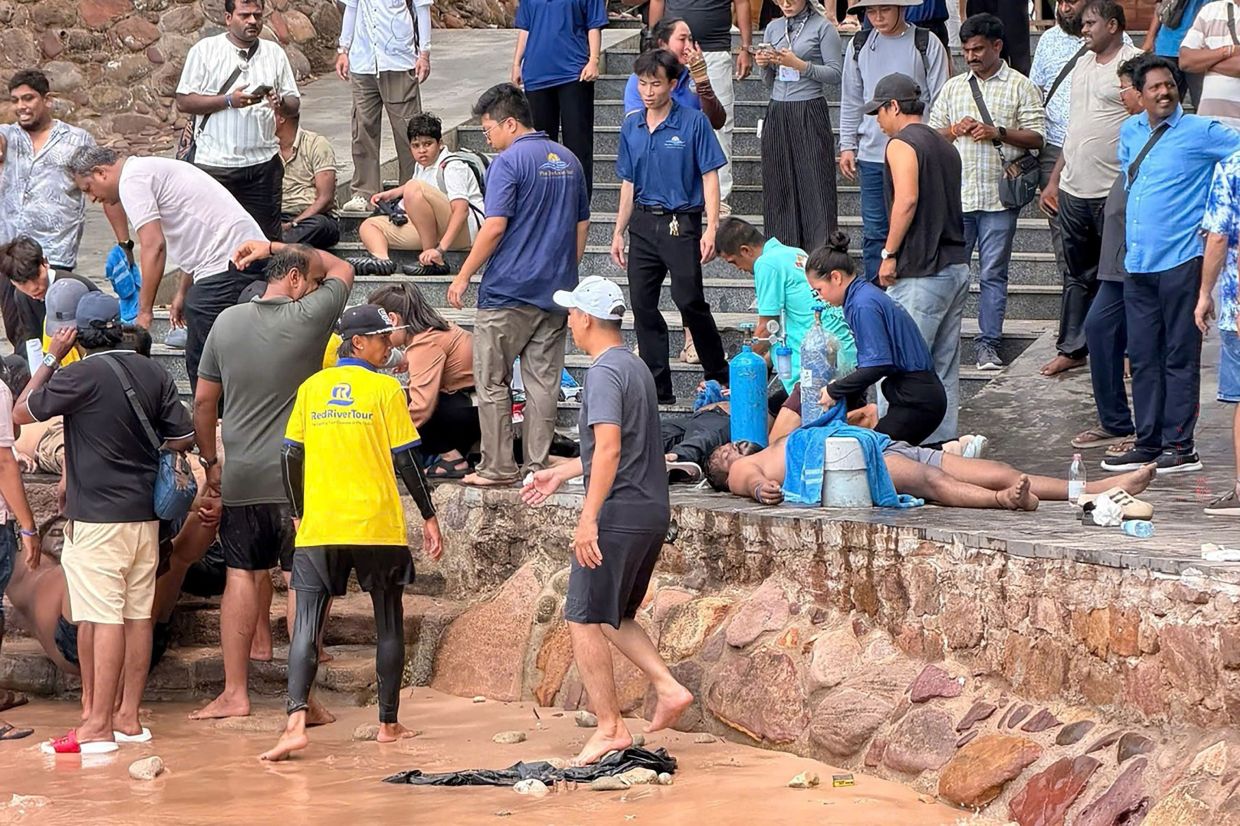
Vietnam's government has launched a sweeping investigation into a maritime disaster that claimed 15 lives when a speedboat capsized near Phu Quoc Island on July 11, 2026. Prime Minister directed immediate action across multiple agencies to investigate the incident, treat survivors, and prevent similar tragedies. The tragic event has prompted one of the country's most coordinated responses to a tourism-related accident, with authorities mobilizing medical resources and initiating comprehensive safety reviews across Vietnam's waterway network.
The speedboat was carrying 32 Indian tourists along with four crew members and guides when it overturned near Hon May Rut Ngoai within the Phu Quoc Special Zone. Among those onboard, 15 Indian nationals—comprising 13 men and two women—lost their lives, while rescue operations managed to bring 21 people safely to shore. The sudden loss of life highlighted vulnerabilities in maritime safety protocols at one of Southeast Asia's premier tourist destinations. The incident occurred on what should have been a routine recreational excursion, transforming an ordinary afternoon into a humanitarian crisis.
In his official dispatch, the Prime Minister extended formal condolences to the bereaved families and emphasized the urgency of providing comprehensive medical care to survivors. Authorities were instructed to deploy all available medical resources and pharmaceutical supplies to treat the injured and prevent further loss of life and property. This directive underscores Vietnam's commitment to managing the immediate human toll while simultaneously addressing systemic safety failures that may have contributed to the accident. The government's response reflects growing international scrutiny of tourism safety standards across the region.
An Giang Province, which administers Phu Quoc Island, received primary responsibility for coordinating the investigation and assessment of the accident's underlying causes. Provincial authorities were tasked with working alongside relevant agencies and emergency forces to thoroughly examine what went wrong and identify any administrative or operational deficiencies. This localized approach enables investigators to draw on regional expertise while maintaining oversight from central government. The provincial government's capacity to manage such investigations will directly influence both the comprehensiveness of findings and the implementation of corrective measures.
The Ministry of Public Security received explicit instructions to conduct an urgent and thorough investigation into the accident's cause. Officials were directed to identify any violations of law and pursue strict legal action against responsible organizations or individuals. This formal mandate suggests authorities will examine whether proper licensing procedures were followed, whether safety equipment met standards, and whether crew qualifications were adequate. The potential for criminal liability could significantly influence the investigation's scope and the accountability measures that follow.
Simultaneously, the Ministry of Construction has been assigned to review and inspect maritime and inland waterway safety measures throughout the area surrounding the accident site and in comparable locations. This broader mandate indicates authorities recognize the incident may represent systemic weaknesses rather than isolated failures. By examining safety protocols across similar operational environments, Vietnam can identify patterns and implement region-wide improvements. Such comprehensive audits often reveal hidden vulnerabilities in inspection regimes, safety certification processes, and emergency response procedures that individual accident investigations might overlook.
The Ministry of Foreign Affairs has been tasked with coordinating closely with the Indian Embassy in Vietnam regarding consular assistance, citizen protection, and matters related to the victims and their families. This diplomatic engagement proves crucial for maintaining bilateral relations and ensuring Indian nationals receive appropriate support. The establishment of contact points in Ho Chi Minh City and Hanoi by the Indian Embassy demonstrates both countries' commitment to facilitating communication and assistance for affected nationals. Such cooperation sets an important precedent for how maritime accidents involving foreign nationals should be handled across Southeast Asia.
The speedboat's manifest revealed 30 men and two women from India among the 32 tourist passengers, information the Indian Embassy compiled and distributed to support identification and family notification efforts. This demographic composition highlights that maritime accidents in the region disproportionately affect working-age adults and families traveling together. The rapid compilation and dissemination of passenger information demonstrates improved crisis communication protocols, though it also raises questions about advance safety briefings and passenger manifest verification procedures that should have preceded departure.
For Malaysia and the broader Southeast Asian tourism sector, the Phu Quoc incident carries significant implications. As regional destinations compete for international visitors, safety standards become increasingly critical to maintaining tourism flows and protecting national reputations. Malaysia, which hosts millions of international visitors annually through attractions involving water transport and outdoor activities, should review its own maritime safety enforcement and tour operator licensing procedures. The incident underscores that rapid regulatory response and transparent investigation protocols protect both travelers and the long-term viability of tourism industries.
The rescue of 21 individuals demonstrates that despite tragic losses, emergency response mechanisms in the area did function to some degree. However, the disparity between those saved and those lost suggests capacity or response time limitations may warrant examination. Vietnam's multi-agency response model offers lessons for regional governments facing similar challenges. The comprehensive nature of the investigation—spanning security, construction, and foreign affairs ministries—reflects recognition that maritime safety requires integrated coordination across multiple governance domains rather than isolated technical fixes.
This tragedy occurs within Vietnam's broader tourism development context, where coastal regions like Phu Quoc face pressure to expand capacity and accommodate growing visitor numbers. Balancing economic development with safety and environmental protection remains a central tension in Southeast Asian tourism policy. The government's swift investigative response suggests commitment to addressing these tensions through evidence-based reform rather than deflection or minimization. However, implementation of recommended changes and sustained enforcement of safety standards will ultimately determine whether this investigation generates meaningful improvements or becomes another documented incident within an ongoing pattern of inadequate regulatory oversight.

