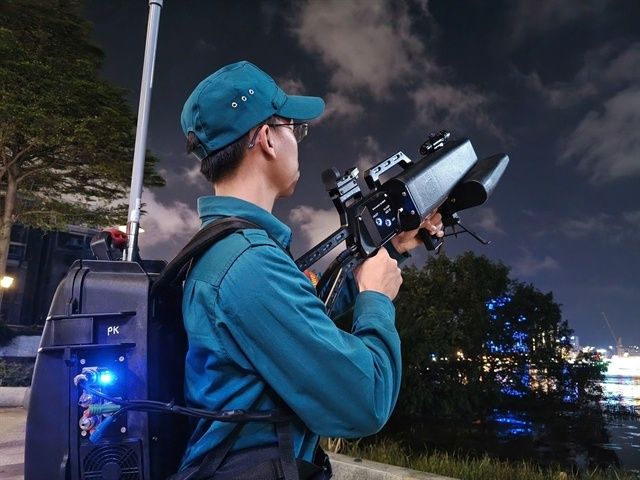
Vietnam's Ministry of Public Security, through its Immigration Department, has issued an urgent public warning about the escalating problem of unauthorised drone operations in airport airspace, describing the trend as a mounting threat to aviation safety across the nation. The alerts come as the frequency of such incidents has accelerated sharply, with authorities documenting substantial increases in airspace breaches over recent years that have forced emergency interventions and created genuine risks of catastrophic collisions between unmanned aircraft and commercial airliners.
The scale of the problem has grown considerably. Government data shows that 34 cases involving drones or other unauthorised aircraft entering restricted airport airspace occurred throughout 2025, while the first six months of 2026 alone saw 17 additional incidents. This trajectory demonstrates a troubling pattern that has prompted increasingly stringent official responses and public messaging from transport and security agencies concerned about the implications for national aviation infrastructure.
Whenever a drone breaches airport airspace, air traffic control personnel must immediately implement emergency protocols designed to prevent loss of life. These responses include halting all scheduled takeoffs, cancelling active landing operations, or ordering aircraft already in flight to divert to alternative airports. Such disruptions ripple through entire aviation systems, creating cascading delays and operational chaos that extend far beyond the immediate vicinity of the incident airport.
The financial consequences have proven substantial and measurable. Vietnam Airlines, the country's flagship carrier, documented the impact during a particularly concentrated period between mid and late February, when drone-related incidents cost the airline approximately VNĐ5.6 billion (US$215,000) and directly disrupted travel plans for roughly 9,200 passengers through cancellations and schedule modifications. In a separate assessment, Danang International Airport calculated direct losses exceeding VNĐ10 billion ($384,000) from such incidents, a figure that captures only tangible expenses and excludes broader economic damage to supply chains, tourism operators and travellers forced to reschedule journeys.
Beyond financial metrics, aviation authorities emphasise the genuine physical peril. A collision between a drone and a commercial aircraft during the critical phases of takeoff or landing could trigger a catastrophic accident with fatal consequences for everyone aboard. This risk is not theoretical; engineers have demonstrated through testing that drone impacts can cause severe damage to aircraft structures and engine systems, particularly during vulnerable flight phases when pilots have limited manoeuvrability and altitude margins.
Vietnam's legal framework establishes comprehensive requirements for drone operations. Prospective operators must complete registration procedures and secure formal flight permits before conducting any aerial activities. However, registration alone confers no operational authority; permits function as conditional licences that specify precisely where, when, at what altitude, and under what circumstances an individual may legally fly their drone. Compliance is mandatory, and enforcement mechanisms are correspondingly severe.
Violators face escalating penalties calibrated to the severity of breaches. Administrative sanctions, civil liability claims, and criminal prosecution all remain available tools depending on circumstances. A 2025 government decree empowered authorities to impose monetary fines, seize confiscated drones, and suspend flight privileges for violations. Prosecutors are particularly aggressive regarding incidents that obstruct air traffic or endanger aviation safety, which they treat as criminal matters capable of resulting in substantial prison sentences up to 15 years in the most egregious cases.
The prosecution threshold is notably low, meaning authorities need not demonstrate that an actual collision or accident occurred to bring criminal charges. Operating a drone into an aircraft's approach corridor, takeoff zone, or landing area creates the requisite legal culpability by itself, as such conduct establishes a clear collision risk. Conviction for these offences carries fines ranging from VNĐ10 million to VNĐ50 million ($384 to $1,920), non-custodial reform periods extending to two years, or imprisonment from three months to two years, plus disqualification from specified employment categories for one to five years post-release.
Authorities are appealing directly to drone operators to respect permit boundaries strictly and comply with all temporal, geographic and operational conditions. Simultaneously, officials have encouraged civilians to report any observed unauthorised drone activity near airports to police departments, military installations, or airport security personnel. This approach shifts some enforcement responsibility toward public participation, recognising that systematic monitoring across numerous facilities requires community cooperation.
Official messaging from security agencies frames drone safety as a collective social responsibility rather than a purely regulatory matter. The consistent official line emphasises that irresponsible drone use carries severe consequences not only for individual operators but for air travel integrity, public safety and national security broadly. For Malaysian and Southeast Asian readers, Vietnam's experience offers a cautionary example of how rapidly drone-related aviation incidents can proliferate without strict regulatory frameworks and demonstrates the substantial economic and safety burdens that uncontrolled unmanned aircraft operations impose on regional aviation sectors already navigating complex operational challenges.

