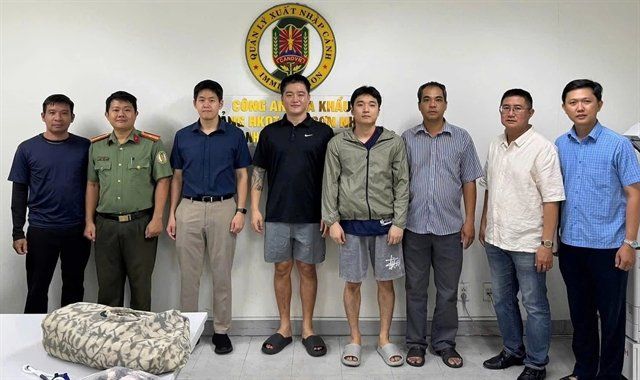
Vietnamese law enforcement has dismantled another chapter in a transnational online fraud operation, arresting three South Korean nationals wanted by Interpol and transferring them to Seoul authorities. The arrests, conducted by Ho Chi Minh City Police Investigation Agency in coordination with the Ministry of Public Security's Police Investigation Agency and other units, highlight the growing sophistication of cross-border cybercrime networks operating throughout Southeast Asia.
The three suspects—Wang Taesan (born 1990), Han Joonhee (born 1992), and Bang Giseong (born 1997)—had been the subject of international red notices issued at South Korea's request. According to Vietnamese police, the trio operated an elaborate scheme targeting fellow South Koreans through multiple deception vectors. Their capture on August 3 represents a significant enforcement success in addressing the proliferation of Korean-operated fraud rings that have increasingly used Southeast Asian jurisdictions as operational bases.
The criminal network employed particularly insidious tactics centred on sextortion, a form of extortion that exploits victims' fears and vulnerabilities. The suspects falsely convinced targets that they possessed compromising intimate videos and threatened public exposure unless substantial payments were made. In reality, no such material existed—a deliberate fabrication designed to trigger panic and financial capitulation from victims who feared reputational damage or blackmail.
Beyond sextortion, the operation demonstrated the hallmarks of sophisticated identity fraud infrastructure. The three men systematically impersonated South Korean prosecutors, police officials, and other law enforcement personnel when making contact with potential victims. They deployed forged documents including counterfeit arrest warrants bearing victims' names, lending false credibility to their communications and triggering psychological urgency designed to bypass rational decision-making.
The fraud methodology extended to financial manipulation through false verification procedures. Once victims were convinced of criminal allegations against them, the suspects claimed that their bank accounts had become entangled in unlawful activities. They then demanded money transfers to designated accounts under the pretext of "verification"—a fictional administrative process that would supposedly clear the victims' names. This social engineering approach weaponised official terminology and governmental authority to extract funds from individuals already psychologically destabilised by threats and accusations.
The arrested individuals were transferred to South Korean authorities at Tan Son Nhat International Airport in Ho Chi Minh City, concluding their detention in Vietnam. This cooperative handover reflects the deepening law enforcement collaboration between Vietnam and South Korea in addressing transnational cybercrime. Regular extraditions and prisoner transfers indicate both governments' commitment to dismantling criminal networks that exploit vulnerabilities in digital communication systems.
This operation represents part of a broader pattern that Vietnamese police have been tracking throughout 2024 and into 2025. Earlier enforcement actions in August resulted in the transfer of another South Korean national to Seoul authorities at Noi Bai International Airport in Hanoi. Additionally, on December 31, 2025, Vietnamese police arrested Lee Sammin (born 1996), also a South Korean national subject to an Interpol Red Notice for telecommunications-related online fraud.
Lee Sammin's case reveals the evolution of fraud tactics within Korean criminal networks. Rather than sextortion, this operation targeted investment fraud victims by impersonating financial experts. The conspiracy disseminated false information about purportedly imminent stock listings, encouraging victims to remit money for investment opportunities. Once payment was received, the network misappropriated funds rather than executing legitimate transactions. The operation defrauded victims of approximately US$10,693,343, demonstrating the substantial financial impact individual networks can achieve through coordinated deception.
The clustering of South Korean fraud operations within Vietnamese territory suggests that these groups view Southeast Asia as a permissive operational environment. Vietnam's geographic proximity to South Korea, combined with established migration patterns and relatively affordable telecommunications infrastructure, creates conditions favourable for transnational crime organisers. However, accelerating enforcement actions indicate that both Vietnamese and South Korean authorities are increasingly disrupting these networks.
For Malaysian readers, these arrests underscore the transnational nature of contemporary cybercrime threats. While these particular operations targeted South Korean victims, the methodologies—sextortion, false verification procedures, impersonation of officials—translate readily to Malaysian circumstances. Domestic financial crimes in Malaysia increasingly employ identical social engineering tactics, suggesting that organised networks may adapt and export their operational playbooks across Southeast Asia.
The success of these enforcement operations depends fundamentally on international cooperation mechanisms like Interpol red notices and formal extradition arrangements. Vietnam's willingness to arrest foreign nationals and transfer them to requesting jurisdictions demonstrates the value of multilateral law enforcement frameworks. For Malaysia, maintaining robust partnerships with regional law enforcement agencies and international criminal justice institutions remains essential for addressing the growing sophistication of cybercriminal enterprises.
These arrests also highlight the importance of public awareness regarding common fraud indicators. The tactics employed by Wang Taesan, Han Joonhee, Bang Giseong, and Lee Sammin—urgent demands, appeals to authority, threats of reputational damage—follow recognisable psychological manipulation patterns. Educational initiatives emphasising verification of official communications and skepticism toward unsolicited financial demands can reduce victimisation rates and diminish criminal incentives.

