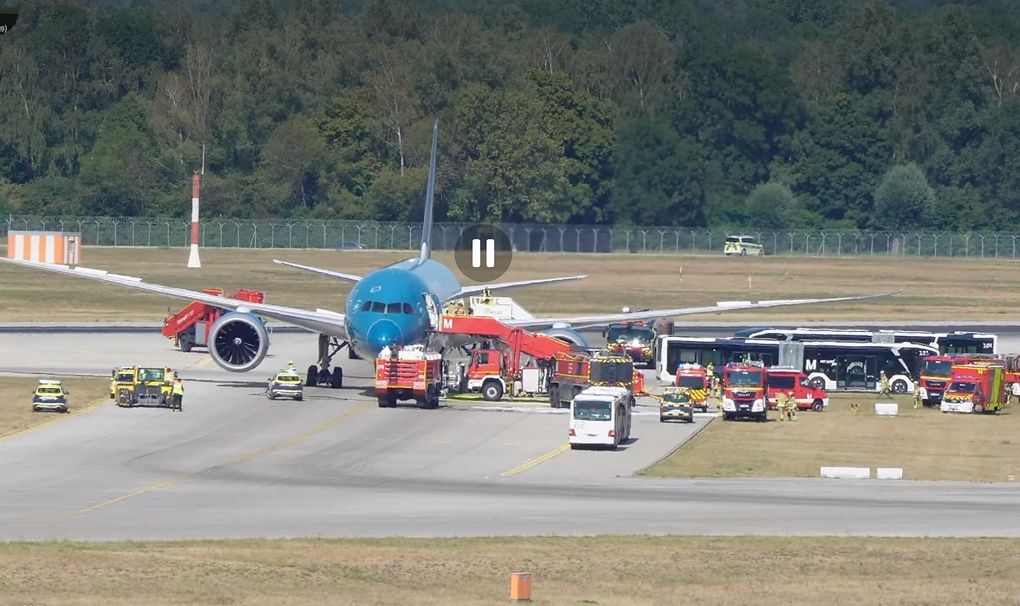
A Vietnam Airlines Boeing 787-9 operating the Munich-to-Hanoi route encountered serious technical difficulties during its takeoff roll on August 15, forcing the crew to abort the flight and make an emergency return to Munich Airport after roughly two hours in the air. The incident, which unfolded with dramatic visual evidence captured by observers near the runway, has raised questions about aircraft maintenance and pre-flight procedures even as aviation authorities move swiftly to investigate the root cause.
According to Vietnam Airlines, the flight crew detected the technical anomaly during the takeoff sequence and executed standard emergency protocols, prioritising passenger and crew safety throughout the incident. The airline confirmed that all persons aboard were accounted for and escorted safely into the terminal following the aircraft's return to Munich. The carrier has not specified the exact nature of the technical problem that triggered the return, pending completion of formal investigations being conducted jointly with German airport authorities and relevant aviation oversight bodies.
Eyewitness footage from the airport vicinity reveals the aircraft accelerating along the runway and rotating—the critical moment when the nose lifts from the tarmac—extremely late in the takeoff sequence, leaving minimal runway length remaining. Observers noted dust being displaced as the Boeing became airborne, a visible sign of the aircraft's marginal clearance from the runway surface during rotation. Such late-rotation scenarios are among the most hazardous situations commercial pilots face, as they leave little margin for error or recovery.
The Aviation Herald, which monitors commercial aircraft incidents globally, reported that the aircraft experienced what it characterised as a "late rotation, tailstrike and runway overrun" condition, meaning the tail section of the fuselage made contact with the runway surface while the aircraft was becoming airborne. This type of contact, even at low speeds, can inflict significant damage to aircraft structures and undercarriage systems. The tailstrike was subsequently accompanied by tyre damage, likely incurred either during the contact event itself or during the emergency landing procedures that followed.
Following the initial incident, the Boeing 787-9 managed to become airborne and climbed to approximately 9,000 feet, where the crew established a holding pattern—a circular flight path around the airport. This tactical manoeuvre served multiple purposes: it allowed the crew and ground engineers at Munich to assess the extent of damage and the aircraft's structural integrity, whilst simultaneously permitting the aircraft to burn fuel and reduce landing weight, a prudent measure given the damage sustained. Emergency response teams at Munich Airport were activated and placed on standby throughout this period, reflecting the serious nature of the situation.
Approximately two hours after the initial takeoff attempt, the aircraft contacted the runway during its emergency landing. That second touchdown produced smoke, consistent with tyre damage and friction from the landing sequence. The aircraft came to rest safely, however, and all occupants were evacuated without injury. The timeline—from initial takeoff problems to safe return—demonstrates both the seriousness of the incident and the professional handling by flight crew and ground personnel.
Vietnam Airlines has assumed responsibility for determining the cause of the incident and is coordinating investigations with Munich Airport authorities, German civil aviation regulators, and technical specialists. The carrier has also committed to providing comprehensive support to affected passengers, including alternative travel arrangements on subsequent services. The airline said that detailed updates would be released once technical inspections of the aircraft are completed and revised operational plans are finalised, suggesting the investigation may take several days or weeks.
The incident carries particular significance for Southeast Asian carriers operating long-haul international routes. Vietnam Airlines, as one of the region's major full-service carriers, operates a growing fleet of modern wide-body aircraft including the Boeing 787-9 Dreamliner and Airbus A350. The airline's Munich and Frankfurt services represent important European connections for Vietnamese passengers and cargo operations. Any extended grounding of affected aircraft could disrupt these strategic routes and necessitate deployment of alternative aircraft or temporary schedule adjustments.
The Boeing 787-9 Dreamliner, which entered service in 2013, has generally maintained a strong safety record across the global fleet. However, sporadic incidents involving this model have occasionally surfaced, prompting ongoing scrutiny from aviation safety authorities. The Munich incident will likely prompt additional attention to takeoff procedures, particularly regarding rotation technique and aircraft weight-and-balance calculations, which directly influence how quickly an aircraft can rotate and clear the runway safely.
For Malaysia and the broader ASEAN region, the incident serves as a reminder of the critical importance of rigorous aircraft maintenance protocols and crew training standards among regional carriers. Malaysia Airlines, AirAsia, and other carriers operating similar aircraft will likely monitor the investigation findings closely. Should the incident ultimately trace to a systemic design flaw or maintenance oversight, it could trigger additional directives from aviation regulators affecting multiple carriers across Southeast Asia.

