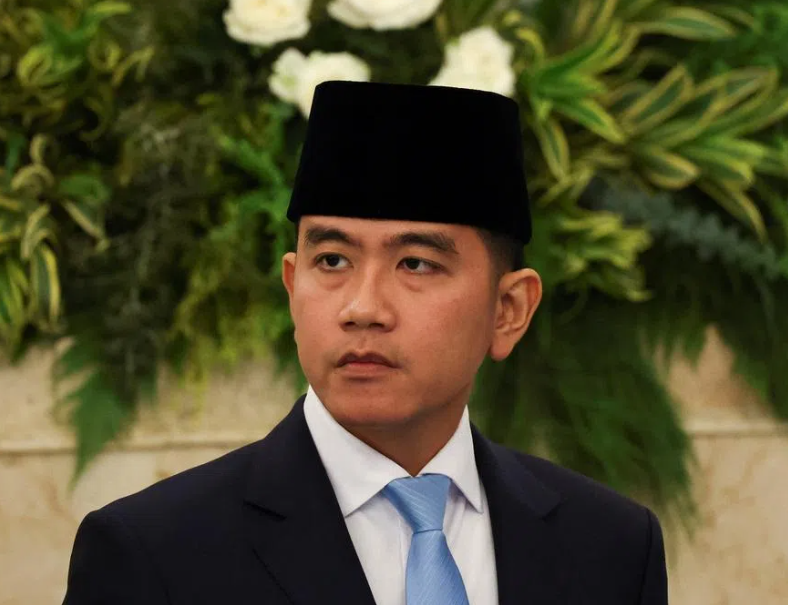
Vice-President Gibran Rakabuming Raka has thrown himself into the centre of Indonesia's student protest movement, hosting activists who had been demonstrating against two of the government's flagship initiatives, the free meals programme and the Red and White Cooperative scheme. Within days of these demonstrations, Gibran invited five university students to join him on an official delegation to eastern Indonesia on June 18, a gesture that analysts interpret as a carefully calibrated effort to position himself as responsive to public concerns. The meeting itself followed a closed-door session three days earlier where Gibran engaged with student representatives who had been criticising both programmes, signalling a willingness to listen that contrasts with the more distant posture typical of previous administrations.
The messaging coming from the Vice-President's Office emphasised receptiveness and follow-through. According to Muhammad Abdi Maludin, a student leader from Bung Karno University, Gibran responded positively to the protesters' research findings and promised to audit their concerns before presenting them to President Prabowo Subianto. Such rhetoric suggests an openness to engaging with grassroots criticism, yet it masks a more complex reality about Gibran's actual authority within the government structure. The optics of accessibility appear designed to build a political persona centred on dialogue and responsiveness, qualities that could prove valuable as Indonesia moves toward the 2029 presidential election cycle.
However, scepticism has emerged swiftly regarding the authenticity of these overtures. Social media reactions to Gibran's Instagram post about the meeting proved decidedly mixed, with critics questioning why the Vice-President chose to engage with students from universities that do not rank among Indonesia's most prestigious or influential institutions. One commenter suggested that involving participants from more prominent campuses would have lent greater credibility to the dialogue, implying that the selection process itself was designed to engineer a more controllable conversation. Another described the entire exercise as theatre rather than substantive engagement, capturing a sentiment that has gained traction among observers sceptical of the government's commitment to genuine reform.
These doubts deepened significantly when local media outlets began reporting irregularities surrounding student compensation. On June 23, Kompas revealed that one student leader who attended the palace meeting had received 20 million rupiah afterwards, while Tribunnews reported that other participants had acknowledged receiving between 2 million and 2.5 million rupiah each. The source and stated purpose of these payments remain opaque, and the Presidential Palace initiated an investigation into the claims. For many observers, the financial transactions undermined the narrative of organic grassroots engagement and instead suggested a carefully orchestrated performance designed to create the appearance of receptiveness without inviting genuine challenge to government priorities.
Political analysts at the Jakarta-based Center for Strategic and International Studies have dissected Gibran's strategy with considerable precision. Nicky Fahrizal characterised the Vice-President's public persona as that of an engaged leader willing to dialogue with students and ordinary citizens, describing it as a deliberate cultivation of political capital during a period when student mobilisation has gained momentum across the archipelago. More pointedly, Fahrizal identified the 2029 presidential election as the clear political target of these manoeuvres, though Gibran has not publicly declared his intention to contest that election. Edbert Gani Suryahudaya, another analyst at CSIS, characterised Gibran's activities as a "deliberate strategy" intended to pacify public anger in the context of corruption scandals and growing scrutiny of flagship programmes, yet simultaneously concluded that such efforts are unlikely to produce meaningful policy shifts.
The corruption context provides essential backdrop to understanding why Gibran's engagement matters. The government's free meals programme, one of President Prabowo's most prominent initiatives, came under intense scrutiny following corruption allegations within the National Nutrition Agency (BGN). In June, agency chief Dadan Hindayana was replaced and subsequently arrested alongside two former deputies as investigations proceeded into alleged procurement irregularities. Gibran's visit to a primary school in East Nusa Tenggara on June 18 included acknowledgment of these shortcomings and calls for improved governance, instructions to accelerate implementation in readied areas, and promises to address local concerns. The timing of this engagement, immediately following the scandal, suggests Gibran is attempting to position himself as a corrective force capable of restoring public confidence in compromised programmes.
Yet the structural reality of Gibran's authority within government significantly constrains his actual capacity to reshape policy. Since taking office alongside Prabowo in October 2024, the 38-year-old Vice-President—and eldest son of former president Joko Widodo—has struggled to carve out a clearly defined role. While nominally associated with high-profile assignments including Papua's development and the new capital Nusantara, he has remained marginalised from major policy decisions. Importantly, he has not been granted a major policy portfolio of his own, leaving him without direct institutional authority over the programmes he now publicly engages with as a reformer. The BGN reports directly to the president, and the Red and White Cooperative initiatives operate as presidential priority programmes coordinated across multiple ministries and agencies. This structural subordination means Gibran's ability to drive meaningful change remains fundamentally constrained, regardless of his public messaging.
Irman Lanti of Padjadjaran University has pointed out that Gibran's growing visibility around these two initiatives does not necessarily correlate with substantial involvement in their design or implementation. According to Lanti, evidence suggests the Vice-President has been largely excluded from both programmes, which appear to operate primarily under the control of military and police leadership rather than through civilian institutional channels. Lanti characterised Gibran's recent activities as an attempt to demonstrate relevance by "riding on the students' demonstrations of recent weeks," positioning the engagement as opportunistic rather than indicative of genuine policy influence. The analytical consensus emphasises that while Gibran's moves may successfully raise his public profile and build political capital ahead of potential future electoral contests, they are unlikely to produce substantive modifications to government policy or implementation.
The broader pattern suggests a Vice-President navigating the political constraints of his office by deploying relatively low-cost, high-visibility tactics designed to maintain public attention and demonstrate relevance. Edbert Gani Suryahudaya described Gibran's strategy as reliant on "simple" attention-grabbing mechanisms that represent the "lowest-cost" options available to him. This performative approach—engaging with students, acknowledging programme shortcomings, promising follow-up—costs the Vice-President little in terms of institutional capital while generating substantial media coverage and public perception of engagement. For a leader operating without major policy responsibilities and marginalised from key decisions, such visibility becomes a substitute for substantive influence, allowing Gibran to cultivate a political persona independent of his actual government role.
For Malaysian observers and those across Southeast Asia, Gibran's situation illuminates broader patterns in how vice-presidential roles function within presidential systems, particularly when the office holder is not fully integrated into the executive inner circle. The gap between rhetorical responsiveness and actual institutional power presents a challenge for citizens seeking genuine policy reform, as gestures of engagement may mask continued vulnerability to scandal, corruption, and the preferences of actors wielding real authority. Gibran's engagement with student protesters represents a textbook example of how limited power can be exercised through symbolic politics, allowing political figures to appear responsive to popular concerns while actual policy implementation remains controlled by other centres of power. As Indonesia approaches the 2029 election, such performative tactics may become increasingly prevalent as potential candidates position themselves for future contests, making critical media literacy and understanding of institutional power distribution essential for an informed citizenry.
The unfolding dynamics also suggest that student protest movements, while capable of generating public debate and forcing official acknowledgment of concerns, may ultimately confront limits to their transformative capacity when they engage with officials lacking sufficient institutional authority to implement desired changes. Gibran's willingness to dialogue does not necessarily translate into power to reform; indeed, his marginalisation from major policy portfolios may make his engagement more attractive to student leaders who feel heard without fundamentally threatening government priorities. The question for observers across the region becomes whether such engagement represents a step toward accountability and genuine reform, or merely a sophisticated mechanism for managing discontent while preserving existing power structures and policy directions.