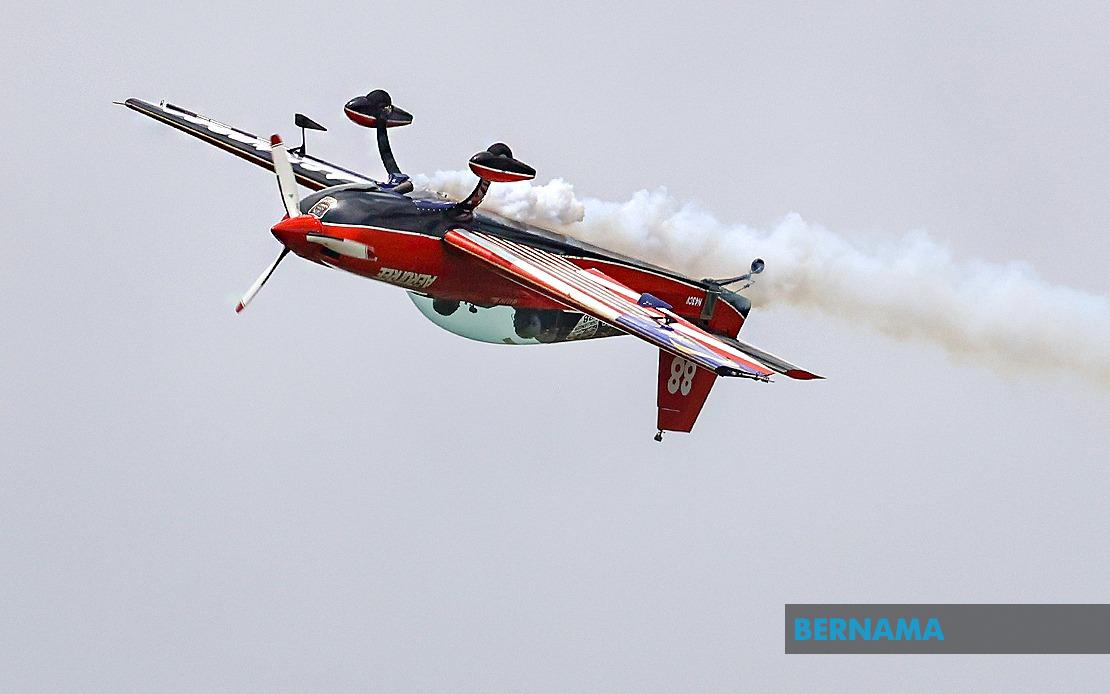
Putrajaya witnessed a spectacular addition to its 69th National Day festivities when retired Royal Malaysian Air Force fighter pilot Major Datuk Halim Othman took to the skies for the inaugural 'Merdeka Sunset Show: Melukis Senja' air display. The 60-year-old aviator, who commands four decades of aviation mastery, delivered a solo twilight aerobatic performance designed to captivate audiences with the unique fusion of precision flying, coloured smoke effects, and pyrotechnics set against the golden backdrop of the setting sun. This performance marked a significant moment for Malaysian aviation, highlighting the calibre of homegrown talent competing on the global stage.
Halim's career trajectory represents a remarkable journey through military service and international competition. He commenced his aviation career in 1985 as an RMAF fighter pilot and earned the distinguished 'Top Gun' designation early in his service. Beyond his military credentials, he distinguished himself as the first Malaysian to secure a place in the Red Bull Air Race World Championship, a feat that underscored his exceptional skill in handling high-performance aerobatic aircraft. The Red Bull competition, renowned for demanding absolute precision, extraordinary bravery, and masterful aircraft control, became the crucible where Halim demonstrated that Malaysian aviators could compete favourably against predominantly non-Asian and non-Malaysian participants on the international stage.
Throughout his professional life, Halim has accumulated experience across a diverse fleet of aircraft. His military service exposed him to sophisticated fighters including the MiG-29N, F/A-18D Hornet, A-4 Skyhawk, and F-5E Tiger. His aerobatic expertise centred on the Extra 300L, an aircraft specifically engineered for precision manoeuvres. Beyond military platforms, he expanded his capabilities to operate corporate jets such as the Learjet 35A and King Air 350i, demonstrating versatility across multiple aviation domains. This breadth of experience, accumulated over several decades, provided the foundational expertise necessary to execute the complex aerobatic sequences that characterised the Merdeka Sunset Show.
Halim's international air racing achievements carry particular significance for Malaysian aviation credentials. In 2014, he captured the Challenger Cup at dual international venues—both Ascot in the United Kingdom and Las Vegas in the United States. He subsequently secured a runners-up position in the Challenger Cup Final at the Red Bull Ring in Austria, performances that validated his competitive standing among global aerobatic aviators. These accomplishments were not merely personal triumphs but represented a statement about Malaysian capacity to perform at elite international standards, challenging preconceptions about aviation capabilities in the region.
The concept underlying the Merdeka Sunset Show represented an evolution of an earlier initiative introduced during last year's Langkawi International Maritime and Aerospace Exhibition. The 'Melukis Senja' (Painting the Dusk) concept proved compelling enough to merit scaling up for the national celebration, transforming it into a signature aerial spectacle for the holiday period. Halim's philosophy regarding aerobatic performance extended beyond mere physical execution of complex manoeuvres. He emphasised that such flying demanded a comprehensive foundation of discipline, relentless training, and deep comprehension of aircraft limitations and capabilities. This approach distinguished professional aerobatics from casual stunt flying, situating the discipline within a rigorous technical and professional framework.
In an exclusive interview, Halim articulated motivations extending beyond personal performance. He explicitly framed his participation within a broader national aspiration, noting that many Red Bull competitors represented non-Asian nations and that competing successfully on this stage involved proving Malaysian competitiveness to global audiences. His strategic positioning of his efforts toward inspiring the younger generation reflected a deliberate commitment to developmental objectives—using his visibility and achievements to cultivate interest in aerospace among Malaysian youth and demonstrate viable career pathways within aviation industries.
Beyond his personal flying accomplishments, Halim played an instrumental role in establishing Krisakti, Malaysia's inaugural official aerobatic display team. This team made its competitive debut at LIMA 2011, representing an institutional contribution to Malaysian aviation culture and international representation. Subsequently, as founder and president of Aerotree Defence and Services Sdn Bhd, Halim positioned his enterprise at the intersection of commercial operations and public engagement. The company's involvement in the Merdeka Sunset Show reflected this dual mandate of professional excellence and community responsibility.
Looking beyond the current display, Halim unveiled ambitious plans for expanding aerobatic demonstrations at future national celebrations and LIMA events. His vision encompassed establishing a new aerobatic team comprising six aircraft equipped with sophisticated coloured smoke systems, creating visually striking formations that would elevate the aesthetic and technical sophistication of aerial displays. These developments would not be confined to single-occasion performances but would establish recurring focal points for national celebrations, elevating Malaysia's profile within international aviation communities and providing platforms for domestic talent cultivation.
Halim's framing of these initiatives explicitly connected aerobatic performances to corporate social responsibility objectives. He articulated a philosophy whereby spectacular aerial displays served educational and inspirational functions, particularly for younger Malaysians considering aviation careers. The Merdeka Sunset Show thus transcended simple entertainment, functioning as a deliberate strategy to broaden awareness of aerospace career opportunities and to normalise Malaysian participation in elite aviation disciplines. This approach recognised the powerful influence of visible role models and demonstrated achievement in shaping career aspirations among younger generations.
The implications of Halim's contributions extend across multiple dimensions relevant to Malaysian aviation development. His achievements establish baseline expectations for Malaysian competitiveness in international aviation competition, challenging potential limitations some might assign to the region's capabilities. His institutional work through Krisakti and Aerotree demonstrates how private enterprise can complement national developmental objectives. Additionally, his explicit commitment to youth development and inspiration suggests a deliberate pipeline-building approach to aviation talent cultivation that extends beyond individual accomplishment to systemic capacity development. These efforts collectively signal that Malaysian aviation capabilities extend well beyond commercial airline operations to encompass elite performance domains traditionally associated with Western and developed Asian nations. As the country continues expanding its aerospace and defence sectors, figures like Halim exemplify the technical excellence and international competitiveness available within Malaysia's existing talent pool.

