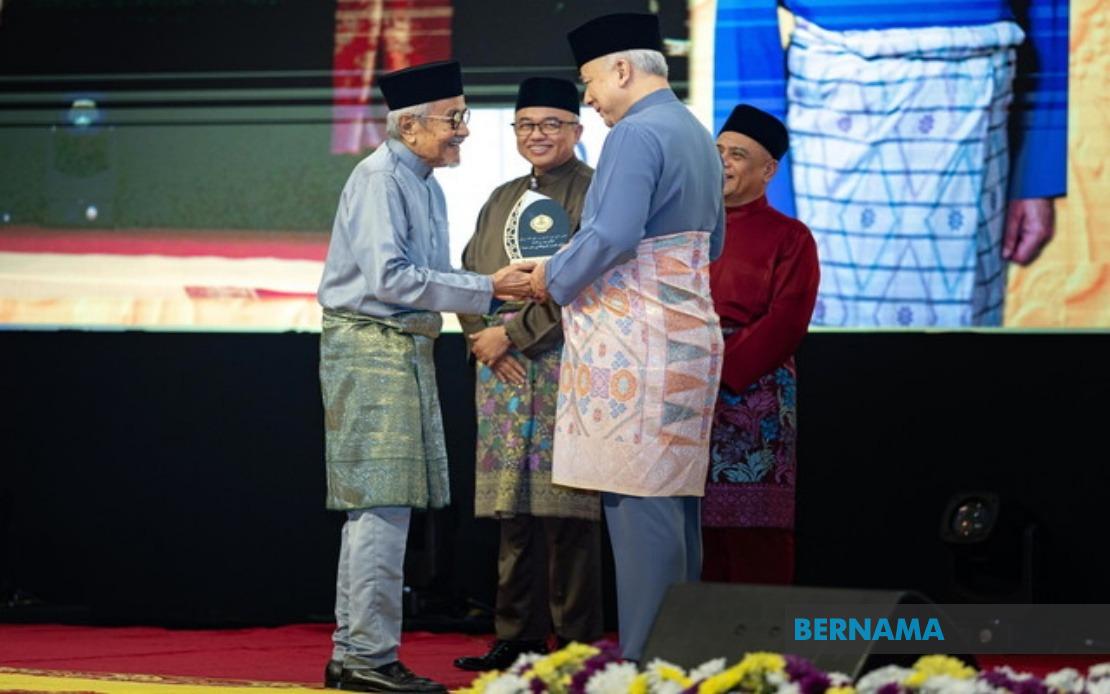
Datuk Rahim Razali, the 87-year-old patriarch of Malaysian cinema and broadcasting, has received the prestigious 'Tokoh Zaid Bin Thabit' or Media and Communications Practitioner Icon Award at a special ceremony in Ipoh. The honour, conferred during Perak's state-level Maulidur Rasul celebration, recognises the lifetime achievements of a man whose full name is Abdul Rahim Mohd Razali and whose roots trace back to Batu Gajah in the state.
Razali's distinction within Malaysia's entertainment landscape reflects the rarity of individuals who have successfully navigated multiple creative disciplines across several decades. Beyond his acclaimed work as a director and actor, he has also established himself as a respected sports commentator, demonstrating versatility that few within the industry can claim. His trajectory through Malaysia's media landscape provides a window into how the country's broadcasting and film industries evolved from their infancy to the sophisticated operations they are today.
The filmmaker's formal engagement with Malaysian media began when he served as a broadcasting assistant at RTM, the national broadcaster that shaped an entire generation of content creators. From this foundational role, Razali possessed the vision and entrepreneurial acumen to establish Angkatan Seniman Abad XX Sdn Bhd in 1981, a production company that would become instrumental in developing local dramatic content for domestic and international audiences. This transition from employee to proprietor was significant, as it demonstrated how creative professionals began taking ownership of Malaysia's cultural output during a critical period of national development.
The scope of Razali's creative output has been substantial. He has produced 50 television dramas for RTM, a volume that places him among the most prolific local producers of dramatic content. Beyond television, his filmography includes 15 feature films, a respectable number considering the challenges of domestic film production in Malaysia. What distinguishes his cinematic work further is the international recognition achieved by eight of his films, which were selected for screening at the Tokyo Film Festival, one of Asia's most prestigious cinema events. This international exposure elevated Malaysian cinema's profile and demonstrated that locally-produced content could appeal beyond regional boundaries.
Among his most notable feature films are "Abang" and "Abang 92," titles that have become reference points within Malaysian film history. These productions likely reflect the concerns and cultural preoccupations of their respective eras, serving as cultural documents as much as entertainment vehicles. The fact that Razali was willing to revisit similar themes across different decades suggests a consistent artistic vision and understanding of audience evolution within the Malaysian market.
The award presentation itself was conducted by Sultan Nazrin Shah, the Sultan of Perak, underscoring the significance with which the state recognizes contributions to media and cultural development. Razali received the award accompanied by RM5,000 cash and a commemorative plaque, recognition that extends beyond monetary value to include symbolic acknowledgment from the highest state authority. This formal recognition at state level reflects broader patterns in Malaysia where such honours serve to document and celebrate contributions to national cultural and educational infrastructure.
The 2024 iteration of Perak's Maulidur Rasul awards recognized achievements across multiple dimensions of Islamic practice and community service, placing Razali's media contributions within a broader framework of societal contribution. Yang Walat, an 82-year-old single mother of 15 children from Kuala Kurau, received the Exemplary Family Icon Award, along with RM10,000 and an Umrah pilgrimage package, highlighting how such ceremonies honour diverse forms of social contribution. Religious scholars and community figures also received recognition, including Radhi Kamarul Hailan as the Preacher Icon, while mosque officials Saharuddin Hassim and Yahya Man were similarly honoured for their dedicated service.
The inclusion of media practitioners within a Maulidur Rasul celebration carries particular significance in the Malaysian context. Such recognition affirms that cultural and media work constitutes a legitimate dimension of community service, particularly when such work contributes to preserving, documenting, and advancing Malaysian heritage and values. Razali's career, spanning multiple decades of content creation, represents a form of cultural custodianship that extends the significance of Islamic celebration beyond strictly religious observance.
For contemporary Malaysian filmmakers and media professionals, Razali's recognition offers important perspective. His journey from broadcasting assistant to internationally-recognized filmmaker occurred within a framework where domestic production infrastructure was less developed than today, yet his persistence and creative vision resulted in a substantial body of work. The achievement of international film festival recognition during an era when Malaysian cinema had not yet achieved its current global prominence makes his accomplishment particularly notable.
The persistence of Razali's influence extends beyond his completed works. As a mentor figure implicitly recognized through such honours, his example has informed how subsequent generations approach filmmaking and broadcasting within Malaysia. His establishment of an independent production company provided an alternative to purely state-controlled content creation, contributing to the ecosystem of private production that characterizes contemporary Malaysian media. The balance between commercially-viable content and culturally-significant work that Razali navigated continues to occupy central importance for today's creators.
Looking at Razali's career within regional context, Malaysian cinema's international presence has grown substantially since his early feature film period, yet the foundational work of establishing international credibility for local productions was largely accomplished by figures like Razali. His contribution to proving that Malaysian stories and Malaysian filmmaking could achieve recognition beyond domestic audiences helped establish the cultural legitimacy upon which subsequent waves of Malaysian cinema have built.
The recognition accorded to Razali at this state-level ceremony represents not merely acknowledgment of past accomplishment but affirmation that media and cultural work constitutes a legitimate category of social contribution deserving formal recognition. In an era where cultural production often operates outside formal recognition structures, such honours serve to document and validate the importance of individuals who have devoted their professional lives to advancing Malaysian creative expression. For a nation building its soft power through cultural export, the legacies of pioneering figures like Razali provide both historical foundation and ongoing inspiration for emerging generations.

