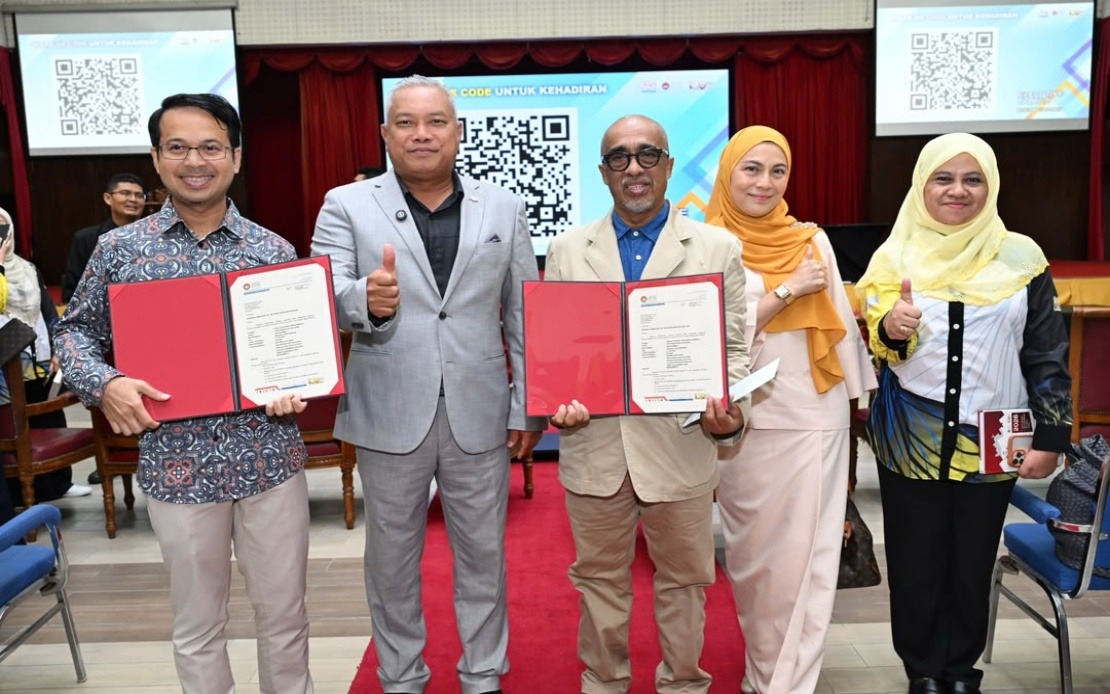
Four decades after his initial aspirations were deferred, veteran Malaysian actor and director Mohd Sabri Yunus has finally realised his university ambitions. The 65-year-old has gained admission to Universiti Pendidikan Sultan Idris (UPSI) to pursue a Master of Education specialising in Malay Literature, marking a significant milestone in a career spanning multiple decades across film, television, and cultural institutions.
Joining Sabri Yunus as a trailblazer in this new educational pathway is television personality and broadcaster Ahmad Fedtri Yahya, 45, who will study for a Master of Education in Malay Language. Both have entered UPSI through the Accreditation of Prior Experiential Learning for Award of Qualifications (APEL.Q) mechanism, a scheme designed to recognise and credit substantial professional experience as a foundation for advanced academic study. Their enrolment positions them as the inaugural cohort for these specialised postgraduate programmes developed by UPSI's Faculty of Languages and Communication.
The APEL.Q pathway represents an evolving approach within Malaysian higher education to acknowledge that valuable expertise and knowledge accumulation can occur outside traditional classroom settings. For Sabri Yunus, this recognition comes after a prolonged personal journey marked by unfulfilled educational ambitions. During his employment at Dewan Bahasa dan Pustaka (DBP) beginning in 1982, when he worked as an illustrator, he attempted university enrolment on two separate occasions. However, the demands of his professional commitments proved incompatible with formal study, forcing him to abandon these pursuits during the 1980s and 1990s. The APEL.Q scheme has essentially bridged a generational gap, allowing him to pursue credentials that earlier circumstances rendered impossible.
Sabri Yunus articulated his perspective on the years intervening between those early ambitions and current realisation, emphasising that his intellectual engagement never ceased despite the absence of formal tertiary education. He characterised his approach to knowledge acquisition as continuous and organic, identifying every individual he encountered as a potential educator with distinct insights and expertise to share. This philosophy has shaped his decades-long involvement with Malaysian arts and culture, work that now forms the experiential foundation supporting his postgraduate candidacy. Through his forthcoming studies at UPSI, he intends to conduct focused research examining specific genres of traditional Malay poetry, research that will merge his practical cultural immersion with academic rigour.
Fedtri Yahya's motivations for pursuing Malay Language studies emerge from a conviction that linguistic patterns directly reflect societal civilisation and intellectual development. His professional trajectory as a television presenter has provided intimate exposure to how Malaysians communicate across different contexts and demographics. He expressed genuine enthusiasm about joining the UPSI academic community, recognising both the intellectual opportunity and the symbolic significance of studying at an institution dedicated to teacher education. His selection of Malay Language as a specialisation reflects concern about contemporary communication trends, particularly the evolving speech patterns among younger Malaysians increasingly shaped by social media platforms and digital technologies.
The broader context surrounding Fedtri Yahya's enrolment reveals substantive anxiety within Malaysian cultural and educational circles regarding language preservation and usage. Social media and instant messaging platforms have introduced novel linguistic conventions, code-switching patterns, and abbreviations that diverge markedly from traditional Malay language standards. Fedtri Yahya perceives this generational shift not merely as linguistic evolution but as a potential dilution of communicative precision and cultural distinctiveness. His intention to undertake advanced study in this domain signals a commitment to understanding these transformations systematically rather than responding reactively.
UPSI leadership has articulated a strategic vision whereby Sabri Yunus and Fedtri Yahya's enrolment transcends their individual educational pursuits. Vice-Chancellor Prof Datuk Dr Md Amin Md Taff positioned their presence within the university community as a catalyst for organisational enrichment, arguing that their extensive professional backgrounds in arts, language, and cultural production will facilitate knowledge exchange between these accomplished practitioners and the institutional body. The articulated expectation is that mentoring relationships and informal intellectual engagement will organically develop across campus, enhanced by the two celebrities' willingness to participate in university life alongside approximately 25,000 students, many of whom will subsequently enter teaching professions.
This pedagogical logic reflects a recognition that UPSI's primary institutional mission—producing educators who will shape Malaysia's younger generations—extends beyond formal curriculum. Students training to become teachers benefit considerably from exposure to accomplished professionals who have spent lifetimes engaged with Malaysian culture and communication. Sabri Yunus's filmmaking experience, his institutional knowledge from DBP tenure, and his cultural advocacy work constitute forms of expertise difficult to replicate within conventional academic structures. Similarly, Fedtri Yahya's professional experience navigating contemporary media landscapes and audience expectations provides insights into practical language application in the modern context.
The APEL.Q programme itself warrants attention as a broader policy development within Malaysian higher education. By formalising recognition of experiential learning, the pathway potentially opens educational opportunities for accomplished professionals across multiple sectors who might otherwise consider themselves ineligible for postgraduate study. This approach acknowledges that significant knowledge accumulation occurs through decades of intensive professional practice, mentorship, and creative problem-solving. For Malaysia's cultural sector specifically, the pathway creates mechanisms whereby established practitioners can transition toward academic roles, research contributions, and teacher training—a career trajectory option previously unavailable.
Sabri Yunus's four-decade hiatus between initial university aspirations and eventual enrolment underscores how systemic barriers and competing life obligations have historically constrained educational mobility for working-class and middle-class professionals. His experience represents countless Malaysians whose career trajectories proved incompatible with formal study requirements. The APEL.Q mechanism effectively acknowledges that such individuals may possess sophisticated knowledge and expertise warranting advanced academic credentialling, even when acquired through non-traditional pathways. This recognition carries implications for Malaysia's broader human resource development strategy and the nation's capacity to leverage accumulated expertise across its institutional landscape.
The implications for Malaysian society extend beyond individual achievement narratives. Both Sabri Yunus and Fedtri Yahya occupy prominent positions within Malaysian public consciousness through decades of media exposure. Their visible pursuit of advanced study at a national institution sends powerful cultural messaging regarding lifelong learning, intellectual humility, and the continued relevance of academic credentials across career stages. This symbolic value may prove particularly influential among Malaysians who have similarly deferred or abandoned educational aspirations due to perceived timing or eligibility barriers. Furthermore, their focus on Malay language and literature—fields that carry profound significance for national identity and cultural continuity—positions their academic work within broader conversations about Malaysia's cultural trajectory during periods of rapid technological and social transformation.

