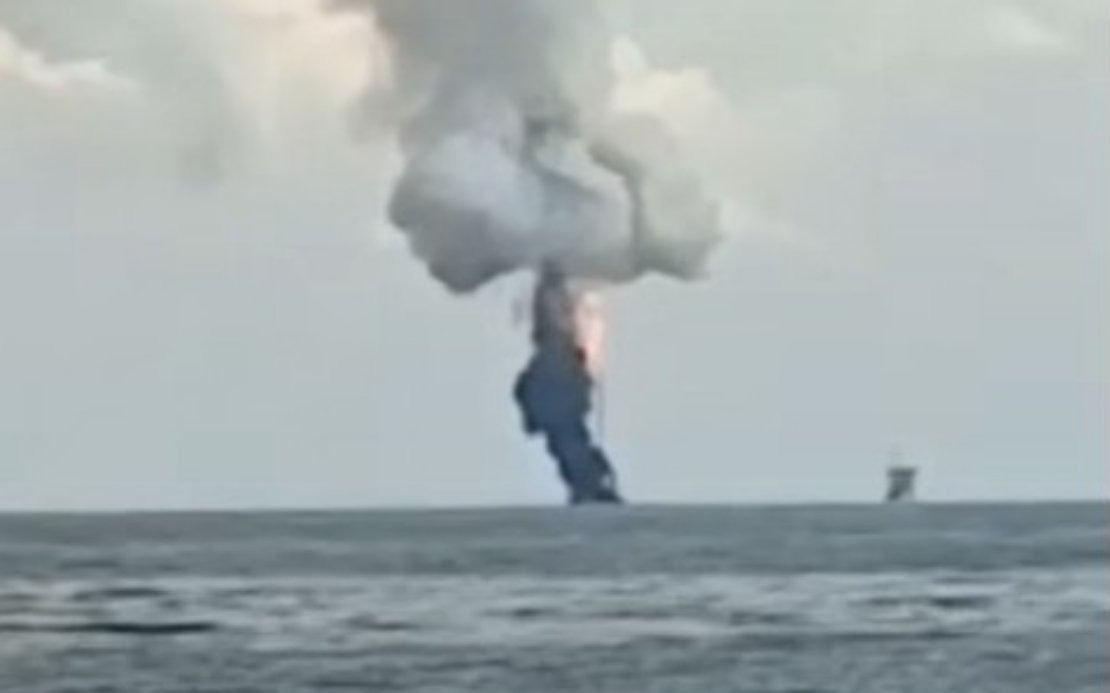
A fire erupted at the West Lutong Vent A facility operated by Vestigo Petroleum Sdn. Bhd., a subsidiary of Malaysia's national oil corporation Petronas Carigali, on the afternoon of June 28 in offshore waters near Sarawak. The incident, which ignited at approximately 2 pm, quickly drew widespread attention when footage circulated across social media platforms, prompting immediate public concern about the safety implications of offshore petroleum operations in the region.
Vestigo Petroleum released an official statement the following day confirming the occurrence and providing initial details about the response. The company emphasized that personnel on site and in surrounding areas were not harmed, and that crisis management protocols were activated swiftly to prevent further escalation. The operator stated that the emergency had been successfully contained and that immediate threats to nearby communities and the marine environment had been neutralised through coordinated emergency procedures.
The petroleum industry operates under strict regulatory oversight in Malaysia, particularly in offshore zones managed by the state of Sarawak, where exploration and production activities contribute significantly to national revenue. Fire incidents at offshore installations, while relatively infrequent given the scale of operations, trigger mandatory investigation and reporting requirements under maritime and environmental safety legislation. Such events underscore the inherent risks associated with deep-water energy production, even when comprehensive safety systems are in place.
Vestigo's management indicated that determining the precise origin of the fire remained an ongoing investigative process involving multiple parties. The company committed to full transparency in its findings and pledged cooperation with all relevant regulatory bodies overseeing offshore petroleum activities. This collaborative approach aligns with international best practices for incident management in the oil and gas sector, where detailed root cause analysis often takes weeks or months to complete.
The operator highlighted its dedication to maintaining stringent safety standards across all operational domains, emphasising that personnel welfare, environmental stewardship, and operational reliability remain paramount corporate objectives. These commitments reflect not only regulatory compliance requirements but also industry-wide recognition that sustainable operations depend fundamentally on robust safety culture and continuous risk management improvement.
Offshore petroleum facilities in Malaysian waters employ multiple layers of fire detection and suppression systems designed to activate automatically when dangerous conditions are detected. Engineers and technicians maintain constant vigilance through both automated monitoring and human observation, yet no system is entirely failsafe. The incident serves as a reminder of the technical complexity and hazard exposure inherent in extracting energy resources from beneath the ocean surface.
For Malaysia's energy sector, which heavily relies on petroleum revenues and exports, maintaining public confidence in operational safety remains crucial to social licence and regulatory approval for future exploration projects. Incidents that receive viral social media attention can rapidly shape public perception, making transparent communication and swift corrective action essential components of industry reputation management.
Sarawak's offshore petroleum fields have contributed substantially to Malaysian oil and gas production for decades, supporting both national economic development and regional employment. The state government maintains oversight authority over operations within its maritime jurisdiction, working alongside federal regulators to ensure compliance with safety and environmental standards.
The rapid containment of this incident reflected the mobilisation of experienced emergency response personnel and the functionality of safety systems installed to manage precisely such scenarios. Oil and gas operators in Southeast Asia have progressively upgraded their emergency protocols following high-profile incidents in the region, incorporating lessons learned from international experiences and evolving technological capabilities.
Vestigo Petroleum's statement commitment to ongoing dialogue with authorities suggests coordination with the Department of Occupational Safety and Health, the Maritime Port Authority of Malaysia, and Sarawak's petroleum authority in documenting what occurred and determining preventive measures. Such investigations typically extend beyond immediate cause identification to examine systemic factors, maintenance protocols, and personnel training adequacy.
The incident underscores persistent questions within Malaysian society regarding the environmental and safety dimensions of petroleum extraction. As the nation contemplates its energy transition and climate commitments, operators face mounting pressure to demonstrate that hydrocarbon production can coexist with robust environmental protection and zero-harm workplace cultures.
Moving forward, the detailed findings from Vestigo's investigation will likely become public information subject to regulatory scrutiny and potentially legislative or procedural adjustments affecting similar offshore operations. Industry observers will monitor whether the incident prompts any revisions to safety standards or inspection protocols governing installations in Malaysian waters.

