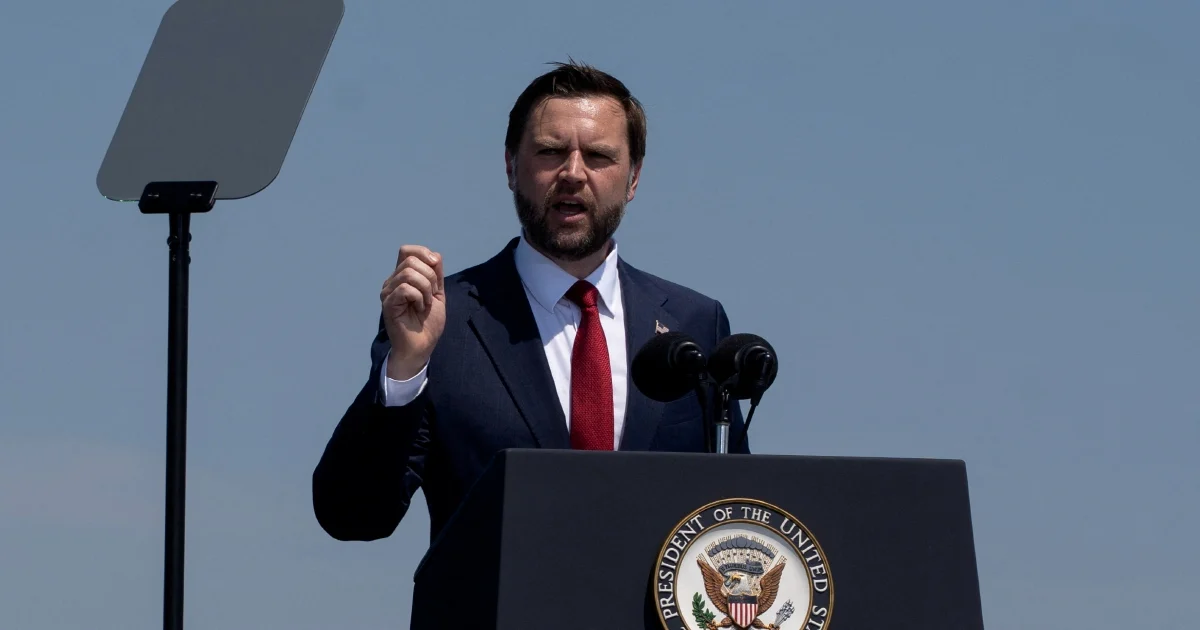
US Vice President JD Vance travelled to London to deliver a pointed critique of Britain's political establishment, asserting that the country has endured prolonged failures of leadership. His remarks appear timed to influence discussions about the direction of British governance as a new prime minister prepares to take office, signalling the incoming Trump administration's keen interest in shaping outcomes in one of America's closest democratic allies.
Vance's comments underscore a growing American preoccupation with the state of British politics, particularly as the two nations navigate their strategic relationship in an era marked by shifting global alliances and competing economic interests. The vice president's willingness to openly criticise the British political establishment represents a departure from traditional diplomatic restraint, reflecting a more assertive approach to foreign engagement that characterises the Trump administration's worldview.
The British political landscape has indeed been turbulent in recent years, marked by multiple changes of government, contentious debates over European relations, and persistent disagreements over economic policy and social direction. Voters have cycled through different administrations in search of coherent strategies to address inflation, stagnating wages, crumbling public services, and the long-term consequences of Brexit. This cycle of electoral churning has created genuine frustration among British citizens, who increasingly perceive their leaders as disconnected from everyday concerns.
Vance's emphasis on the need for structural change carries particular weight, as it suggests the new prime minister will face American expectations for comprehensive reform rather than incremental adjustments. The Trump administration's preference for leaders willing to undertake bold transformations aligns with broader conservative desires within Britain for deregulation, reduced immigration, and a recalibration of the state's role in the economy. Vance's intervention essentially signals that Washington will monitor whether Britain's incoming leadership matches this vision of fundamental overhaul.
For Malaysian observers and those across Southeast Asia, Vance's comments carry implications for Britain's regional engagement and its participation in Indo-Pacific affairs. As Britain seeks to maintain influence globally through security partnerships and trade relationships, stability in domestic governance becomes essential. Uncertainty about political direction or ineffectual leadership could undermine London's ability to execute long-term strategic commitments in the region, affecting frameworks like the AUKUS alliance and Britain's broader Indo-Pacific strategy.
The reception of Vance's remarks within British political circles reveals deeper anxieties about national standing and international respect. When a senior American official openly criticises an ally's leadership, it touches a nerve in Britain's long history of assuming a privileged position in global affairs. The implicit suggestion that British governance has fallen short creates pressure on the incoming prime minister to prove effectiveness and command international confidence from day one of office.
Vance's hope that structural change will materialise rests on assumptions about what the next government can realistically achieve. Implementing comprehensive reform requires not just political will but also economic resources, parliamentary backing, and careful management of public expectations. The incoming prime minister will inherit a budget constrained by years of austerity, a public sector weakened by repeated spending freezes, and entrenched disagreements about the proper direction of policy among both voters and elected representatives.
The American vice president's comments also reflect Washington's conviction that Britain requires fundamental reorientation rather than tinkering at the margins. This perspective aligns with American preferences for allied governments that pursue deregulation, reduced social spending, and closer alignment with Washington's foreign policy objectives. Britain's new leadership will thus face pressure to signal early that it intends to pursue such directions, whether through legislative agendas, rhetoric, or concrete policy announcements.
For Southeast Asian governments watching this dynamic, Vance's intervention illustrates how the Trump administration intends to exercise influence over allied democracies—directly, publicly, and with clear expectations for change. This approach differs markedly from traditional American diplomatic practice and suggests a more transactional relationship with even long-standing allies. Nations across the Indo-Pacific will note this shift and may adjust their own calculations about relying on American institutional support.
The coming months will reveal whether Britain's incoming prime minister can satisfy both domestic voters demanding genuine improvement and international partners, particularly Washington, expecting demonstrable transformation. The credibility of the new government depends partly on swiftly identifying achievable priorities and delivering visible progress. Vance's pre-emptive call for change establishes a benchmark against which the incoming administration will inevitably be measured, creating both opportunity and risk for whoever assumes Britain's highest office.

