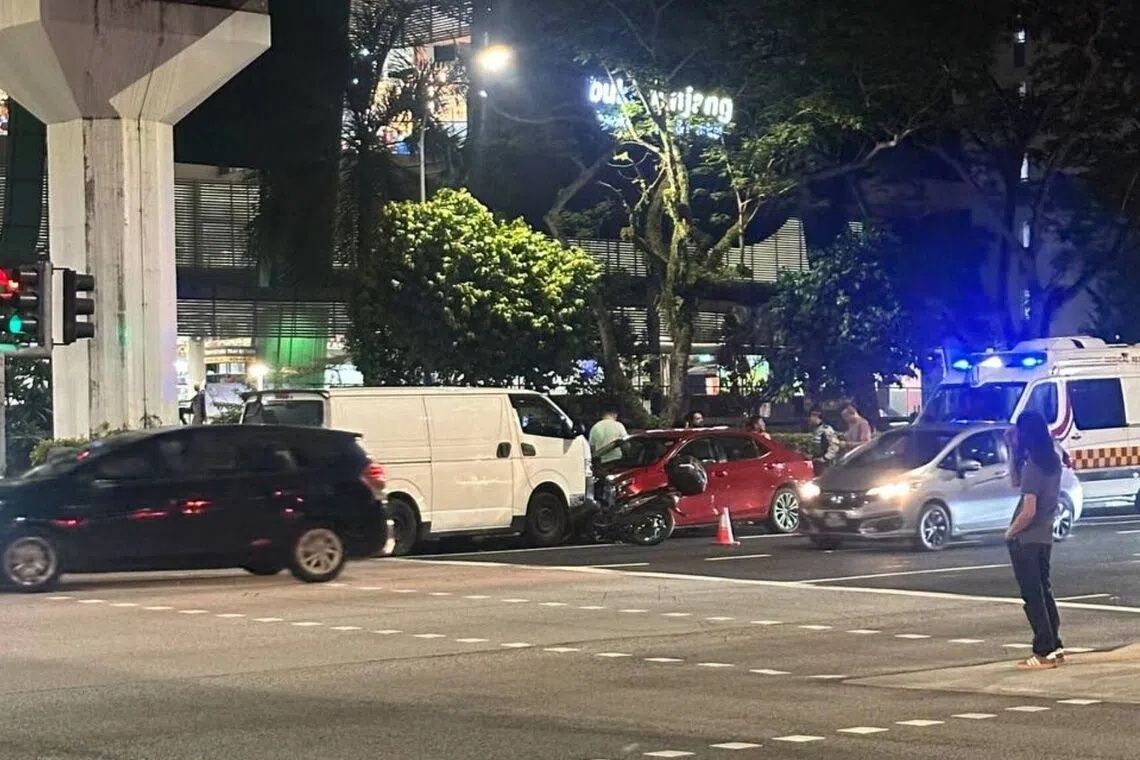
A 27-year-old van driver has been arrested on suspicion of operating a vehicle whilst under the influence of drugs following a serious multi-vehicle collision that unfolded on Bukit Panjang Road in Singapore on Friday evening. The incident, which occurred around 9pm on 14 August and involved a total of four vehicles—the van, a motorcycle, and two passenger cars—has prompted investigations into both the driving offence and the discovery of prohibited vaping equipment at the scene.
Singapore's police force and Civil Defence Force responded to the accident near the intersection with Bukit Panjang Ring Road. During their subsequent examination of the van, officers retrieved two vaporisers and three accompanying pods, raising questions about potential involvement of vaping products in the driver's impairment. The discovery of these items has triggered a separate investigative pathway, with the case being escalated to the Health Sciences Authority for specialist assessment of the vaping-related violations.
Accounts from those present at the scene, including video footage circulating on social media, paint a troubling picture of the collision's force and sequence. The van appears to have been travelling in the wrong direction when it collided head-on with a red sedan, with a motorcycle caught catastrophically between the two larger vehicles. A black sedan remained several metres behind the point of impact, suggesting a chain-reaction incident that caught multiple unsuspecting road users.
The accident resulted in two individuals sustaining minor injuries, though both declined medical evacuation to hospital facilities. This relatively fortunate outcome masks the serious nature of what could easily have proved fatal, particularly for the motorcycle rider whose vehicle was sandwiched in the initial collision. The refusal of injured parties to seek hospital treatment may indicate the injuries were indeed superficial, though it also highlights the potential for more serious harm to go undetected in post-accident chaos.
The arresting circumstances underscore a persistent road safety challenge across Singapore and the broader Southeast Asian region: impaired driving stemming from substance use. Driving under the influence of drugs represents a particularly insidious traffic hazard because the visual and cognitive impairment it causes can be subtle yet devastating, potentially explaining how a vehicle operator might navigate against traffic flow without immediate recognition of the danger. The presence of vaping devices at the scene introduces an additional layer of concern regarding what substances may have been inhaled and their contribution to the driver's condition.
Singapore's road safety regime has grown increasingly sophisticated in recent years, with enhanced detection methods and stricter enforcement protocols. However, this incident demonstrates that drug-impaired driving remains a tangible threat despite stringent regulations. The involvement of vaping products is particularly noteworthy given the evolving landscape of substance consumption methods; traditional breath and blood tests for conventional drugs remain standard, but the rise of vaporised products—which may contain various psychoactive compounds—presents novel detection and prosecution challenges for law enforcement agencies throughout the region.
The referral of the vaporiser-related offence to the Health Sciences Authority suggests that authorities are treating this aspect of the case with appropriate seriousness. Singapore's regulatory framework distinguishes between different categories of vaping violations, and determining the precise contents and legal classification of the seized devices will inform the trajectory of charges against the driver. This investigative step also reflects broader governmental concern about the proliferation and evolving composition of vaping products in the local market.
For Malaysian motorists and those in neighbouring jurisdictions, this incident serves as a timely reminder of the cascading consequences of impaired driving. The collision involved innocent parties who had done nothing to contribute to the hazardous situation yet found themselves trapped in a potentially lethal scenario. The psychological and physical toll on the motorcycle rider and other vehicle occupants extends far beyond the immediate medical classifications of their injuries, encompassing disruption to their daily lives and the trauma of near-fatal encounters.
The ongoing investigation reflects Singapore's commitment to establishing comprehensive accountability in traffic incidents, particularly those involving substance impairment. Beyond the criminal charges the driver will likely face, the case will generate valuable data regarding drug-driving patterns, detection methodologies, and enforcement effectiveness. Such intelligence feeds into regional road safety strategies and informs public health initiatives aimed at discouraging impaired driving across Southeast Asia.
As investigations proceed, both the police and Health Sciences Authority will be examining the nexus between the vaping devices discovered in the van and the driver's apparent impairment. The outcome of these parallel investigations will likely have implications for how vaping-related substances are regulated and how they feature in road safety awareness campaigns. For now, the arrested driver faces serious charges that could result in substantial penalties, whilst the broader conversation about substance-induced driving hazards continues to evolve across the region.

