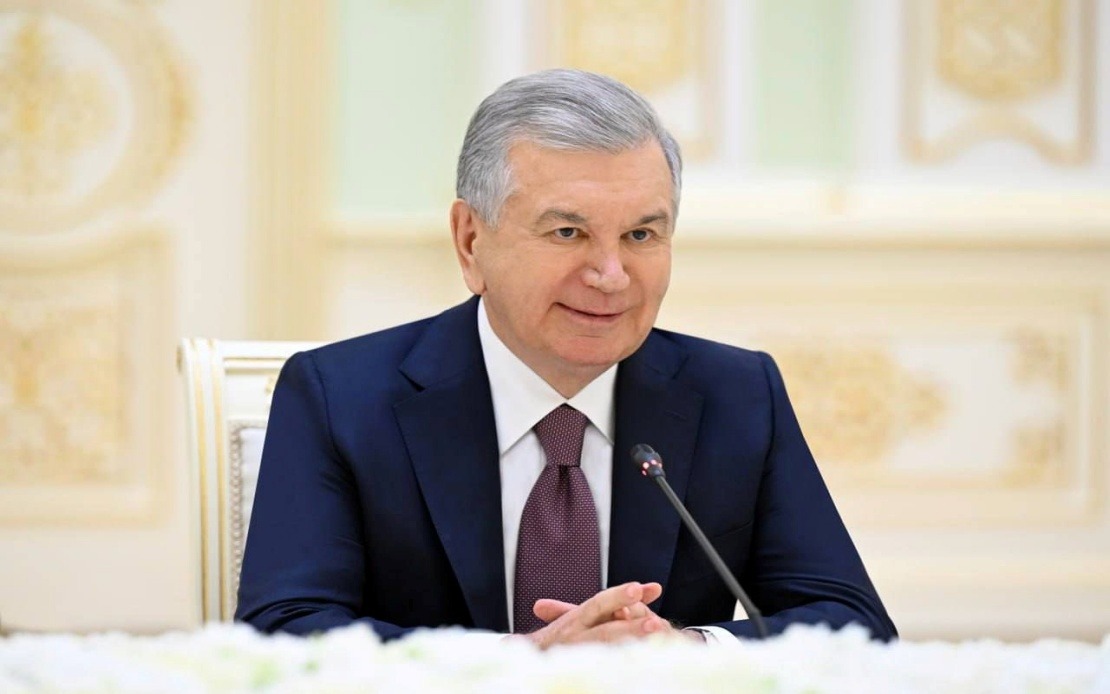
Uzbekistan's President Shavkat Mirziyoyev has made an impassioned appeal for the international community to harness the intellectual and spiritual resources of Islamic civilisation in confronting today's deepest geopolitical challenges. Delivering remarks at the inaugural First International Islamic Civilisation Forum, the Central Asian leader positioned shared Islamic heritage as a unifying force capable of transcending sectarian boundaries, cultural differences and the rising tide of religious intolerance that threatens global stability.
The timing of Mirziyoyev's intervention reflects deepening concerns about the fragmentation of international relations. His speech acknowledged that the world faces an unprecedented period of transformation marked by escalating conflicts, eroding trust between communities and deliberate efforts to deepen rifts along religious and civilisational lines. Against this backdrop, he contended that Islamic values offer time-tested wisdom for fostering coexistence, intellectual progress and moral renewal. Rather than viewing Islam solely through the lens of contemporary geopolitical competition, Mirziyoyev invoked the civilisation's historical record as a generator of scientific breakthroughs, cultural flowering and spiritual enlightenment that benefited all humanity.
Central to Uzbekistan's diplomatic positioning is its "Enlightenment Against Ignorance" initiative, launched at the United Nations in 2017. This framework explicitly connects Islamic intellectual traditions to contemporary challenges in education, research and social cohesion. By reframing Islamic history as a resource for addressing ignorance and division rather than as a source of conflict, Uzbekistan articulates an alternative narrative to dominant Western discourse on Islam and modernity. The initiative underscores how the nation seeks to leverage its geographic and cultural position as a bridge between East and West, positioning itself as a custodian and interpreter of Islamic heritage for a fractured world.
Mirziyoyev's emphasis on Central Asia's intellectual legacy carries particular resonance for regional stability and identity. The historical figures he cited—Muhammad al-Khwarizmi, Abu Rayhan Biruni, Abu Ali ibn Sina, Mirzo Ulugh Beg and the Imams al-Bukhari, al-Tirmidhi and al-Maturidi—represent the region's unparalleled contributions to mathematics, astronomy, medicine, philosophy and Islamic jurisprudence. By celebrating these scholars, Uzbekistan reasserts Central Asia's claim as a cradle of Islamic civilisation, offsetting narratives that concentrate Islamic intellectual history in the Middle East. This assertion matters for regional prestige and for younger generations seeking indigenous sources of pride and identity distinct from both Soviet heritage and contemporary geopolitical alignments.
The concept of a "Third Renaissance" articulated by Mirziyoyev represents an ambitious vision for how Uzbekistan and partner nations might synthesise scientific innovation, modern education, spiritual development and historical preservation. Unlike the European Renaissance, which emphasised secular humanism and classical revival, or the Islamic Golden Age, which emerged from specific historical conditions, Mirziyoyev proposes a contemporary renaissance deliberately constructed through institutional investment, international partnerships and strategic cultural positioning. This framework appeals to Muslim-majority nations seeking modernisation paths that do not require abandoning religious or civilisational identity.
The Islamic Civilisation Centre, positioned as an "intellectual bridge" connecting past and future, East and West, functions as Uzbekistan's institutional vehicle for this agenda. By establishing a permanent platform for scholars, researchers and religious leaders to collaborate on scientific cooperation and universal values, Uzbekistan creates infrastructure for long-term influence over how Islamic heritage is interpreted and mobilised in global discourse. The centre's role in convening the current forum demonstrates how state institutions can shape intellectual narratives at scale, bringing together approximately 300 participants from more than 50 countries.
For Southeast Asian observers, particularly in Malaysia and Indonesia where Islamic identity intersects with modern governance and development, Uzbekistan's approach offers instructive lessons. The emphasis on education, scientific research and institutional preservation provides a template for balancing religious authenticity with contemporary development imperatives. Countries wrestling with questions about how to integrate Islamic values into secular governance structures or how to position themselves within global hierarchies might find Uzbekistan's framework relevant to their own national conversations about civilisational identity and international standing.
The scale and substance of the forum—featuring eleven plenary sessions, four international scientific conferences, exhibitions of rare manuscripts and emerging discussions about artificial intelligence applications for preserving Islamic heritage—reflects Uzbekistan's determination to anchor its civilisational diplomacy in concrete intellectual work. The inclusion of digital heritage preservation and AI applications signals awareness that Islamic civilisation's future relevance depends on engaging contemporary technological transformation rather than merely custodian historical artefacts in museums and libraries.
The forum's formal outcomes—the anticipated Tashkent Declaration, approval of the Islamic Civilisation Centre's development roadmap through 2030, and cooperation agreements with international organisations—will provide measurable indicators of whether this initiative generates sustained institutional momentum or remains a symbolic statement. The declaration's specific commitments on interfaith dialogue, scientific collaboration and resource allocation for heritage preservation will determine whether the forum catalyses practical changes in how the international community approaches Islamic heritage and religious tolerance.
Mirziyoyev's framing of science and education as "the greatest unifying forces of our time" deserves particular attention. By anchoring his appeal in universal domains of knowledge and human development rather than in religious doctrine or theological argument, he positions Islamic civilisation as relevant to non-Muslim societies and secular governance frameworks. This rhetorical move potentially broadens Uzbekistan's diplomatic reach beyond the Organisation of Islamic Cooperation member states to include secular governments, academic institutions and cultural organisations concerned with heritage preservation, interfaith understanding and countering religious extremism.
The convening of this forum amid global rises in Islamophobia and intercommunal tension carries implicit criticism of Western foreign policy approaches that have marginalised Islamic voices in international problem-solving. By repositioning Islamic civilisation as offering constructive solutions to contemporary challenges rather than as either a threat requiring management or a historical curiosity, Uzbekistan stakes a claim to intellectual and moral authority that extends beyond the Muslim world. Whether such positioning translates into meaningful shifts in how international institutions approach questions of religious identity, civilisational dialogue and global cooperation remains to be seen in the years following this inaugural forum.

