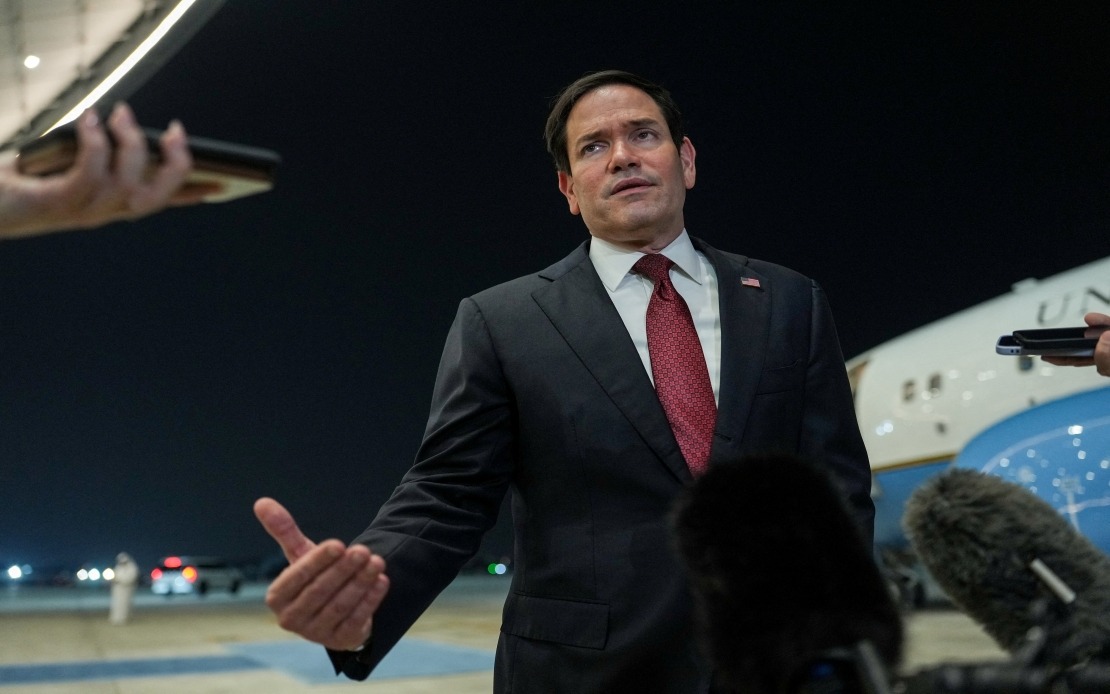
The United States has made clear it will not be a financial contributor to any reconstruction programme for Iran, according to Secretary of State Marco Rubio, who downplayed speculation about the scope and participants in such initiatives during remarks to journalists on Tuesday. Rubio's statement appears designed to temper expectations around reported plans for a reconstruction fund, particularly as diplomatic channels between Washington and Tehran remain active following recent high-level negotiations.
When questioned about the possibility of Gulf states investing in Iranian reconstruction efforts, Rubio indicated that determining which nations might participate in any such arrangement remains premature. He emphasised that while economic opportunities could theoretically be created if Iran pursues certain paths, the United States itself would neither provide government funds nor make private investments in such a venture. This positioning reflects the Biden administration's cautious approach to incentivising Iranian compliance with international agreements.
Rubio's comments appear to address earlier reports circulating about a potential $300 billion reconstruction fund, which US President Donald Trump had rejected as speculative just days prior. By clarifying American non-participation, Rubio seems intent on managing international expectations and preventing mischaracterisation of Washington's role in ongoing diplomatic efforts. His measured language suggests the administration views any reconstruction assistance as a matter for other parties to negotiate and finance.
The Secretary of State linked progress on economic opportunities to broader security considerations that have yet to be resolved between the two nations. He suggested that meaningful discussions about reconstruction remain contingent upon tangible advancement on multiple security fronts, indicating that such matters are part of a larger diplomatic equation rather than standalone negotiations. This framing positions economic incentives as tools to encourage Iranian compliance rather than as immediate offerings.
Recent diplomatic activity has intensified following Sunday's talks in Burgenstock, Switzerland, where American and Iranian delegations met under mediation by Qatar and Pakistan. The American team was led by a senior representative, while Iran's parliamentary speaker Mohammad Bagher Ghalibaf headed the Iranian delegation, underscoring the high-level nature of the engagement. Both sides subsequently announced that meaningful progress had been achieved during these discussions.
A significant development emerged last week when Iran and the United States jointly signed a memorandum addressing the military conflict that erupted on February 28. The agreement establishes specific timelines for critical actions, including provisions for Washington to lift its naval blockade and for Iran to restore shipping operations through the Strait of Hormuz. Such concrete arrangements suggest the negotiations have moved beyond preliminary discussions toward substantive commitments.
Crucially, the memorandum incorporates Iran's commitment to forgo the acquisition of nuclear weapons, though the broader nuclear programme remains subject to separate negotiations. The parties have agreed to conduct these discussions within a 60-day window, creating a defined timeframe for resolving this historically contentious issue. This bifurcated approach allows military conflict resolution to proceed independently of nuclear matters, potentially accelerating progress on immediate security concerns.
For Southeast Asian observers, these developments carry significant implications. The region's economies depend substantially on stability in the Middle East and unimpeded access to critical maritime routes, particularly the Strait of Hormuz through which substantial portions of Asian energy supplies transit. Any military escalation or sustained blockade directly affects regional energy prices and shipping costs, influencing everything from manufacturing competitiveness to household utility expenses across Malaysia and neighbouring countries.
The diplomatic framework emerging from these talks suggests a potential de-escalation path that could restore normal maritime operations and reduce regional tensions. However, Rubio's insistence that American participation in reconstruction financing remains unlikely indicates Washington's preference for burden-sharing among regional actors. This approach may place greater pressure on Gulf Cooperation Council states to finance Iranian economic revitalisation, potentially reshaping regional investment patterns and relationships.
The distinction Rubio drew between potential private sector engagement and government participation reflects broader American policy calculus regarding sanctions and Iran's international reintegration. By explicitly ruling out government funding, the administration preserves its ability to maintain certain restrictions while allowing market forces and other nations to gradually normalise economic relationships. This nuanced position attempts to balance pressure on Tehran with incentives for compliance.
Looking forward, the success of these diplomatic initiatives hinges on whether both sides can maintain momentum through the coming weeks. The 60-day nuclear negotiation window and the timelines for blockade removal will test the durability of the agreements reached thus far. For regional stability and global energy markets, the continuation of diplomatic progress represents a preferable alternative to renewed military confrontation, making the preservation of these discussions critically important to broader international interests.