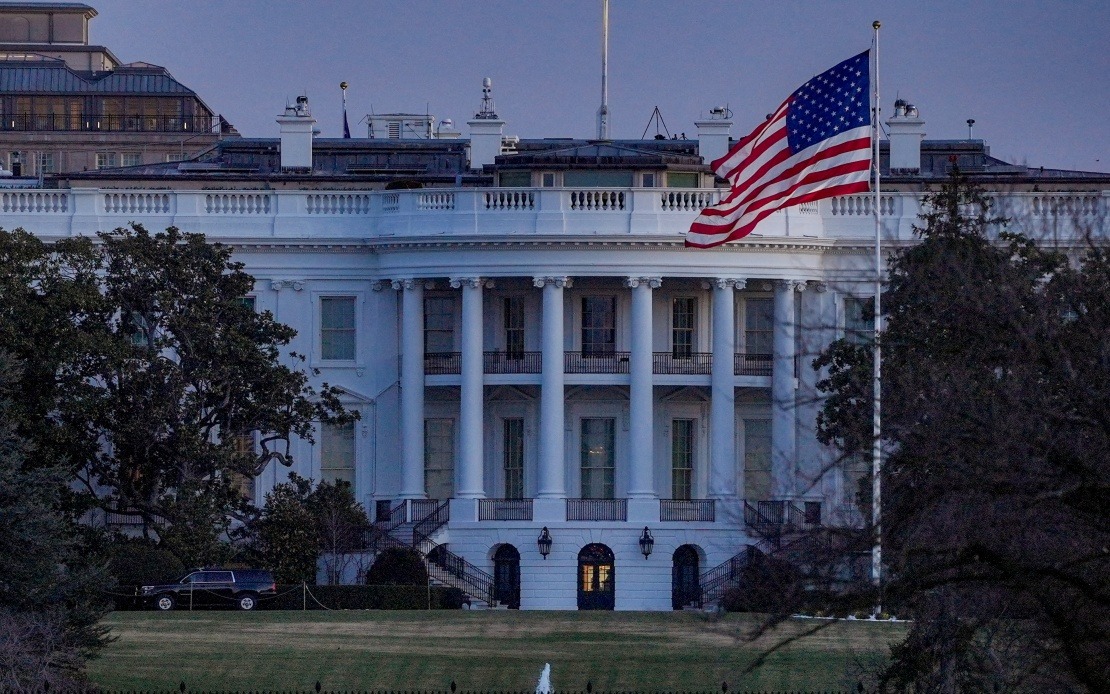
The protective apparatus surrounding the American presidency faces an unusually complex security environment, according to Sean Curran, head of the United States Secret Service. Speaking at a briefing ahead of the White House Correspondents' Association dinner on July 23, Curran described the contemporary threat landscape as substantially more challenging than normal operational circumstances, a candid assessment that underscores the extraordinary pressures now confronting his agency and its personnel.
Curran's acknowledgement of what he termed a "heightened level of threat environment" reflects an objective reality that has characterised the period surrounding President Donald Trump's current tenure. The Secret Service director was preparing remarks in advance of a ceremonial dinner scheduled for July 24, an event that itself carries particular significance given its dramatic interruption during an April incident involving gunfire. The rescheduling of this prestigious annual gathering among political journalists and officials testifies to how security concerns have reshaped even traditional Washington institutions.
The specific constellation of threats confronting presidential protection has grown more multifaceted in recent years. Trump himself has publicly stated that Iran ranks among the most significant sources of danger, claiming he represents the primary target for Iranian assassination schemes. In July of this year, Trump asserted that the statistical probability of a sitting American president failing to survive their tenure stood at 5.2 per cent—a figure he cited to contextualise the genuinely elevated risks now present. Notably, Trump has expressed confidence about attending the White House Correspondents' dinner despite these proclaimed dangers, a decision announced in June that signals his determination to maintain normal presidential activities regardless of security assessments.
The historical record of the past two years provides sobering evidence supporting Curran's institutional assessment. The first major incident occurred during a campaign rally in Pennsylvania in July 2024, when an assailant opened fire and struck Trump in the ear—an attack that came perilously close to causing far more severe injury. This event fundamentally altered American political discourse and raised urgent questions about adequacy of existing protective measures. The incident demonstrated that even under intensive Secret Service supervision, determined adversaries could breach security perimeters with lethal intent.
A second assassination attempt followed in September 2024 at Trump's golf club located in Florida. This subsequent attack, occurring at a private recreational facility, illustrated that threats extend beyond public campaign settings and major state occasions. The targeting of the golf club represented an escalation in operational sophistication, suggesting planning across multiple venue types and security environments. Each successive incident prompted uncomfortable institutional reckonings within the Secret Service regarding resource allocation, personnel training, and strategic positioning.
The third attack unfolded in April 2026 during the aforementioned White House Correspondents' Association dinner, directly disrupting one of Washington's most prominent social and professional occasions. This incident particularly rattled the capital's establishment because it penetrated security at an event within the White House complex itself—ostensibly among the most secure physical locations in the world. The suspect subsequently faced multiple criminal charges including attempted assassination of the president, establishing clear legal recognition of the severity and intent behind the attack.
Beyond these three distinct incidents, intelligence agencies have uncovered additional plots in various stages of planning or preparation. In June 2026, the Federal Bureau of Investigation discovered what it characterised as an assassination scheme connected to a sporting event—specifically a UFC (Ultimate Fighting Championship) competition planned at the White House. The Department of Justice formally classified this plot as representing another attempt against the president, indicating that the threat environment extends to scenarios involving large gatherings, athletics programming, and civilian attendance at presidential venues.
The Iranian dimension presents a qualitatively different challenge from domestic extremism. Foreign state actors possess resources, tradecraft, and operational patience that distinguish their efforts from individual domestic assailants. Trump's assertion regarding Iranian targeting reflects intelligence community assessments about Tehran's long-standing interest in striking at American leadership, particularly Trump himself given historical tensions between his administration and Iranian interests. The prospect of internationally-coordinated assassination efforts fundamentally complicates protective operations, requiring integration of counterintelligence capabilities alongside traditional Secret Service functions.
For Malaysia and Southeast Asian observers, these developments carry significant implications. The region has longstanding relationships with the United States, with Malaysia hosting substantial American diplomatic and commercial presence. Political instability in Washington or disruption to presidential continuity would reverberate through regional security architecture, trade relationships, and alliance structures upon which several Southeast Asian nations depend. Furthermore, the demonstrated sophistication of assassination plots targeting a heavily-protected leader raises uncomfortable questions about protective capabilities across the region, where political violence and extremism periodically threaten leadership.
The Secret Service's institutional challenges also reflect broader technological and tactical evolution in security threats. Curran's candid acknowledgement that his agency operates under exceptional pressure suggests that traditional protective approaches may require fundamental revision. The repeated penetration of security perimeters—whether at campaign rallies, private clubs, or White House-adjacent venues—indicates that adversaries have developed countermeasures to conventional protective strategies, compelling continuous innovation in detection, deterrence, and response mechanisms.
Looking forward, the convergence of domestic extremist actors, sophisticated international threats, and evolving tactical approaches suggests that the Trump presidency will continue operating under extraordinary security constraints. The White House Correspondents' dinner itself, now occurring under heightened vigilance following the April disruption, symbolises how American institutions are adapting to a threat environment substantially more dangerous than that confronting recent predecessors. Curran's public acknowledgement of these realities, rather than insisting on routine security sufficiency, represents both institutional honesty and implicit recognition that the Secret Service requires sustained political support, enhanced resources, and sophisticated coordination across multiple intelligence and law enforcement agencies to maintain protective effectiveness in an unprecedented threat landscape.

