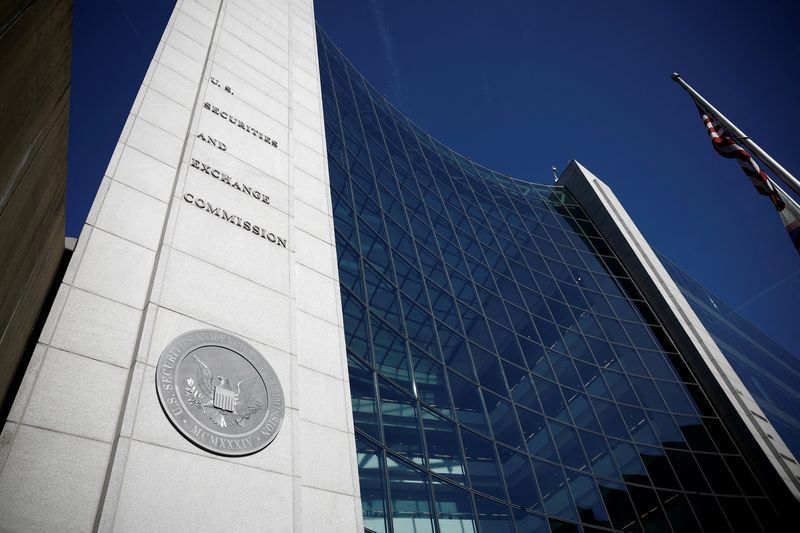
The United States Securities and Exchange Commission has brought civil charges against Jason Satsky, a former co-head of Bank of America's Americas power and renewable energy banking division, in connection with an alleged insider trading scheme that prosecutors say netted an associate $18.5 million in illegal profits. The enforcement action, announced on Friday, represents another high-profile case of information asymmetry in the investment banking sector, where senior professionals have access to commercially sensitive details about pending corporate transactions before they become public knowledge.
According to the SEC's allegations, Satsky disclosed material nonpublic information to Gavin Wolfe regarding the forthcoming acquisition of South Jersey Industries, an energy holding company for which Bank of America was serving as financial advisor. Wolfe, who founded and operates Evergreen Capital, had maintained a personal and professional relationship with Satsky spanning more than two decades. The two men had previously worked together in the power and renewable energy banking space at Credit Suisse before both joining Bank of America in 2012, establishing a foundation of trust that prosecutors allege was subsequently exploited for financial gain.
The timing of the alleged information transfer is critical to the SEC's case. In late 2021, while the transaction negotiations were confidential and ongoing, Satsky purportedly began communicating with Wolfe about the impending acquisition. The communications allegedly continued across multiple settings, including a social occasion that underscores the blurred boundaries between professional and personal life in the investment banking world. When Satsky and Wolfe attended a nationally televised college basketball game between Duke and Kentucky at Madison Square Garden, using luxury box seating that Satsky had accessed through Bank of America, the pair discussed the potential deal.
Wolfe subsequently purchased approximately 2.2 million shares of South Jersey Industries' parent company, representing a total capital commitment of roughly $53 million. When the acquisition was formally announced on February 24, 2022, valued at $8.1 billion, the share price movement generated substantial returns for Wolfe's position. The regulatory filing indicates that Wolfe realised a 36 percent gain on his investment, translating to approximately $18.5 million in profits that the SEC characterises as ill-gotten gains derived from the use of confidential information.
The mechanism of the alleged wrongdoing reflects a persistent vulnerability in financial market regulation. Insiders at major investment banks routinely possess weeks or months of advance notice regarding transactions that can move security prices substantially upon public disclosure. While compliance frameworks and information barriers theoretically limit the dissemination of such sensitive details, personal relationships and informal communication channels can undermine these safeguards. The Duke-Kentucky basketball game encounter exemplifies how informal settings away from the office can facilitate the transmission of material information without creating obvious documentary evidence.
Satsky, aged 59 and based in New York, has categorically denied the SEC's allegations through his attorney, Robert Anello. The defence strategy focuses on demonstrating that Satsky conducted himself appropriately and transmitted no material nonpublic information whatsoever to Wolfe or any other party. This represents a fundamental factual dispute about whether the conversation occurred and, if it did, what precisely was communicated. Similarly, Wolfe, aged 55 with residences in both New York and Sunny Isles Beach, Florida, has categorically rejected all allegations and announced his intention to mount a vigorous legal defence. His counsel, Reed Brodsky, contends that the SEC's case overlooks sworn testimony and documentary evidence demonstrating that Wolfe's investment decision was grounded in an independent investment analysis rather than material nonpublic information provided by Satsky.
The legal proceedings seek multiple remedies designed to address the alleged misconduct comprehensively. The SEC aims to recover the illegal profits that Wolfe obtained through the improperly timed investment. Beyond monetary disgorgement, the regulatory action seeks to impose civil financial penalties against both men and to institute officer-and-director bars that would restrict their future participation in regulated securities activities. These escalating sanctions reflect the seriousness with which financial regulators treat breaches of fiduciary duty and market integrity.
Bank of America's position in the matter has remained notably peripheral to the enforcement action. The institution itself faces no allegations of wrongdoing and has simply confirmed that Satsky's employment terminated in March 2025. This separation occurred after the SEC initiated its investigation but the precise chronology and causation remain unclear from available statements. The bank's swift dissociation from Satsky may reflect both the seriousness of the allegations and a desire to demonstrate proactive compliance to regulators and investors.
From the perspective of Southeast Asian financial markets and investors, this case underscores the critical importance of robust insider trading enforcement mechanisms and the ongoing challenges that regulators face in policing information flows within major financial institutions. Many regional economies are experiencing substantial growth in power and renewable energy sectors, making them attractive targets for international capital and advising relationships with major global investment banks. The South Jersey Industries transaction itself demonstrates how infrastructure and utility sector deals can command substantial valuations and attract significant investor interest.
The distinction between legitimate investment analysis and insider trading ultimately rests on whether a trader possessed material nonpublic information and acted upon it with knowledge of its source. Regulators must reconstruct the timeline of communications, the content and specificity of what was discussed, and the causal relationship between disclosed information and investment decisions. The defence assertion that Wolfe's investment thesis was independent requires demonstrating either that he reached identical conclusions through separate analytical work or that any information received from Satsky was already public or immaterial to his decision-making process.
The broader implications for financial governance extend beyond these two individuals. The case illustrates how personal relationships accumulated over decades in banking create psychological and social commitments that may override compliance training and professional standards. The use of Bank of America resources, specifically the luxury seating at Madison Square Garden, further blurs the line between personal hospitality and the instrumentalisation of corporate assets to facilitate information exchange. Future investigations into insider trading will likely continue scrutinising informal communications and social settings where investment professionals might share sensitive information outside formal compliance channels.

