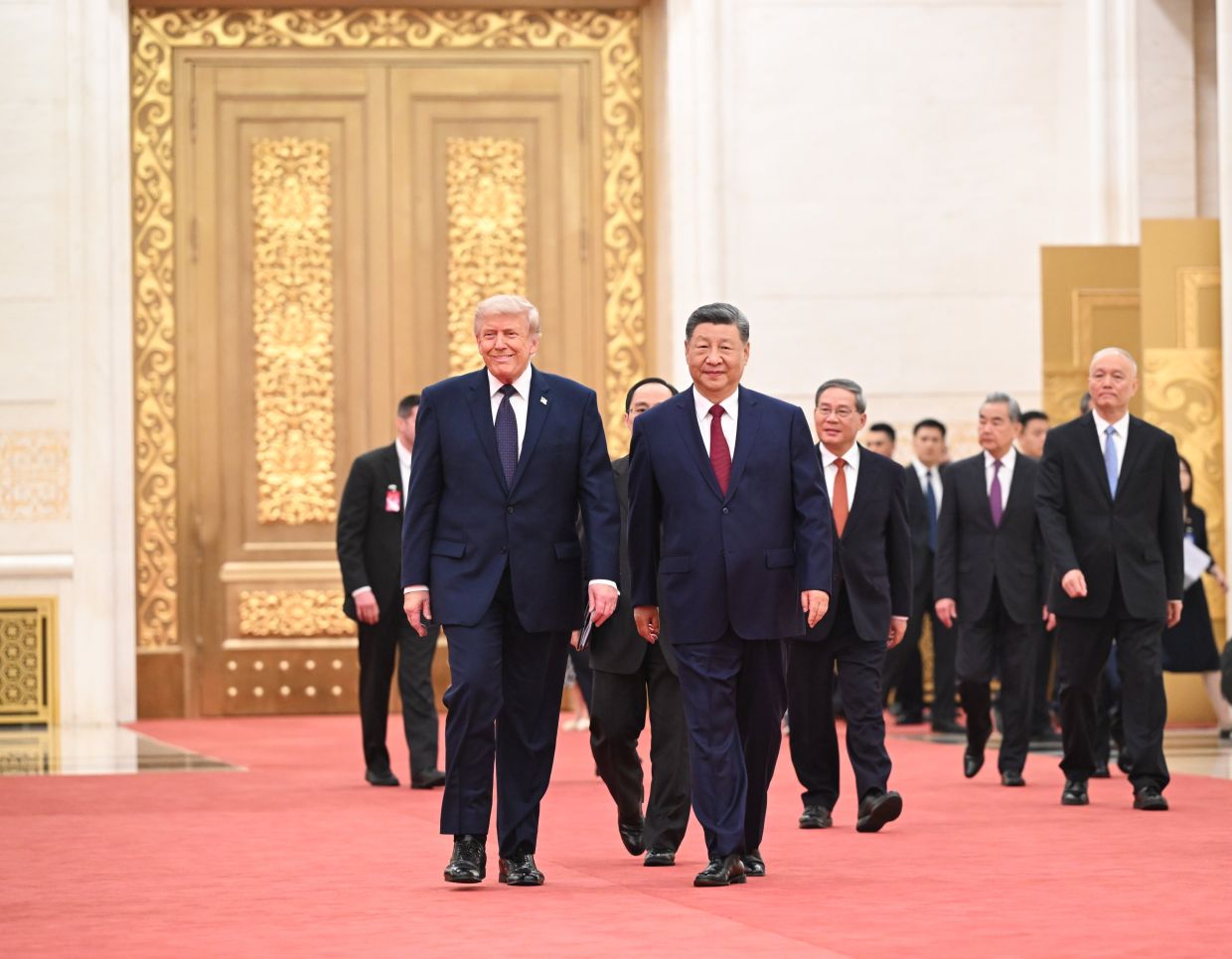
The incoming US administration is fundamentally reshaping the Group of Twenty's negotiating priorities, transforming what traditionally serves as a forum for addressing shared global challenges into what some delegates characterise as a ceremonial backdrop for bilateral great-power politics. This strategic recalibration emerged during this week's sherpa negotiations in Washington, where senior negotiators from member nations gathered for their second drafting session ahead of the December 14-15 summit at Trump National Doral in Miami.
According to two delegation members speaking privately to international media, American negotiators have mounted a sustained campaign since December to purge the joint declaration of references to poverty reduction, energy transition, and gender equality. The US position instead narrows focus to immigration, transnational crime, terrorism, foreign investment flows, and what Washington frames as "fair trade" arrangements. This strategic pruning fundamentally alters the G20's traditional scope, which for two decades has attempted to coordinate responses across development, sustainability, and security challenges facing the global economy.
The effort reflects a deliberate choice to hollowed out the multilateral framework at precisely the moment when developing economies face acute pressures from debt servicing, climate impacts, and technological disruption. One negotiator characterised the American approach as prioritising language that favours US interests over those of smaller and developing economies, suggesting that Washington's negotiating position since the group's initial December meeting has consistently weighted bilateral advantage above collective problem-solving. This framing gained particular significance given that Xi Jinping's expected attendance at Miami creates the geopolitical centrepiece that appears to be driving the summit's shape and focus.
Russia has publicly articulated similar frustrations, though its negotiators participated in this week's talks despite their concerns. Ambassador-at-large Marat Berdyev flagged the narrowing scope to Russian state media, while the Russian delegation led by sherpa Denis Agafonov continued engagement on tracks covering trade, energy, and finance. The fact that even Washington's traditional geopolitical competitors remained at the negotiating table despite their reservations underscores the institutional inertia of multilateral forums, even as their substance erodes under pressure from dominant powers pursuing narrower objectives.
Beijing's response to the American negotiating push presents a notable puzzle. China, which has positioned climate action and renewable energy deployment as central policy pillars, has not objected to the American effort to excise energy transition language from the declaration. One delegate remarked on this restraint with evident surprise, noting that the world's largest renewable energy producer seemed untroubled by losing explicit G20 commitment to climate initiatives. The Chinese embassy in Washington declined to explain this strategic silence, instead offering a statement recounting Beijing's achievements in carbon emissions reduction and renewable capacity without addressing why it did not contest the American push to strip these themes from the multilateral text.
This Chinese reticence may reflect broader diplomatic calculations. Beijing may be prioritising the bilateral summit with Trump and calculated that securing favourable bilateral outcomes outweighs defending language in a collective declaration with limited enforcement mechanisms. Alternatively, China might be signalling flexibility on G20 language in exchange for US concessions on trade, investment, or Taiwan-related issues in the bilateral context. The embassy declined to confirm even which senior official was leading China's negotiating team this week, creating an information vacuum that invites speculation about the importance Beijing assigns to the sherpa process relative to parallel talks at higher levels.
The climate angle merits particular attention for Southeast Asian policymakers. The region faces disproportionate vulnerability to temperature rise and sea-level change, with nations like Vietnam, Thailand, and Indonesia confronting existential threats from coastal inundation. A G20 declaration stripped of binding or aspirational language on energy transition represents a missed opportunity for the world's major economies to reinforce commitment to Paris Agreement pathways. Analysts have previously noted that current Chinese climate pledges fall well short of the roughly 30 per cent emissions cuts required to align with a 2-degree warming trajectory, while lacking defined peak-year targets. Removing G20 language that might have created reputational pressure for enhanced ambition effectively erases one lever for progress.
The structural tensions within the G20 have accumulated over Trump's current term. April's finance ministers' meeting in Washington concluded without a joint statement or customary press conference, marking unprecedented discord within the group's formal processes. The exclusion of Russia from full participation, the first outright suspension of a founding member in the group's history, has drawn objections from multiple governments including South Africa. These fractures suggest the G20 is struggling to function as a deliberative body capable of navigating great-power competition while maintaining inclusive legitimacy.
For Malaysia and other middle-income Southeast Asian economies, the hollowing of the G20 agenda carries material consequences. The forum traditionally provides a stage for developing economies to amplify their voices on debt restructuring, technology transfer, and climate finance—precisely the issues that constrain development prospects in the region. As the agenda contracts toward security and investment issues weighted toward developed-economy interests, the G20 becomes a less useful channel for advancing agendas around poverty reduction and just energy transition. Malaysia's own stake in renewable energy deployment and climate-resilient development will receive less multilateral attention if development themes disappear from G20 texts.
The Miami summit therefore represents not merely a diplomatic gathering but a potential inflection point in how the world's largest economies approach collective action. The transformation of the event into what delegates describe as scenery for a Trump-Xi bilateral encounter signals that great-power bilateral relations now supersede multilateral coordination even within the most senior economic forum. For smaller economies reliant on rules-based systems and inclusive processes, this shift portends a more fragmented global order where power concentrates in bilateral channels less accessible to non-hegemons. The December meeting will demonstrate whether the American negotiating position prevails or whether other major economies ultimately reassert the G20's broader mandate.

