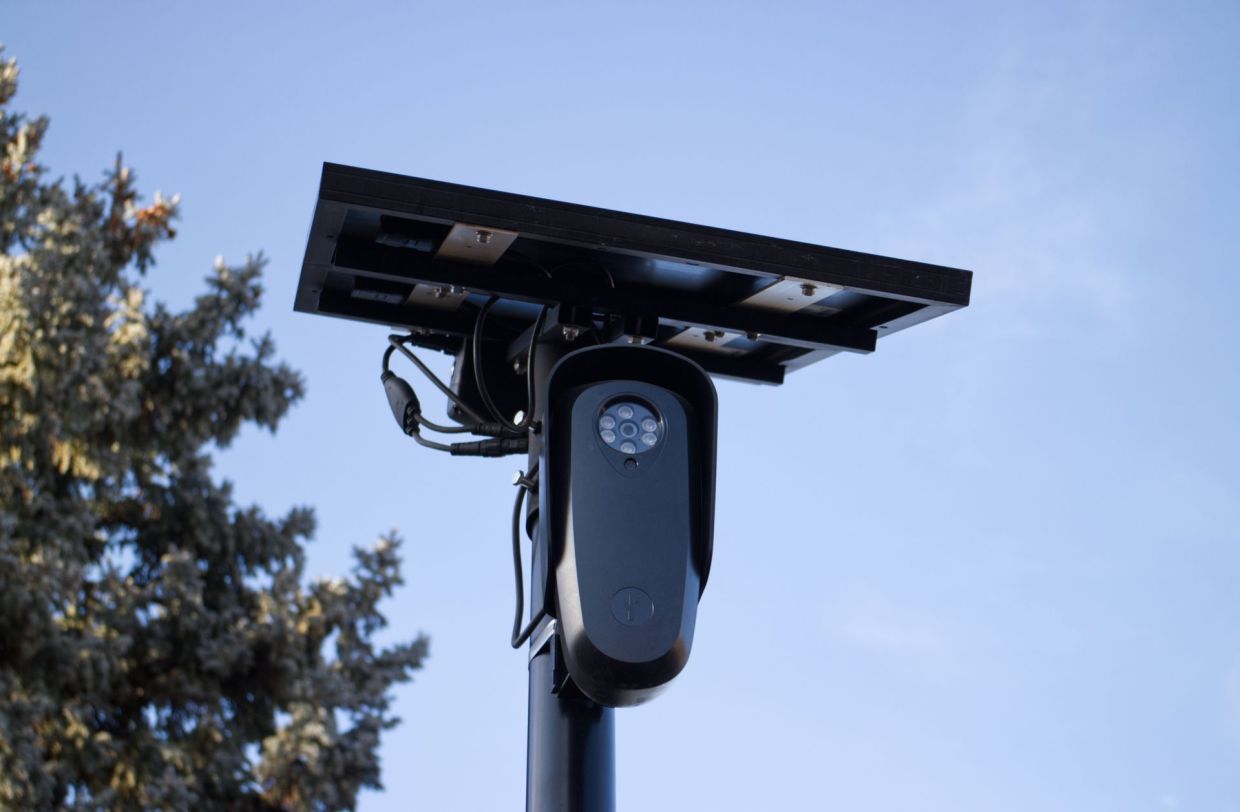
Frustration over police use of automated license plate recognition technology has ignited an unusual alliance across America's deeply fractured political landscape, as civil liberties advocates, conservatives, and ordinary citizens mobilize against what they view as mass surveillance. The backlash centres on Flock cameras—devices deployed by police departments, homeowners' associations, and businesses that capture vehicle identification data and store it in networked cloud systems accessible to law enforcement. This emerging movement represents one of the few issues gaining traction on both the left and right, driven by fundamental concerns about privacy, government overreach, and the absence of judicial oversight.
The hardware itself functions differently from conventional security cameras. Rather than recording continuous video footage, Flock devices capture still photographs of vehicles, extracting information including licence plate numbers, vehicle make and model, colour, and distinctive features like bumper stickers. This captured data persists in Flock's cloud storage for approximately thirty days and can be shared across jurisdictional boundaries—a networked architecture that fundamentally distinguishes it from traditional stationary cameras. Law enforcement agencies query this database routinely during investigations, creating what critics describe as a comprehensive digital ledger of Americans' movements and locations without warrant requirements or meaningful oversight mechanisms.
Concern about the system's potential for abuse appears well-founded. An investigation by The Washington Post documented accusations against at least fifty police officers who misused Flock access, predominantly to monitor romantic partners and ex-partners without legitimate investigative cause. News reports have further revealed officers using the system to track women who obtained abortions—illegal in numerous American states—while others illicitly forwarded Flock data to immigration enforcement agents. These documented cases have galvanized privacy advocates who argue that networked surveillance technologies create systemic vulnerabilities to official misconduct, regardless of stated intentions.
Police defenders highlight genuine investigative utility. Richmond, Virginia Police Official Jon Bridges, whose department adopted Flock in 2023, emphasises that the technology proves invaluable for cases involving vehicles. He recounts a May domestic homicide investigation where detectives used Flock data to identify a suspect fleeing in a pickup truck, subsequently arresting him in an adjacent county after he appeared on another camera. Such successes underscore the legitimate law enforcement applications driving adoption across American jurisdictions, yet simultaneously illustrate the concerns privacy advocates raise about tracking without warrants.
The backlash has transcended traditional ideological boundaries. The American Civil Liberties Union, representing the civil liberties left, characterises the movement's growth as "stunning," while libertarian-leaning conservatives express similar objections to government surveillance infrastructure. Conservative media figure Tucker Carlson has lauded camera vandals as "decent, patriotic Americans" exercising self-help against government intrusion—language reflecting the movement's unusual political reach. This convergence suggests that mass surveillance concerns operate outside conventional partisan frameworks, resonating with diverse constituencies concerned about state power and personal privacy.
Grassroots organisation has proven remarkably effective. The Facebook group DeFlock America has accumulated over 600,000 members with membership expanding daily. Activists have constructed crowdsourced maps documenting camera locations, shared technical methods for disabling devices, and celebrated individuals arrested for vandalism. A self-described vigilante operating under the pseudonym Nomark, just twenty years old, has leveraged an Instagram following of 500,000 to circulate instructional guides for rendering cameras inoperable. Though Nomark acknowledges disabling approximately thirty devices near Minneapolis and admits his actions violate criminal law, he reports diminishing personal fear as the movement gains momentum—a psychological shift reflecting broader normalisation of resistance.
Municipal governments increasingly respond to constituent pressure. Over seventy cities and towns have terminated contracts with Flock in recent months according to ACLU tallies, spanning geographically diverse locations from Los Angeles to small Virginia communities. This municipal response pattern suggests that grassroots mobilisation—through city council meetings, mayoral communications, and public advocacy—translates into tangible policy reversals when residents organise systematically. Steven Keener, a criminology professor at Christopher Newport University, notes that such engagement channels provide practical pathways for citizens to challenge surveillance expansion without requiring federal legislative action.
Flock CEO Garrett Langley has responded defensively, characterising opponents as "terrorists"—inflammatory language that arguably reinforces privacy advocates' characterisations of Flock as insensitive to legitimate concerns. This rhetorical escalation contrasts sharply with the movement's ability to articulate privacy concerns resonating across political demographics. By framing critics as extremists rather than addressing substantive civil liberties arguments, Flock leadership may inadvertently validate the movement's contention that surveillance industry interests subordinate democratic accountability to commercial expansion.
For Southeast Asian observers, this American controversy offers instructive lessons about technology governance and democratic resistance. Malaysia and the region face expanding surveillance infrastructure—from facial recognition systems to traffic enforcement cameras—often without robust public debate or legislative safeguards comparable to American constitutional protections. The American movement demonstrates that grassroots organisation, cross-partisan coalition-building, and public pressure campaigns can constrain surveillance expansion even when technology companies and government agencies champion adoption. Conversely, the success of vandalism and organised resistance in America may prompt surveillance advocates elsewhere to implement more resilient infrastructure or accelerate deployment before public opposition crystallises.
The movement's durability remains uncertain. Technology companies continuously improve equipment resilience and detection systems, potentially rendering vandalism increasingly difficult. Police departments may leverage the controversy to justify enhanced security measures around camera installations. Federal legislation could preempt municipal authority to reject surveillance systems, though current political fragmentation makes comprehensive national solutions unlikely. Nevertheless, the movement has already shifted the surveillance debate's terms, establishing that ordinary Americans—across ideological lines—question whether networked vehicle tracking serves democratic interests or merely extends government monitoring capabilities beyond meaningful constraint.

