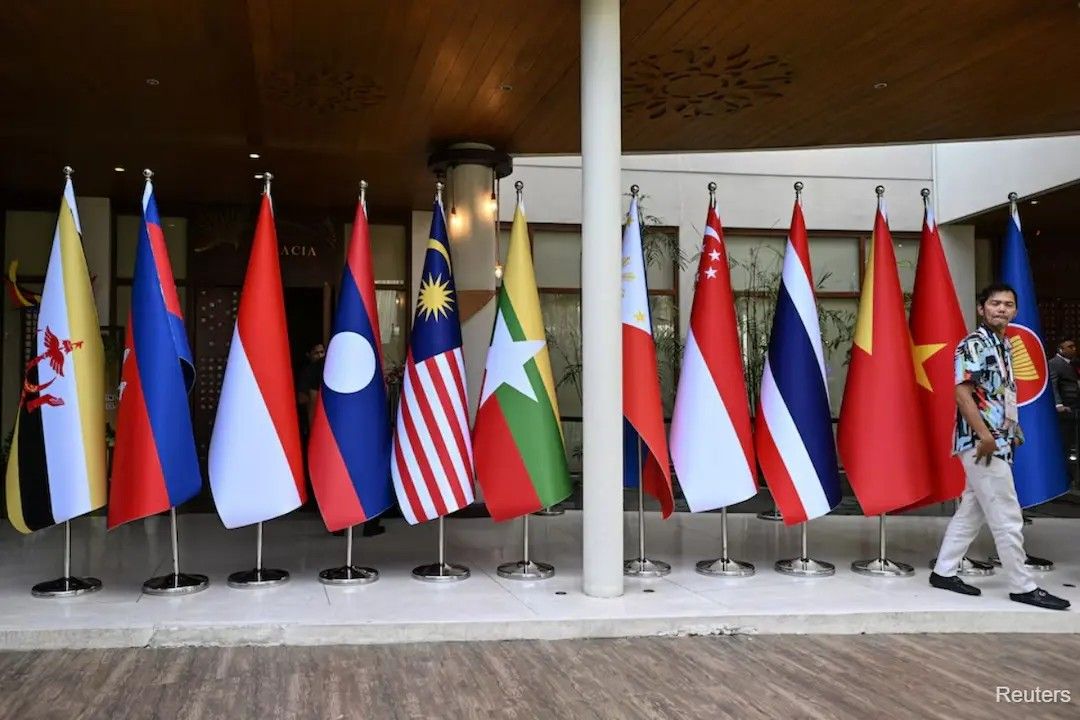
The prospect of meaningful regional cooperation faces significant headwinds this week as the Association of Southeast Asian Nations gathers in Manila, with mounting friction over the South China Sea appearing poised to dominate proceedings and complicate efforts to forge unified positions on pressing regional challenges. The tensions crystallised immediately upon the arrival of US Secretary of State Marco Rubio, whose appearance coincided with Washington's sharp rebuke of what it characterised as dangerous conduct by Chinese forces in the disputed waterway—a statement that underscores the geopolitical stakes shaping the gathering and hints at deeper divisions within the bloc regarding how to manage great power competition.
The immediate spark for escalating rhetoric came from a confrontation between Philippine and Chinese maritime personnel at the Second Thomas Shoal, marking the first significant seaborne incident in months and demonstrating the fragility of informal arrangements in the contested waters. According to Philippine accounts, China Coast Guard members physically assaulted Filipino sailors stationed aboard a grounded vessel that serves as a military garrison on the disputed formation. Beijing's version contradicts this narrative substantially, asserting that Filipino personnel aboard small rubber boats initiated the provocative approach toward Chinese vessels. This divergence in accounts highlights how interpretations of maritime incidents remain fundamentally polarised between claimant states, leaving room for escalation and undermining confidence-building measures that regional diplomats have spent years attempting to construct.
Rubio's presence in Manila carries symbolic weight beyond routine diplomatic engagement. Writing in an op-ed distributed to Philippine media on Tuesday morning, the Secretary of State articulated a muscular defence of American interests in Southeast Asia, emphasising Washington's commitment to maintaining freedom of navigation in waters vital to global commerce and regional stability. His framing of the South China Sea through the prism of sovereignty and security protection for ASEAN states reflects a strategic calculus that positions the US as a necessary counterbalance to Chinese assertiveness. Rubio's explicit warning that control of these waters by powers willing to weaponise trade would threaten both American and Southeast Asian security interests amounts to a thinly veiled reference to Beijing's demonstrated willingness to employ economic coercion, a concern that resonates particularly among smaller nations dependent on Chinese markets.
The geopolitical dimension takes on added urgency given Beijing's longstanding and expansive territorial claims across nearly the entire South China Sea. Despite a 2016 international tribunal ruling that invalidated the legal basis for these claims, China has proceeded to militarise artificial features and consolidate de facto control over strategic locations. This persistence, combined with occasional forceful interactions with Philippine personnel, creates an unpredictable environment where diplomatic breakthroughs remain elusive. Rubio signalled openness to a bilateral encounter with Chinese Foreign Minister Wang Yi during the Manila proceedings, suggesting that despite public statements emphasising freedom of navigation, backdoor channels may facilitate more pragmatic discussions about managing competition and preventing miscalculation.
The collision between strategic pressure from Washington and regional consensus-building needs manifests most clearly in the stalled negotiations over a Code of Conduct between ASEAN and China. This proposed framework, repeatedly delayed and currently in the consultation phase, represents the bloc's most ambitious effort to establish rules governing conduct in the South China Sea and preventing incidents from spiralling into larger conflicts. Analysts monitoring the negotiations have grown increasingly sceptical that the final document will contain binding enforcement mechanisms with genuine teeth, fearing instead that it will function as an aspirational statement lacking practical consequences for violations. The latest shoal incident reinforces these concerns, suggesting that even closer cooperation between claimant states remains contingent on narrower national interests rather than regionalism's higher ideals.
Beyond the maritime flashpoint, broader economic and energy security considerations are shaping this week's diplomatic agenda in ways that compound regional vulnerabilities. The Philippines formally declared a national energy emergency this March and has subsequently cast an increasingly wide procurement net to secure fuel supplies, including controversial purchases from Russia—a position that places Manila in direct tension with Western allies' sanctions regime against Moscow. The arrival of Russian Foreign Minister Sergei Lavrov in Manila on Tuesday underscores how the Ukraine conflict has created unexpected alignments and divisions within Southeast Asia's traditionally non-aligned foreign policy framework. The bloc's collective push for ratification of its Framework Agreement on Petroleum Security represents an attempt to build internal resilience against external disruptions, though implementation remains patchy across member states facing distinct energy challenges.
Myanmar's continued isolation from ASEAN high-level forums has become perhaps the most emotionally fraught issue confronting the bloc, pitting solidarity and engagement principles against concerns regarding the military junta's humanitarian record. Since the 2021 coup that toppled Aung San Suu Kyi's government and triggered an ongoing civil war, ASEAN has maintained Myanmar's formal exclusion from its summits—an unprecedented move that reflects the depth of disagreement within the association about how to respond to the dramatic political rupture. The situation has proven particularly testing for Thailand, which shares an extensive border with Myanmar and hosts millions of Burmese refugees fleeing violence and repression. Thai Foreign Minister Sihasak Phuangketkeow has emerged as the most prominent advocate within ASEAN for Myanmar's reintegration, arguing that five years of isolation necessitates renewed dialogue and direct engagement with Myanmar's leadership.
Thai officials have signalled that Myanmar's military leader Min Aung Hlaing would visit Thailand in August, framing such engagement as essential groundwork for eventual reintegration. This diplomatic manoeuvre reflects Bangkok's conviction that isolation has proven counterproductive and that direct conversation between ASEAN counterparts offers the only viable path toward influencing developments in Myanmar. However, this position encounters resistance from other bloc members, most notably Malaysia, where Foreign Minister Mohamad Hasan has explicitly stated his country's unwillingness to normalise relations while systematic oppression continues within Myanmar. The Malaysian stance articulates a principled position that distinguishes between pragmatic engagement and tacit acceptance of rights violations, creating internal ASEAN tensions that complicate efforts to forge consensus on reintegration pathways.
The contradictions facing ASEAN in its approach to Myanmar reflect broader conceptual tensions within the association regarding whether regional stability requires accommodation of member states regardless of internal governance practices, or whether certain human rights thresholds should condition full participation in bloc activities. Philippine President Ferdinand Marcos's May call for a "fine-tuning" of ASEAN's five-point conflict resolution plan acknowledged that the existing framework had stalled without producing meaningful progress toward Myanmar's political stabilisation or civil war resolution. This diplomatic language masks fundamental disagreements about whether the five-point plan itself requires substantive revision or whether implementation has simply proven inadequate given Myanmar's military's intransigence. The upcoming Manila meeting will likely see renewed attempts to navigate between engagement advocates and principled sceptics, a balancing act that has characterised ASEAN responses to Myanmar since 2021.

