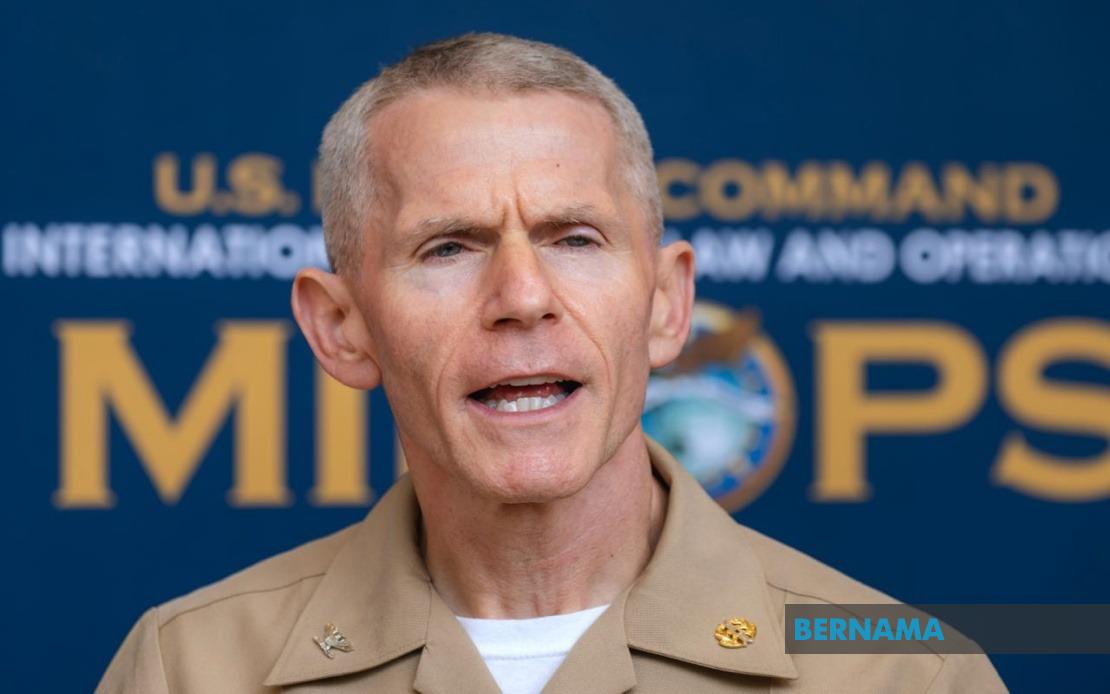
The United States Pacific Command has reiterated its determination to sustain a robust military presence throughout the South China Sea as a cornerstone of its wider strategy to safeguard peace and stability across the Indo-Pacific region. Speaking at an international military law conference in Kuala Lumpur, Navy Captain Dustin Wallace, who serves as USPACOM's Staff Judge Advocate, underscored that the waterway's security remains integral to American strategic interests and those of its regional partners. The declaration comes as geopolitical tensions in the contested waters continue to simmer, with multiple claimants asserting overlapping territorial rights.
Wallace articulated USPACOM's core mission as maintaining vigilance against actions that could undermine regional peace, whether through aggressive military posturing or activities designed to destabilise the status quo. This framing reflects Washington's broader concern about the militarisation of the South China Sea and efforts by various actors to alter established norms through coercive means. The command's approach emphasises deterrence through presence and capability, signalling to potential aggressors that any attempt to use force or intimidation would face a credible countermeasure.
Central to USPACOM's operational philosophy is an unwavering commitment to international legal frameworks, particularly principles governing freedom of navigation and unrestricted maritime commerce. These foundational concepts, Wallace stressed, form the bedrock of mutual understanding between the United States and its Indo-Pacific allies, protecting what Washington views as universal rights rather than privileges granted by any single nation. The emphasis on sovereign equality and sovereign rights reflects growing concerns that some actors seek to establish spheres of influence that would effectively exclude competitors or restrict passage through international waters.
Wallace's remarks on ASEAN's importance signal a notable strategic shift in how Washington engages with the region's primary diplomatic institution. Rather than adopting a one-size-fits-all approach, USPACOM intends to tailor its partnership strategy to accommodate the distinct security priorities and geopolitical circumstances of individual member states. This recognition acknowledges the reality that ASEAN nations, despite their collective identity, possess divergent threat perceptions, economic interests, and diplomatic alignments that shape their foreign and defence policies.
The command's stated objective to work with each country according to its respective sovereign interests represents a pragmatic adjustment to the complex dynamics within ASEAN, where consensus-building often proves challenging and national interests sometimes diverge. By offering flexibility rather than demanding uniform alignment, USPACOM aims to deepen bilateral relationships while respecting the autonomy of partner nations. This approach respects the principle of ASEAN centrality—the notion that the regional grouping should lead diplomatic and security initiatives affecting Southeast Asia—while preserving American strategic influence.
Malaysia's hosting of the 37th International Military Law and Operations Conference demonstrates its pivotal role within regional security architecture. The gathering, designated MILOPS 26, convened more than 300 military leaders, legal advisors, policymakers and academic specialists from across thirty nations, creating a unique forum for candid discussions on contentious issues. The conference's broad theme, spanning from maritime concerns to space-based capabilities, reflects the expanding complexity of modern security challenges facing Indo-Pacific nations.
The conference itself serves purposes beyond ceremonial acknowledgement. By bringing together military legal experts and policymakers, the event facilitates informal diplomacy on sensitive matters where formal negotiations might prove intractable. Discussions on the law of the sea, rules of engagement, and conflict prevention mechanisms help establish shared understandings that can reduce miscalculation risks. For Malaysia, the conference elevates its standing as a neutral venue for addressing regional security issues, positioning the country as both a stakeholder in stability and a trusted interlocutor among competing powers.
For Southeast Asian nations, the American commitment to South China Sea security operations carries significant implications. While some countries welcome the US presence as a counterbalance to Chinese military expansion, others maintain delicate diplomatic balances designed to avoid appearing aligned exclusively with Washington. Malaysia itself navigates this terrain carefully, maintaining strong economic ties with China while valuing security partnerships with the United States and other democratic nations. The USPACOM statement effectively signals that American strategic commitment to the region remains firm regardless of broader geopolitical shifts.
The emphasis on upholding international law and the rules-based order reflects a core tension in Indo-Pacific geopolitics. While multiple nations rhetorically support these principles, their practical application remains contested. Disputes over maritime boundaries, fishing rights, and resource extraction frequently pit principle against national advantage. USPACOM's insistence on these frameworks suggests Washington intends to maintain pressure on parties it believes violate established norms, even as it acknowledges the legitimate interests of regional actors.
Wallace's affirmation that USPACOM seeks both to strengthen existing partnerships and forge new relationships indicates American confidence in its ability to navigate regional complexities despite great-power competition. The strategy assumes that demonstrating commitment to genuine partnership rather than hegemonic control will yield sustained cooperation. This approach contrasts with perceptions of coercive diplomacy, positioning American engagement as fundamentally different from approaches that might rely on economic pressure or military intimidation to achieve compliance.
The broader context of USPACOM's statement reflects Washington's recognition that Indo-Pacific stability directly affects American prosperity and security. As maritime commerce in the region accounts for trillions of dollars in annual trade, including goods destined for American consumers, freedom of navigation transcends abstract principle to become an economic imperative. This nexus between strategic interest and international law provides the conceptual framework for sustained American military presence.
Looking forward, USPACOM's commitment suggests continued operational tempo in the South China Sea, including freedom of navigation operations and regular military exercises with allied nations. These activities, while presented as routine maintenance of established rights, remain controversial among some regional observers who perceive them as unnecessarily provocative. The delicate balance between demonstrating resolve and avoiding escalation will likely define American operations in the contested waters for years to come.

