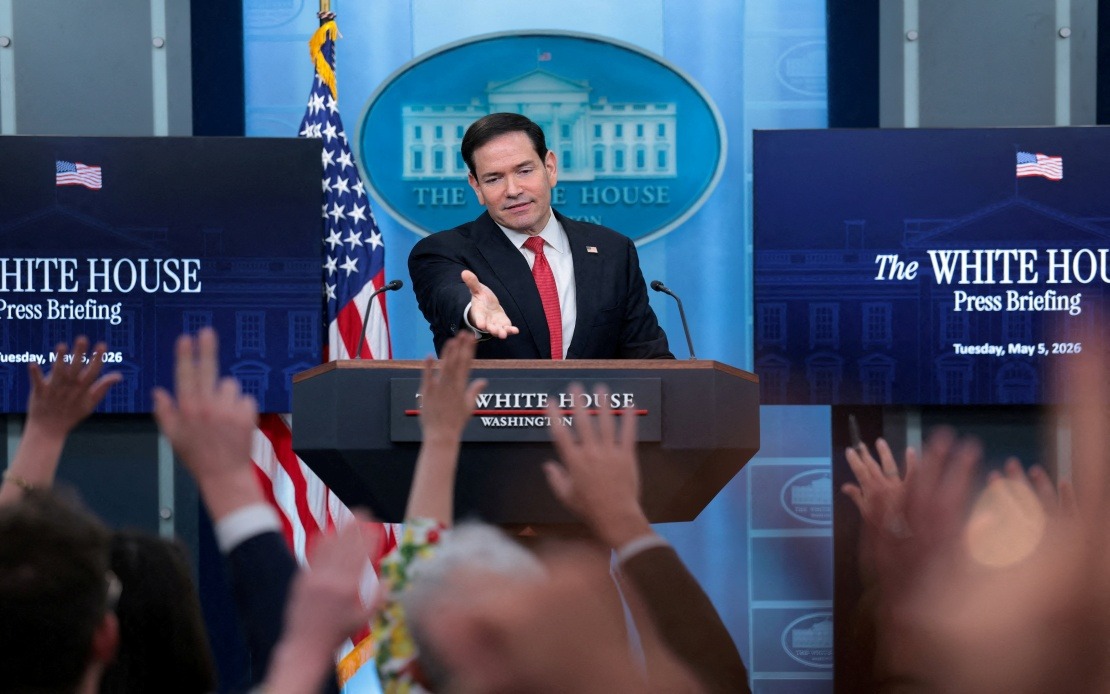
The United States continues to hold the door open for diplomatic engagement with Iran, according to Secretary of State Marco Rubio, who outlined Washington's approach during an ASEAN ministerial meeting in Manila on Wednesday. Rubio's remarks signal that despite heightened regional tensions, the Biden administration has not abandoned the possibility of negotiated settlements, though his comments carry a conditional tone that reflects deep scepticism about Iranian willingness to participate in good-faith talks.
Rubio emphasised that America's commitment to diplomacy remains foundational to its foreign policy approach. Speaking before ASEAN delegates, he reiterated that the United States views negotiated settlements as the preferred mechanism for resolving disputes, including those with Tehran. This positioning is significant for Southeast Asian nations, many of which maintain complex relationships with both Washington and Iran and have consistently advocated for multilateral dialogue as a means of de-escalating Middle Eastern tensions that could reverberate across their own maritime trade routes and regional stability.
Crucially, Rubio indicated that informal communication channels between Washington and Tehran remain active. The secretary noted that Iran has engaged in both direct and indirect communications with the United States regarding potential discussions. This disclosure suggests that despite public rhetoric on both sides and years of diplomatic tension, back-channel communications persist—a common feature of international relations when official diplomatic relations are strained or non-existent. For Malaysian observers and regional policymakers, such communications indicate that neither capital has entirely closed the possibility of broader engagement.
However, Rubio placed substantial emphasis on what he characterised as Iran's lack of seriousness in pursuing negotiations. He articulated a clear quid pro quo framework: American willingness to engage depends entirely on whether Tehran demonstrates genuine commitment to talks. This formulation represents a hardening of negotiating terms compared to previous diplomatic frameworks, suggesting that Washington will not accept theatrical displays of engagement while substantive concessions remain off the table. The secretary's tone reflected frustration with what US officials perceive as Iranian stalling or insincere overtures.
The consequences of Iranian intransigence, according to Rubio, would extend beyond mere suspension of talks. He warned that if Iran refuses serious engagement, the United States will pursue unilateral measures to protect its own interests and those of its regional allies. This language carries implicit threats of economic sanctions, military posturing, or other coercive measures—options the Trump administration employed extensively and which remain available to policymakers. For Malaysia and ASEAN, such escalation could disrupt oil markets, complicate shipping through the Strait of Hormuz, and draw the region into geopolitical competitions that Member States prefer to avoid.
Rubio further emphasised that America's openness to constructive negotiations must be paired with iron-clad respect for commitments. He explicitly referenced Iran's alleged violations of previous agreements, suggesting that trust has been severely eroded. This point carries historical weight, particularly given the contentious circumstances surrounding the 2015 Joint Comprehensive Plan of Action (JCPOA), which the Trump administration abandoned in 2018 and which remains a central point of contention between Washington and Tehran. Rubio's insistence on compliance mechanisms reflects lessons the United States believes it learned from that experience.
The secretary's remarks illuminate the tension at the heart of current US-Iran relations: Washington expresses rhetorical openness to diplomacy while simultaneously setting conditions so stringent that Iranian acceptance seems unlikely. This posture allows the administration to position itself as the reasonable party if negotiations collapse, while reserving the right to implement more aggressive measures. For Southeast Asian nations seeking to maintain balanced relationships across the Middle East, this dynamic creates diplomatic complexity, as they must acknowledge American security concerns while avoiding entanglement in confrontation.
Rubio's comments were delivered during an ASEAN forum, a venue choice that underscores American interest in maintaining regional support for its Middle Eastern policies. By addressing these themes to Southeast Asian foreign ministers, Washington signals that it views the region not merely as peripheral to Middle Eastern affairs but as stakeholders in maintaining stability and freedom of navigation. ASEAN nations, through which enormous quantities of global trade flow and whose members depend heavily on Middle Eastern energy supplies, have substantial interests in preventing escalation.
The broader context informing Rubio's statements includes ongoing tensions between the United States and Iran over nuclear programme development, regional proxy activities, and maritime security. Recent years have witnessed several direct military confrontations and assassination campaigns that have heightened mutual distrust. Against this backdrop, Rubio's willingness to engage verbally on diplomacy represents a modest de-escalatory gesture, even as his conditional framing suggests low expectations for breakthrough negotiations in the near term.
For Malaysian policymakers and regional observers, the key takeaway is that American flexibility on Iran remains circumscribed by stringent preconditions. Malaysia, as a significant Muslim-majority nation with historical ties to both Iran and Western powers, occupies a unique diplomatic position. Understanding that US engagement with Iran remains conditional rather than unconditional allows Malaysian officials to calibrate their own approach to regional mediation efforts and to anticipate how American policy might shift depending on Tehran's negotiating posture.
The medium-term trajectory of US-Iran diplomacy will likely depend on whether Tehran signals increased willingness to engage on Washington's terms or whether both sides continue their current pattern of mutual recrimination and limited interaction. Rubio's Manila remarks suggest that any diplomatic breakthrough would require substantial Iranian concessions on nuclear matters, regional activities, and verification mechanisms—preconditions that Iranian leadership has historically resisted. The divergence between expressed openness to talks and the actual conditions attached to negotiations will continue to shape Middle Eastern geopolitics and its spillover effects on Southeast Asia.

