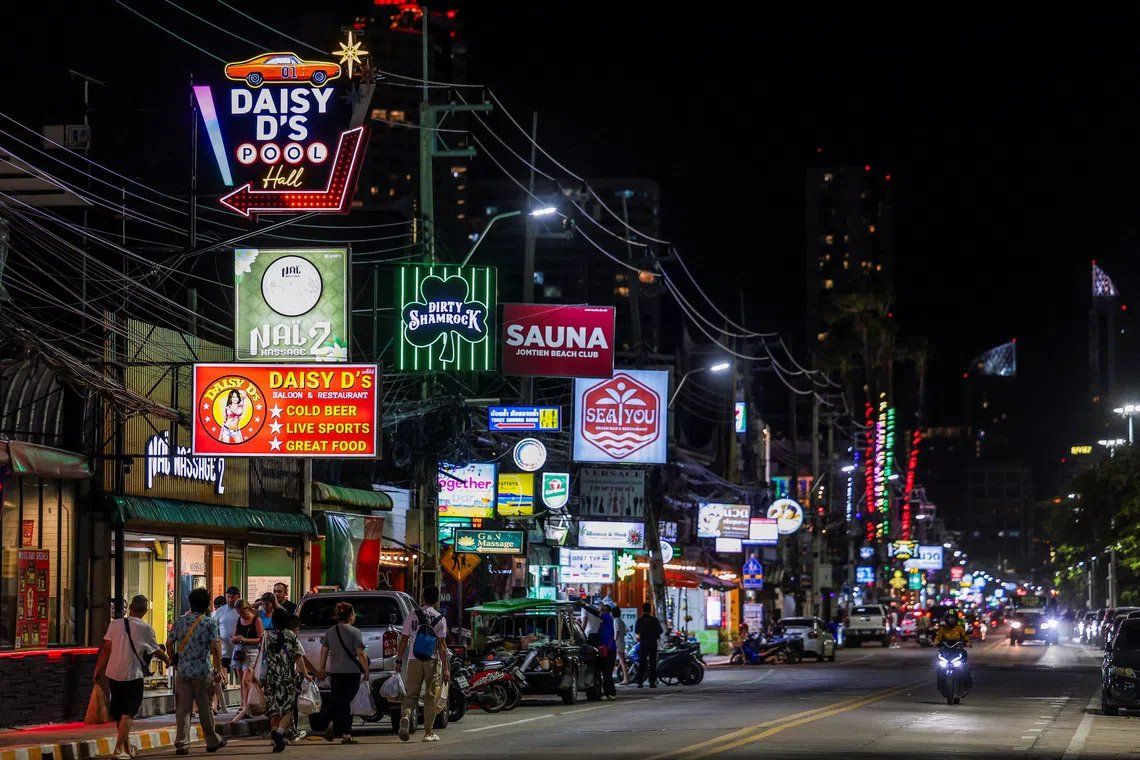
The USS Abraham Lincoln, returning from an extended Middle East deployment, is preparing to dock in Thailand's Pattaya region this week, signalling both economic opportunity and renewed scrutiny of the resort city's complicated relationship with military shore leave. Two accompanying Navy vessels will join the carrier at Laem Chabang port, disembarking nearly 5,000 sailors and Marines who have spent over 200 days deployed at sea. For Pattaya's tourism-dependent economy, the arrival represents a significant injection of potential spending during a period of acknowledged commercial slowdown that has affected businesses across the city.
The carrier's journey reflects broader geopolitical complexities in the Indo-Pacific region. After departing its San Diego home port in November, the Abraham Lincoln was rerouted to the Middle East to support military operations tied to the U.S.-Israeli conflict with Iran, setting what Democratic lawmakers have described as a modern record for consecutive days deployed at sea. This extended assignment has positioned the vessel at the centre of sustained American military presence in contested waters, while the crew's extended confinement has reportedly sparked concerns about personnel welfare.
Local authorities in Pattaya are preparing for the sailors' arrival by escalating law enforcement operations designed to manage the city's notorious sex-tourism industry. Over the past weekend, police conducted raids that resulted in 40 to 50 detentions related to suspected prostitution activities. Additional patrols are being mobilized around Pattaya's central beachfront and entertainment zones, representing a coordinated enforcement effort ahead of the military visit. Police chief Anek Srathongyoo acknowledged the inherent challenges in this undertaking, noting that detection of illegal sex work in public spaces remains difficult, even with enhanced police presence.
Prostitution technically violates Thai law, yet the sex industry operates with considerable visibility throughout major tourism destinations, particularly in Pattaya and parts of Bangkok. This contradiction between legal prohibition and commercial reality reflects decades of accommodation between authorities, business operators, and international clientele. The FBI identified Pattaya as one of the world's leading sex-tourism destinations a decade ago, a designation that underscores the scale of the industry's entrenchment within the city's economic and social fabric.
Economic projections for the visit centre on potential daily spending by American personnel. Pattaya's mayor, Poramase Ngampiches, estimates that each sailor could spend between 1,000 and 3,000 baht—approximately $30 to $91—per day, depending on the length and nature of their shore leave. Since military protocols typically stagger personnel disembarkation to maintain operational readiness, visitor impact will unfold gradually rather than as a concentrated surge. The mayor expressed cautious optimism that the deployment would provide short-term economic stimulus to a city struggling with reduced visitor volumes.
The broader commercial implications remain uncertain and spatially dependent. Pattaya maintains over 300,000 hotel rooms, yet spending patterns among sailors could significantly affect which businesses benefit most. Tourism federation president Thanet Supornsahasrungsi noted that personnel might choose to travel to Bangkok or other destinations, distributing spending beyond Pattaya's immediate economy. This spatial diffusion represents a complicating factor in calculating the precise economic value of the carrier's visit to the local hospitality and entertainment sectors.
Sentiment among Pattaya's business community reflects a mixture of anticipation and anxiety about the visit's implications. Lisa Hamilton, president of the Pattaya Nightlife Business Association, framed the announcement as a lifeline for an industry experiencing unprecedented commercial contraction. She emphasized that the current economic downturn in the city has been the most severe in her two decades of residence in Pattaya, suggesting that the carrier visit carries outsized psychological and financial significance for merchants already facing margin pressures.
However, the anticipated spending surge must be weighed against documented health and safety risks identified by academic observers. Pipatpong Fakfare, an associate professor at Bangkok University's School of Humanities and Tourism Management, highlighted that rapid increases in customer demand within the sex-tourism sector correlate with elevated risks of sexual exploitation and the transmission of sexually transmitted infections. These concerns reflect documented patterns from previous military port visits and underscore that economic benefits carry externalized social costs concentrated among vulnerable populations within the entertainment industry.
The welfare of deployed personnel themselves adds another dimension to the visit's implications. Recent reporting from military-focused outlets has documented suicide attempts and declining morale aboard the Abraham Lincoln, conditions potentially connected to the ship's extended deployment and operational pressures. For sailors arriving in Pattaya after months at sea, the availability of the city's entertainment district presents both recuperative opportunity and potential risks related to substance use, financial exploitation, and psychological stress management. These concerns highlight tensions between individual servicemembers' personal autonomy during authorized shore leave and institutional responsibility for crew welfare.
The visit encapsulates the complex dynamics that characterize U.S. military presence in Southeast Asia. Thailand's strategic location, established port infrastructure, and historically cooperative relationship with American forces have positioned cities like Pattaya as predictable rest-and-recuperation destinations for deployed naval personnel. Yet each such visit replicates social and health challenges that local authorities must manage through enforcement and public health intervention, with limited resources and contested legal frameworks. For Malaysia and the broader region, the Abraham Lincoln's call at Pattaya serves as a reminder of how military deployments intersect with tourism economies, transnational sex markets, and questions of sustainable development within strategically important but economically vulnerable destinations.

