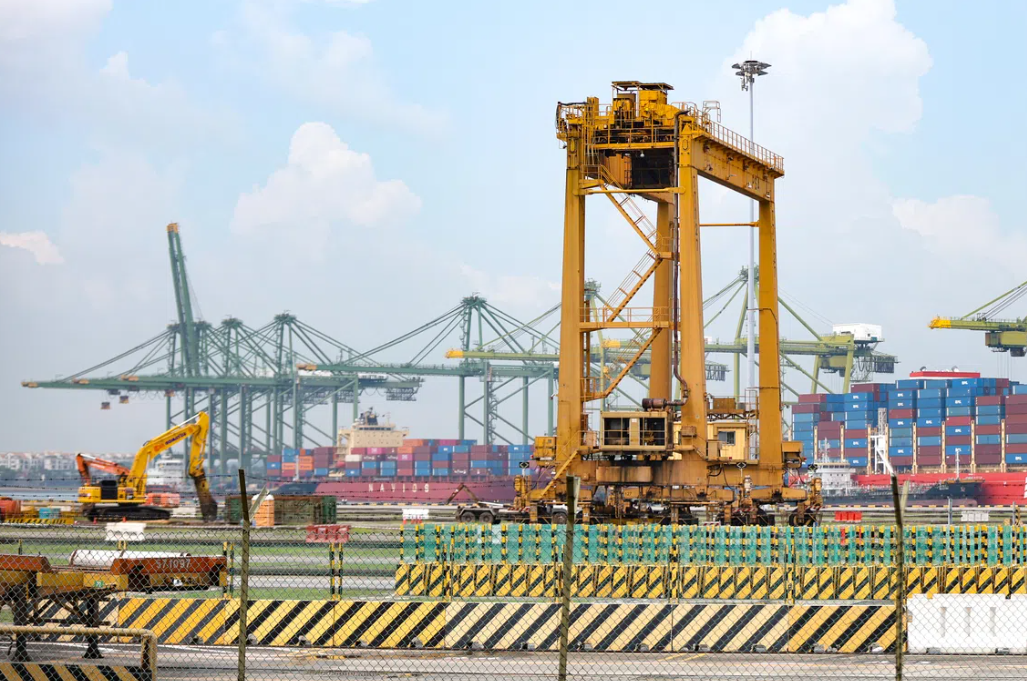
The Trump administration has turned its attention to what it describes as a sophisticated global tariff-dodging operation, fingering Singapore and dozens of other economies as unwitting—or perhaps complicit—participants in what the White House calls "The Great Transshipment Scam". Released in mid-August, the report alleges that Chinese exporters are systematically routing goods through intermediate countries with lower tariff exposure, disguising the true origin of their products to gain entry into the American market. This strategy represents a fundamental challenge to US trade enforcement, striking at the heart of Washington's tariff architecture that has been central to its economic policy for nearly a decade.
The mechanics of this alleged evasion scheme are relatively straightforward but effective. Chinese manufacturers export goods to third countries where they undergo minimal processing or simply change transport vessels—a practice known as transshipment. Once repackaged with the intermediate country's origin label, these goods proceed to the United States under a false identity, successfully sidestepping the punitive tariffs that would apply if their Chinese source were known. The sophistication lies not in any technical innovation but in the exploitation of legitimate global supply chains and the gaps in customs enforcement across multiple jurisdictions. By distributing the scheme across dozens of economies, Chinese exporters have created a network that is difficult for any single country to police unilaterally.
The financial implications of this alleged network are staggering. Using data compiled from both government agencies and private sector analyses, the White House estimates that tariff-evading transshipments may have deprived the US Treasury of between USD 40 billion and USD 303 billion in customs revenue. This vast range reflects the inherent difficulty in quantifying shadow trade, but even the lower bound represents a sum that would dwarf many nations' annual budgets. Such losses directly undermine the tariff regime that the Trump administration has laboured to construct since 2018, effectively making a mockery of trade enforcement efforts if the allegations prove substantive.
Singapore's placement in the third tier of the report's three-tiered classification reveals how Washington views the Republic's vulnerability to exploitation. Unlike Tier 1 economies such as Canada, the European Union, Japan and Taiwan—where transshipment risks are embedded within massive, legitimate trade flows—or Tier 2 nations including Malaysia, Indonesia, Thailand and Vietnam that have deep economic integration with China, Singapore occupies a different category. The White House describes Tier 3 economies as "small, opportunistic Chinese targets" possessing specific structural weaknesses that make them attractive for rerouting schemes. These include low-cost labour, free zones, port access, bonded warehousing facilities and limited customs enforcement capacity. For a nation that prides itself on efficient administration and strict regulatory compliance, such a designation carries uncomfortable implications about how external actors perceive its institutional strengths and vulnerabilities.
What distinguishes Singapore's situation from its regional neighbours is the nature of its positioning within global supply chains. While Malaysia, Thailand and Vietnam are classified as Tier 2 due to their significant economic integration with China and their role as alternative manufacturing hubs, Singapore functions differently. The Republic is primarily a transshipment hub itself—a legitimate geographical gateway for goods moving between Asia and the West. This inherent function, while legal and beneficial to Singapore's economy, paradoxically makes it vulnerable to misuse. The same infrastructure that enables legitimate commerce—deep-water ports, advanced logistics networks, free trade zones and efficient customs procedures—can theoretically be exploited for illegitimate purposes if proper safeguards are not maintained or if enforcement capacity is overwhelmed.
The Trump administration has signalled its intent to deploy technological solutions to combat the alleged scheme. The announcement of an AI-powered "Detective Border" system suggests that Washington believes advanced surveillance and data analytics can identify transshipment fraud that traditional customs inspection might miss. By cross-referencing shipping patterns, company ownership structures, production timelines and price data, artificial intelligence systems could theoretically identify goods that appear to undergo minimal value-added activity in intermediate countries. However, the effectiveness of such technology depends heavily on data access and cooperation from other nations' customs authorities—a level of information-sharing that remains inconsistent across the 40 flagged economies.
Singapore's response to the White House allegation has been characterised by measured defence rather than confrontation. The Ministry of Trade and Industry and Singapore Customs have reiterated that the Republic's legislative framework for transshipment complies with international best practices and World Customs Organization standards. Officials have emphasised that transshipped goods cannot be relabelled as originating from Singapore and that companies engaging in transshipment must fully comply with local laws. This position, while legally sound, does not directly address the White House's implicit assertion that compliance with existing rules may be insufficient to prevent the type of sophisticated evasion schemes the report describes. It raises the question of whether international standards themselves require updating to address modern tariff circumvention methods.
The broader regional context matters considerably for Malaysia and other Southeast Asian nations also named in the report. For Malaysia classified as Tier 2, the designation acknowledges its role as an alternative manufacturing destination where Chinese investment has expanded significantly in recent years. The distinction between Tier 2 and Tier 3 partly reflects production capacity; Malaysia actually manufactures goods, whereas Tier 3 economies may serve primarily as logistics hubs. However, this distinction offers little comfort, as the report warns that as these economies become increasingly dependent on Chinese inputs, logistics networks and capital, Beijing may accumulate additional geopolitical leverage. The implication is clear: economic integration with China, presented by Beijing as mutually beneficial development, carries hidden costs in terms of reduced policy autonomy and exposure to American economic coercion.
The report itself acknowledges an important caveat: not all trade reallocation from China to the 40 identified economies represents illegal transshipment. Following the 2018 tariff escalations, some Chinese manufacturers genuinely relocated production facilities to lower-tariff jurisdictions, representing legitimate foreign direct investment and economic transformation rather than tariff evasion. The White House concedes this point, stating that "some of the shift reflects legitimate changes in production, investment and sourcing." This admission complicates the enforcement picture considerably. Distinguishing between genuine relocation and sophisticated transshipment fraud requires examining production volumes, labour movements, capital flows and supply chain integration—determinations that are inherently difficult and contestable. A company that establishes a real manufacturing facility but sources 95 per cent of inputs from China and engages in minimal value-added processing occupies a grey zone that may satisfy formal trade rules while frustrating the policy intent behind tariffs.
The timing of this report reflects broader shifts in Trump administration strategy. It follows a July announcement of an additional 12.5 per cent levy targeting goods allegedly produced with forced labour, which affected Singapore among other economies. Together, these actions indicate a comprehensive reassessment of US trade relationships across Asia, not driven by a single concern but by accumulating frustration with what Washington perceives as the erosion of its tariff regime. A court decision earlier in 2026 had undermined key elements of the tariff architecture, prompting the administration to rebuild its enforcement mechanisms through alternative approaches. The transshipment report represents one component of this broader project to reassert American trade power through a combination of technology, international pressure and multilateral coordination.
For policymakers across Southeast Asia, the implications extend beyond immediate tariff disputes. The report foreshadows a future in which American trade enforcement becomes increasingly granular, targeting not just direct imports but entire supply chains and networks. Nations that serve as logistics hubs or transshipment points face pressure to demonstrate ever-stricter enforcement of origin rules and to deny service to companies that Washington suspects of tariff evasion. This creates a difficult balancing act: maintaining the regulatory openness that attracts international commerce while satisfying external powers' growing demands for enforcement. For Malaysia and other regional economies, navigating these competing pressures while maintaining relationships with China—still the region's largest trading partner—will require considerable diplomatic skill and strategic clarity.
The long-term trajectory suggested by this report points toward fragmentation of global supply chains along geopolitical lines. If American enforcement efforts successfully disrupt the transshipment networks the White House describes, Chinese exporters and their clients will need to find alternative routes or genuinely relocate production. This could accelerate the decoupling of Chinese and American supply chains that has been underway since 2018. Southeast Asian nations, positioned geographically and strategically between these two powers, stand to gain from some aspects of this fragmentation—as manufacturers seek new production locations—while losing from others, particularly if American enforcement becomes so restrictive that regional economies cannot profitably serve as logistics hubs. Understanding and preparing for these structural changes represents perhaps the most significant challenge facing Malaysian and regional policymakers in the coming years.

