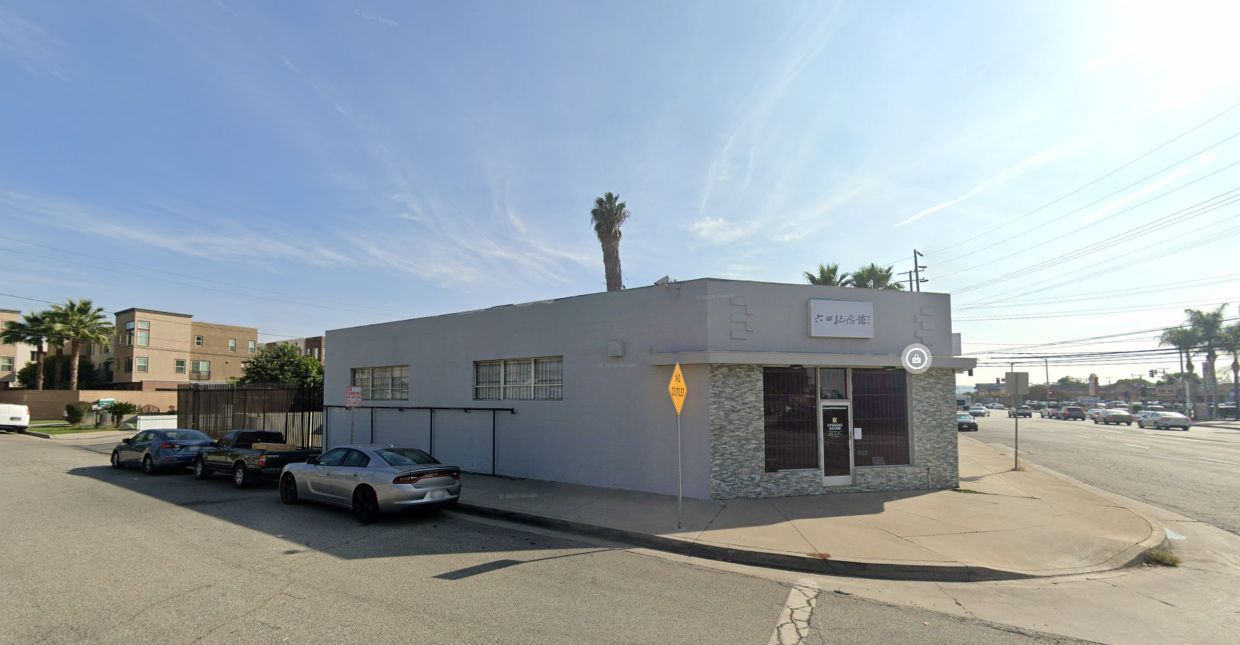
Two prominent Republican congressional leaders have formally petitioned the US Justice Department to launch a comprehensive investigation into a break-in at a museum in California dedicated to commemorating the 1989 Tiananmen Square incident. John Moolenaar, chairman of the House Select Committee on China, and Christopher Smith, co-chairman of the Congressional-Executive Commission on China, submitted a three-page letter to federal authorities on Thursday, arguing that the incident represents a threat to fundamental freedoms enjoyed by Chinese diaspora communities across the United States.
The June 4th Memorial Museum in El Monte, located in Los Angeles County, experienced the intrusion on May 31, just days before the annual remembrance of the Tiananmen Square crackdown. According to statements posted on the museum's website, unidentified individuals gained unauthorized entry to the facility and defaced interior spaces with spray paint, damaged fixtures and displays, and deliberately sabotaged the security camera system. Photographs shared online revealed single lines of orange paint applied across framed newspaper clippings and other commemorative materials, suggesting a targeted rather than random act of destruction.
The museum's management issued a statement expressing strong condemnation of those responsible for the incident while pledging to pursue legal avenues to hold perpetrators accountable. Officials refused to be intimidated by what they characterized as a calculated act designed to silence public remembrance of the historical event. The museum has indicated that El Monte police initiated a formal investigation and that investigators had identified certain leads and areas warranting further scrutiny. Management stated their willingness to cooperate fully with law enforcement authorities throughout the investigative process.
The facility itself represents a relatively recent addition to the American memorial landscape. Established in 2023, the museum originally operated from a New York location before relocating to the Los Angeles area to reduce operational costs and reach a broader audience. The move reflected both the growing Chinese diaspora population in Southern California and the challenges faced by grassroots organizations seeking to maintain independent historical documentation outside the control of Beijing authorities. Funding for the institution has relied primarily on individual donations, crowdfunding campaigns, and contributions from civil society organizations rather than government support.
Moolenaar and Smith's letter specifically asked federal investigators, including the FBI's Los Angeles Field Office and the Justice Department's National Security Division, to determine whether the attack was orchestrated, coordinated, encouraged, or financed by agents working on behalf of the People's Republic of China or the Communist Party of China. This language reflects longstanding concerns among US lawmakers about what they term "transnational repression," whereby foreign governments allegedly conduct intimidation campaigns against diaspora communities and political opponents residing on American soil. The museum itself has characterized the incident as potentially representing such transnational repression, though officials have not released detailed evidence supporting this assessment.
The distinction between independent vandalism and state-sponsored action carries significant implications for how the incident is addressed within the US criminal justice system and American foreign policy discourse. Establishing a connection to Chinese government actors would elevate the matter from a local crime investigation to a national security concern, potentially triggering broader interagency coordination and diplomatic responses. Conversely, if investigators determine that domestic actors committed the offense for ideological reasons unrelated to Beijing's interests, the characterization and consequences would differ substantially.
China's government maintains a consistent posture toward such incidents and the institutions investigating them. The Chinese embassy in Washington has previously dismissed both Moolenaar's House Select Committee and the Congressional-Executive Commission as lacking credibility, characterizing them as instruments of American political ideology rooted in Cold War-era confrontational thinking. Beijing has repeatedly accused these bodies of demonstrating anti-China bias and operating according to predetermined conclusions rather than objective analysis. The embassy has not yet formally responded to inquiries regarding the museum break-in specifically.
The House Select Committee on China, established in January 2023, maintains a mandate to investigate and analyze economic and security dimensions of US-China competition across multiple domains. The body wields no legislative authority to propose new laws but functions as a research and advisory entity capable of issuing investigative findings and policy recommendations to the broader Congress. The Congressional-Executive Commission, created two decades earlier in 2000 following China's accession to the World Trade Organization, focuses specifically on human rights compliance and rule of law standards. Like the House committee, it serves an oversight and advisory role without direct authority to introduce legislation.
For Malaysian readers and Southeast Asian observers, this incident illuminates broader patterns evident throughout the region regarding efforts to control narratives around sensitive historical events and the protection of diaspora communities exercising free speech rights. As Southeast Asian nations grapple with their own balancing acts between maintaining diplomatic ties with Beijing while protecting the freedoms of Chinese immigrant populations, the California situation provides a useful case study in how such tensions can manifest beyond the formal diplomatic realm. The alleged targeting of a museum dedicated to historical remembrance raises questions about where boundaries between legitimate state interests and suppression of free expression should be drawn.
The break-in also underscores the vulnerability of small independent cultural institutions dependent on grassroots funding rather than government backing. By operating outside the traditional institutional apparatus, such organizations may face heightened scrutiny or pressure from multiple quarters, including those wishing to control how significant historical events are remembered and discussed. The museum's relocation from New York to California and its ongoing financial challenges reflect the precarious position of many diaspora-led cultural preservation efforts throughout North America and increasingly in Asia-Pacific nations hosting growing Chinese communities.
Meanwhile, El Monte police authorities have launched their own investigation but have not yet released substantive findings regarding suspects or motives. The Justice Department and FBI have not formally announced whether they will undertake a federal-level inquiry as requested by the congressional lawmakers. The coming weeks will likely determine whether this incident remains primarily a local criminal matter or becomes elevated to a broader geopolitical concern within Washington's evolving approach to perceived Chinese government activities on American soil.

