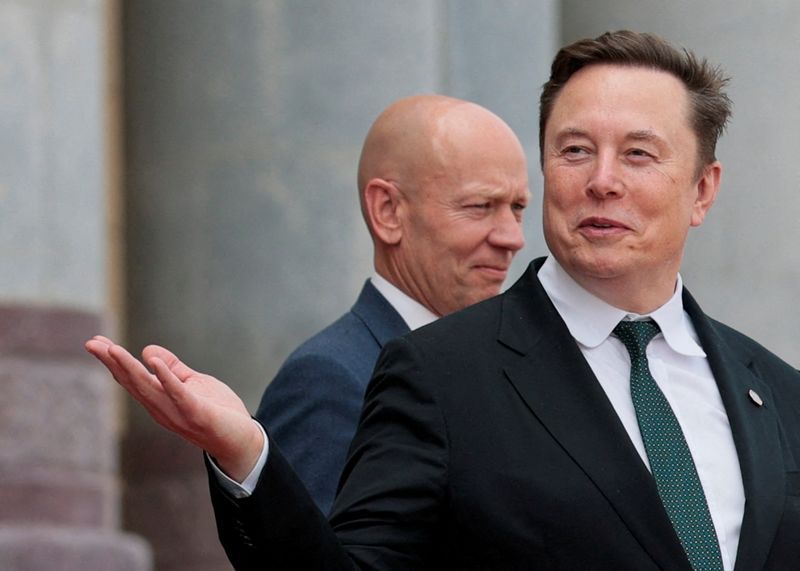
Elon Musk's efforts to escape legal accountability for his conduct during the acquisition of Twitter have suffered a significant setback, with a federal judge in San Francisco decisively rejecting his motion to dismiss a jury verdict that found him liable for investor fraud. The ruling, delivered by U.S. District Judge Charles Breyer on Monday, upholds the jury's March determination that the world's wealthiest individual engaged in deceptive practices to drive down the company's stock price, creating leverage to either renegotiate or abandon his $44 billion takeover deal.
The judge's decision carries particular weight for investors who pursued the case, as it not only preserves the finding of liability but also reinforces the legal protections available to shareholders when corporate leadership engages in market manipulation. Breyer's ruling addresses multiple dimensions of Musk's challenge to the verdict, systematically rejecting his arguments for dismissal while also declining to overturn the investor class certification that forms the foundation of the lawsuit. The outcome represents a comprehensive victory for the plaintiff coalition pursuing the case against one of the world's most influential and litigious business figures.
Musk's legal strategy involved targeting specific statements he had made publicly about Twitter's bot problem, arguing that these tweets should not have formed the basis for the jury's finding. The businessman had questioned whether the platform was overrun with fake accounts, particularly during the period when he was attempting to restructure his contractual obligations to acquire the company. However, Breyer found persuasive evidence that at least one of these statements—posted on May 13, 2022—contained material falsehoods that demonstrably affected the company's market valuation. The substantial decline in Twitter's stock price following this tweet provided concrete evidence of the statement's market impact.
Interestingly, the judge's analysis did provide Musk with partial vindication on a technical point. Regarding the May 17 tweet that Musk also challenged, Breyer concluded that the market did not react significantly to this particular statement, and therefore found insufficient evidence that Musk bore legal responsibility for its consequences. This nuanced ruling indicates that the judge applied rigorous standards of causation, requiring demonstrable market reaction to attribute liability for specific statements. Nonetheless, this limited concession did not alter the overall verdict or provide grounds for dismissing the case.
The implications for corporate accountability in the technology sector extend beyond Musk's personal circumstances. The ruling establishes that even individuals with extraordinary market influence cannot rely on their prominence or technical sophistication to escape scrutiny for statements that drive down share prices. For Malaysian and Southeast Asian investors who hold positions in technology companies listed on international exchanges, the decision reinforces protections that apply regardless of where securities trade or where the companies are domiciled. The case demonstrates that US courts remain willing to hold even the most powerful business figures accountable when evidence demonstrates deliberate market manipulation.
The question of damages remains a significant outstanding issue in the litigation. Plaintiff attorneys had estimated that compensation could reach approximately $2.5 billion based on the March verdict, a figure that would represent one of the largest fraud settlements against an individual investor in recent corporate history. The judge's refusal to set aside the verdict means this damages calculation remains on the table, though the precise amount will likely be subject to further proceedings and potential appeals. For context, this scale of liability would represent a meaningful financial consequence even for someone of Musk's considerable wealth.
Breyer's decision to grant the investors' motion for prejudgment interest further strengthens the plaintiff position by allowing accumulated interest charges to accrue on the ultimate damages award from the date of the original fraud through final judgment. This provision ensures that delaying tactics or prolonged appeals do not benefit the defendant by allowing him to retain disputed funds interest-free while litigation continues. The grant of prejudgment interest reflects judicial recognition that Musk's actions caused identifiable financial harm to investors during a specific period, and that those injured parties deserve compensation reflecting the full temporal extent of their losses.
Musk's legal team has not yet publicly commented on the ruling or indicated whether they intend to pursue further appeals. The decision by Judge Breyer forecloses several avenues for dismissal that represented the defendant's best remaining prospects for escaping the verdict before a higher court. An appellate strategy would now necessarily involve challenging the judge's factual and legal conclusions on the merits, rather than arguing for dismissal on procedural grounds. This substantially raises the burden Musk's attorneys must satisfy to reverse the judgment.
The broader context of this litigation involves Musk's acquisition of Twitter and his subsequent transformation of the platform into what he renamed X. The case predates and parallels the dramatic operational changes, staff reductions, and policy shifts that have defined the platform's recent history. Investors who pursued this lawsuit contended that Musk deliberately manufactured doubts about Twitter's financial prospects and bot prevalence to create negotiating room or an exit strategy. The jury agreed with this characterization, and Judge Breyer's ruling ensures that their judgment stands as the operative legal conclusion regarding Musk's conduct during the acquisition process.
For regional observers, the case illustrates the continuing robustness of US securities fraud protections and the willingness of federal courts to apply these standards even when the defendant possesses substantial resources and public prominence. The outcome suggests that investor protection mechanisms in major global markets retain meaningful force, despite concerns about regulatory capture or enforcement gaps that sometimes emerge in emerging economies. Companies seeking to operate within US capital markets, or individuals seeking to conduct significant transactions affecting US-listed securities, operate within a legal framework that courts actively enforce.

