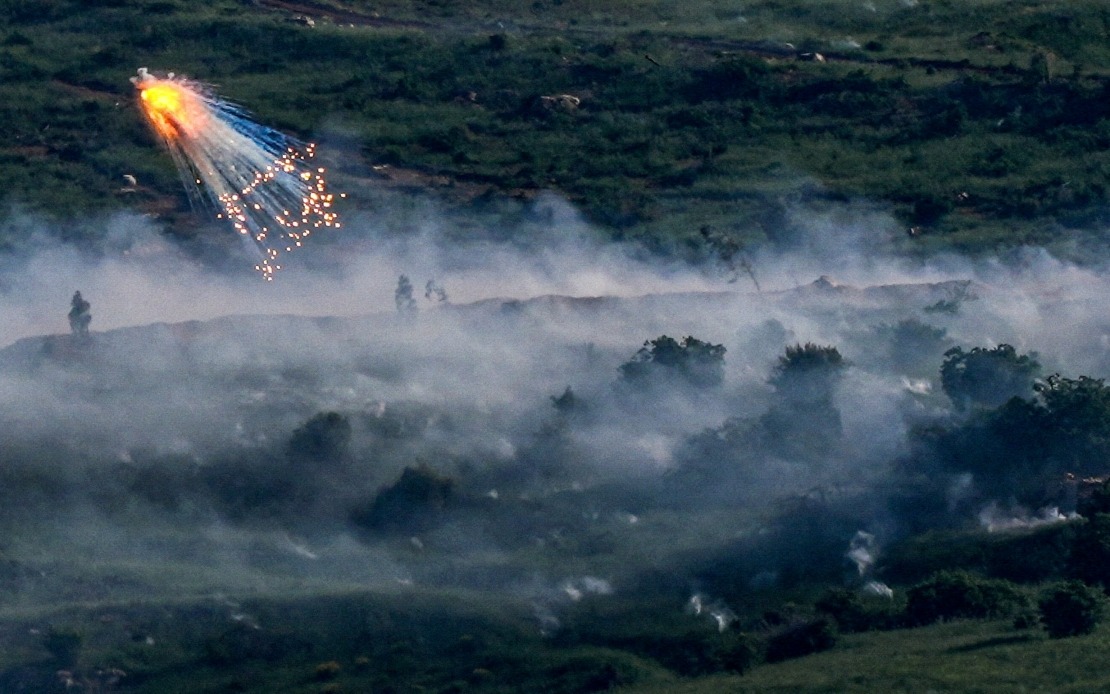
The United States has issued formal warnings advising its nationals against travelling to Lebanon and the northern regions of Israel, responding to what American diplomatic missions have characterised as volatile security conditions across West Asia. The caution reflects mounting concern about the fragile state of regional stability and the possibility of rapid deterioration in the security environment, with American officials acknowledging that the current situation carries unpredictable risks for civilians in affected areas.
American diplomatic representations in both Beirut and Jerusalem released coordinated statements on Saturday outlining the nature and scope of the travel restrictions. The US Embassy in the Lebanese capital emphasised that the intricate security landscape, shaped by multiple overlapping tensions and competing interests, creates conditions where unexpected military or political developments could occur with minimal warning. Officials characterised the environment as one where the baseline risk profile has shifted considerably, necessitating enhanced caution for American citizens who might otherwise consider regional travel.
The Jerusalem-based embassy issued parallel guidance that extended beyond Lebanon to encompass the Gaza Strip, northern Israeli territory, and the Egyptian border region, with the notable exception of the Taba crossing point. This more expansive advisory suggests American assessments have identified particular vulnerability across a broader geographic corridor than Lebanon alone. The guidance further recommended that Americans reassess all travel plans involving transit through or within West Asia more broadly, implying concerns that extend well beyond specific flashpoints to encompass the entire regional security architecture.
These warnings arrive against a backdrop of intensifying geopolitical rivalry between the United States and Iran, which has manifested in a pattern of reciprocal military actions and escalatory rhetoric. Despite efforts to establish a more stable framework through diplomatic channels, including a Pakistan-brokered memorandum of understanding concluded in June purporting to establish mechanisms for ending hostilities and achieving durable peace, the practical security situation on the ground has continued to deteriorate rather than improve. The gap between diplomatic agreements and operational reality has widened, creating an unpredictable environment where formal understanding coexists with active military tensions.
The memorandum signed last month represented an attempt to introduce institutional restraint and prevent the kind of uncontrolled escalation that characterises periods of acute geopolitical competition. However, the subsequent exchange of attacks between American forces and Iranian-aligned entities suggests the agreement has struggled to constrain the underlying drivers of regional conflict. For Malaysian and Southeast Asian observers, this disconnect between formal peace arrangements and continuing military activity raises sobering questions about the reliability of diplomatic solutions in managing great power competition in strategically vital regions.
The timing of these travel advisories carries particular significance for regional economies that depend substantially on Western tourism and business travel. Malaysia, as a major tourism destination and business hub in Southeast Asia, maintains robust connections with both American and Middle Eastern interests. The ripple effects of American travel restrictions on the broader West Asian region have potential consequences for Southeast Asian airlines, hospitality sectors, and business communities that facilitate commerce between the regions. When major tourism-generating nations implement travel restrictions, even focused on specific locations, the psychological impact often extends well beyond the designated danger zones.
The complexity of contemporary Middle Eastern geopolitics defies simple categorisation or containment. The emergence of non-state actors, proxy forces, and asymmetric capabilities has fundamentally altered how regional conflicts manifest and spread. American officials have clearly assessed that the potential for rapid escalation exists not merely as a theoretical concern but as a genuine operational risk. The characterisation of the security environment as one where "unforeseen escalation" remains possible suggests American intelligence assessments have detected indicators of heightened readiness among multiple parties in the region.
For Malaysian policymakers and citizens with business or family ties to the affected areas, these developments underscore the importance of maintaining robust crisis preparedness and contingency planning. The unpredictability that American officials identify as inherent to the current regional situation creates specific challenges for those with obligations or interests spanning multiple jurisdictions. Companies with operations or employees across the region must recalibrate their risk assessment frameworks and potentially implement modified business continuity arrangements.
The broader pattern of American security warnings across West Asia reflects a strategic reassessment of risks in a region where multiple crises intersect. Beyond the immediate US-Iran dimension, the area encompasses Israeli-Palestinian dynamics, intra-Arab tensions, and various humanitarian catastrophes. Each element contributes to an overall environment where cascading effects from any single trigger point could rapidly destabilise the entire region. The American decision to expand its travel warnings beyond individual countries to encompass broader regional reassessment suggests officials perceive systemic rather than isolated vulnerabilities.
For Malaysian citizens considering travel to the region, the official American warnings provide a clear signal that the security calculus has shifted substantially. While diplomatic channels remain open and formal agreements nominally constrain behaviour, the operational reality on the ground has diverged from the theoretical commitments made in June. This gap between aspirational agreements and actual security conditions may persist for the foreseeable future, creating an extended period of elevated uncertainty. Malaysian authorities may find themselves fielding increasing numbers of inquiries from nationals seeking guidance on whether to maintain business or personal commitments in the affected regions.

