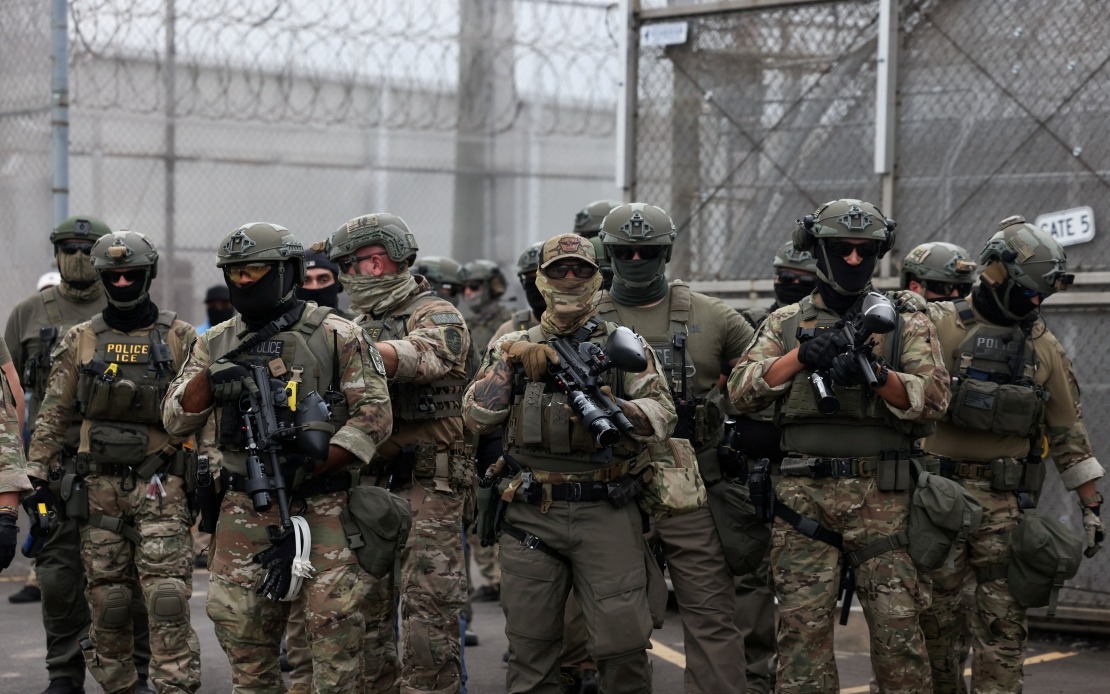
A federal judge in California has issued a sweeping nationwide order preventing United States Immigration and Customs Enforcement (ICE) from conducting arrests of migrants at immigration courthouses, effectively halting one of the more controversial enforcement mechanisms introduced during President Donald Trump's second term. The ruling represents a significant judicial check on the administration's aggressive deportation strategy, which had intensified following Trump's return to office and the implementation of new operational guidelines designed to expand workplace and courthouse enforcement activities.
The practice of arresting migrants within courthouse facilities had become increasingly common across the United States, with ICE officers detaining individuals both inside court buildings and in adjacent areas. These arrests often occurred regardless of whether migrants had completed their legal proceedings, a troubling development that civil rights advocates and immigration lawyers had flagged as fundamentally undermining the integrity of the judicial process. The courthouse became, in effect, a venue where individuals facing removal proceedings could be apprehended while navigating the legal system ostensibly designed to adjudicate their cases fairly.
Immigration courts serve as the critical venue where deportation cases are heard and decided. These specialized courts examine the circumstances of migrants who face potential removal from the United States, determining whether they have valid legal grounds to remain, such as asylum claims, family ties, or other humanitarian considerations. The courthouse setting is meant to be a neutral space where migrants can present their arguments before immigration judges without fear of immediate detention. The ICE arrest strategy fundamentally compromised this environment, creating a chilling effect where migrants and their families became reluctant to attend hearings or cooperate with the legal process.
The Trump administration modified ICE's operational approach at the beginning of 2025, introducing revised guidelines that explicitly promoted the advantages of courthouse arrests as an immigration enforcement tool. These new protocols represented a departure from previous practice, reflecting the administration's commitment to a harder line on unauthorized immigration. Officials argued that such arrests were operationally efficient and allowed the agency to apprehend individuals who might otherwise evade enforcement. However, this rationale, while administratively convenient, collided with fundamental legal principles governing due process and access to justice.
The federal judge's decision centered on the agency's failure to properly justify the policy shift in legal terms. Courts require that when government agencies change established practices, they must provide reasoned explanations addressing the concerns raised by affected parties and the public. The judge found that ICE had not adequately grappled with the legitimate worries about the negative consequences of courthouse arrests, nor had officials articulated a sufficiently rigorous basis for abandoning previous restraint in this particular context. This analytical gap rendered the new practice vulnerable to legal challenge under administrative law standards.
The ruling carries particular significance for Southeast Asian readers and Malaysian observers of US immigration policy. Southeast Asia, including Malaysia, has substantial diaspora communities in the United States, with significant populations from the Philippines, Vietnam, Thailand, and other regional nations. Many individuals from this region who navigate the US immigration system could be directly affected by courthouse enforcement practices. The decision demonstrates how judicial systems in democracies can impose limits on executive enforcement actions, a principle that resonates across the region where immigration and labor mobility remain critical issues.
The decision also illuminates the tension between security-focused immigration enforcement and due process protections. While governments understandably pursue border security and enforcement of immigration laws, the manner in which such enforcement occurs has profound implications for the rule of law. When individuals cannot safely attend court proceedings without fear of arrest, the entire judicial process becomes compromised. This principle transcends national borders and reflects concerns that immigration officials and policymakers throughout the world must consider when designing enforcement strategies.
Criticism of the courthouse arrest practice had been mounting from multiple quarters before the judge's ruling. Immigration attorneys argued that clients were increasingly reluctant to appear for scheduled hearings, effectively forfeiting their opportunity to present defenses against deportation. Civil rights organizations warned that the practice disproportionately affected vulnerable populations, including asylum seekers fleeing persecution and individuals with family ties to the United States. Faith-based groups and immigrant advocacy organizations submitted legal briefs opposing the policy, contending that it violated core principles of justice and human dignity.
The judicial intervention comes at a moment when immigration remains among the most contentious policy domains in American politics. The Trump administration has made aggressive enforcement a centerpiece of its governing agenda, with significant resources devoted to deportation operations. This court ruling, while blocking one particular tactic, does not prevent ICE from pursuing enforcement through other mechanisms. The administration retains authority to conduct workplace raids, investigate undocumented residents through other means, and pursue deportations through standard legal channels. However, the courthouse order eliminates one avenue that had proven particularly disruptive to the immigration court system itself.
The broader implications for immigration systems extend beyond the United States. Many countries around the world maintain immigration enforcement agencies with varying degrees of independence and accountability. This case illustrates how judicial oversight can serve as a check on executive power, ensuring that enforcement strategies do not undermine the legitimacy of the legal proceedings they ostensibly serve. For Southeast Asian nations with significant labor migration or refugee populations, the principle articulated here—that enforcement cannot occur in spaces designated for legal proceedings—offers an important model for protecting access to justice.
The decision also raises questions about the future direction of Trump administration immigration policy. With one enforcement tool blocked, officials will likely pursue alternative strategies to achieve similar enforcement objectives. The administration may appeal the ruling, leading to potential litigation at higher court levels. Alternatively, officials might seek to reformulate policies in ways that satisfy the judge's legal concerns while still advancing aggressive enforcement goals. The extended legal battle over immigration enforcement tactics is likely to continue throughout the remainder of the administration's term.