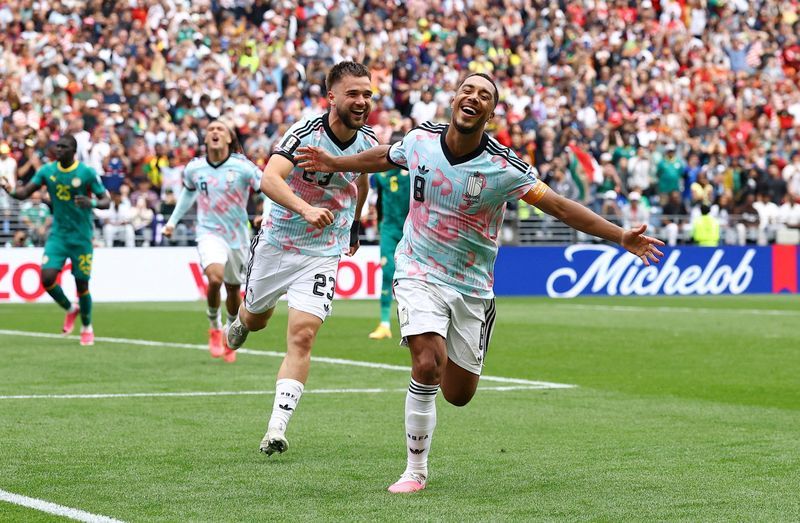
The United States will attempt to reach the World Cup quarter-finals when it faces Belgium at Seattle's Seahawks Stadium on July 4, a contest that has taken on heightened significance given America's unexpectedly strong performances in the tournament so far. What began as a campaign with modest goals has transformed into something more ambitious following victories against Paraguay and Australia in the group phase, followed by a commanding 2-0 triumph over Bosnia completed despite operating with ten players for the final 36 minutes. The environment in Seattle, a stadium renowned for generating some of the most intense noise in professional football, promises to amplify the American team's home advantage as Mauricio Pochettino's squad pursues a berth in the last eight.
The pre-tournament narrative surrounding the United States centred on qualifying for the knockout stage as a respectable achievement. However, the team's quality and resilience have prompted supporters and analysts alike to recalibrate expectations upward. Each successive performance has revealed a side capable of competing against established football nations, with the defending tactics in particular drawing praise following concerns about this area before the tournament commenced. The momentum carrying into the Belgium fixture creates palpable excitement within American football circles, a shift that reflects genuine progress rather than mere optimism.
Belgium arrives in Seattle as a side that has yet to fully inspire confidence, despite holding the credentials of one of Europe's most seasoned international teams. Their path through the group stage and into the round-of-16 included a precarious encounter with Senegal, where the Africans controlled proceedings for substantial periods before Belgium equalized through two quick goals and ultimately secured passage via a controversial penalty decision awarded following VAR consultation in extra time. The manner of that escape has left questions about Belgium's form and consistency, even as the squad boasts considerable technical quality and experience at the highest level.
What renders this fixture particularly poignant for Belgium is the likelihood that it represents the final World Cup opportunity for the nation's celebrated generation of players. Kevin De Bruyne, Romelu Lukaku, and Thibaut Courtois anchor a talented contingent that has competed across multiple tournament cycles, and the window for capturing major tournament glory is rapidly closing. For this cohort of Belgian footballers, a quarter-final exit would represent a disappointing conclusion to their international careers despite years of competitive excellence and previous deep tournament runs.
The American defence, which entered the tournament as a potential vulnerability, has emerged as an unexpectedly solid unit. The performance against Bosnia particularly demonstrated defensive discipline and organisation, though the unit will face a significant test in containing Belgium's creative players. Jeremy Doku, the Belgian winger, has remained relatively subdued throughout the tournament to date and may view the Seattle encounter as an opportunity to produce a decisive contribution. How effectively the American back line manages Doku's pace and technical ability could prove decisive in determining the match's outcome.
The statistical echo of Belgium's 2014 round-of-16 victory over the Americans resonates within football memory, particularly the goalkeeping masterclass by Tim Howard, who registered a tournament-record 16 saves in a display of desperation that ultimately proved insufficient. That match in Brazil concluded with American heartbreak despite a spirited late push, establishing a narrative of near-misses and what-might-have-beens. The 2022 encounter provides an opportunity for the current American generation to rewrite that particular chapter of bilateral history.
Pochettino confronts a critical tactical consideration following the suspension of striker Folarin Balogun, who demonstrated clinical finishing against Bosnia before receiving a red card for a second-half offence. The loss of the goalscorer creates uncertainty regarding formation and personnel for the knockout fixture, with the coaching staff requiring to identify the optimal attacking configuration to penetrate a Belgian defensive structure that, while tested throughout the tournament, remains fundamentally sound.
For Malaysian and Southeast Asian football observers, the contest represents a compelling narrative of emergence and recovery. The American team's trajectory mirrors broader developments within CONCACAF football, where improved infrastructure, player development pathways, and coaching sophistication have begun translating into genuine competitive advancement. The possibility of a United States squad reaching the World Cup quarter-finals carries regional implications, as success inspires investment and interest throughout the Americas.
Midfielder Tyler Adams articulated the American ambition succinctly, emphasising the squad's desire to create a lasting imprint on the tournament while building a legacy extending beyond the immediate fixture. That philosophy underpins the team's approach and reflects the understanding that sustained advancement requires consistency, collective commitment, and elevation beyond the baseline expectations established before the competition commenced. The Seattle stadium will provide the platform for that aspiration to either flourish or face premature termination against a Belgium side with everything to prove and much to lose.

