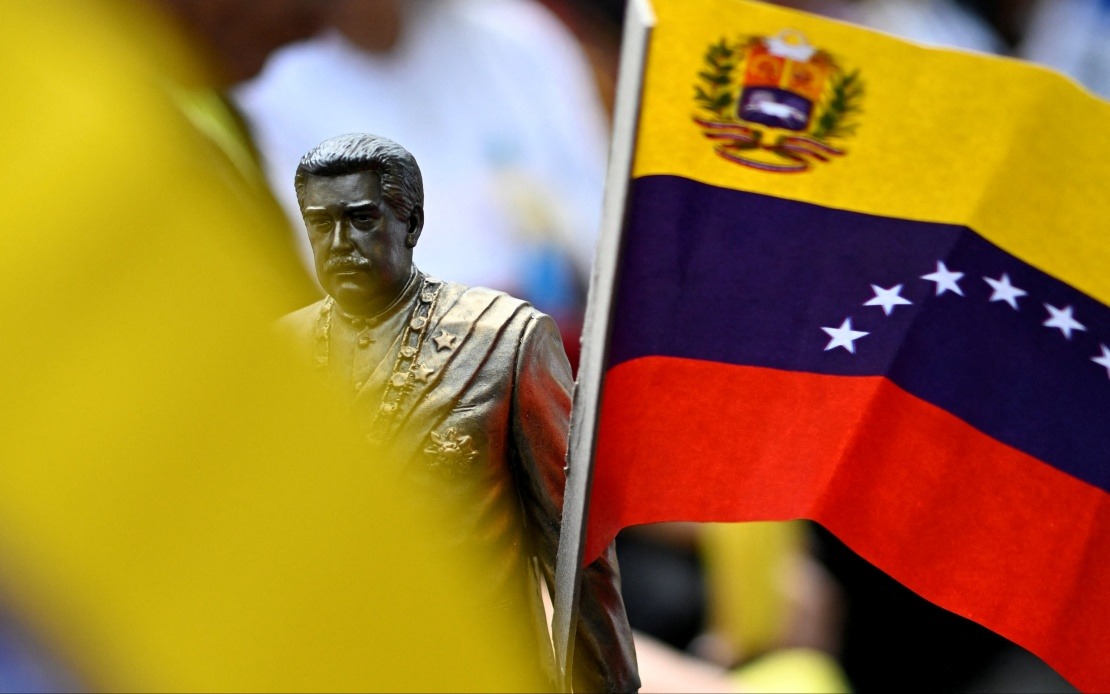
A United States federal judge has set June 1, 2027, as the trial date for Venezuelan President Nicolas Maduro and his wife Cilia Flores, who face drug trafficking and firearms charges in a case that has escalated tensions between Washington and Caracas and drawn sharp criticism from international observers and civil rights activists worldwide. Judge Alvin Hellerstein made the determination during a brief 15-minute hearing on Wednesday in New York, accommodating requests from legal counsel representing both the prosecution and defence in what has become one of the most polarising international cases in recent years.
The couple, who have consistently maintained their innocence to all charges levelled against them, appeared in the Manhattan courthouse for their third formal court proceeding since their dramatic seizure in Venezuela on January 3. The circumstances surrounding their capture remain extraordinarily contentious. According to official accounts, United States military personnel conducted a large-scale armed operation in early January that resulted in Maduro and Flores being forcibly apprehended in Caracas and subsequently transported to New York, where they have remained in custody at the Metropolitan Detention Centre in Brooklyn throughout the intervening months.
The legal strategy adopted by Maduro's defence team signals an aggressive challenge to the proceedings themselves rather than merely contesting the factual allegations. Attorney Barry Pollack has indicated that the defence will mount a motion challenging the indictment on sovereign immunity grounds, a doctrine rooted in international law that traditionally shields sitting heads of state from prosecution in foreign courts. Should this argument succeed, it would fundamentally undermine the entire case and potentially invalidate all subsequent legal proceedings, rendering the trial itself moot. This approach reflects the broader legal and diplomatic dimensions of the dispute, which extend far beyond conventional criminal prosecution.
The international reaction to the military operation and subsequent legal proceedings has been decidedly negative, with governments and organisations across multiple continents expressing alarm at what many characterise as a violation of established international norms. The seizure of a sitting president through military force has triggered extensive diplomatic commentary, with numerous nations raising concerns about the precedent being set for state conduct in the Western Hemisphere and globally. Southeast Asian observers, including Malaysian legal and political analysts, have noted the implications for non-aligned nations and those seeking to maintain independent foreign policies amid great power competition.
Outside the heavily secured Manhattan courthouse on Wednesday, a substantial contingent of demonstrators assembled to voice their opposition to both the military operation and the trial itself. The protesters represented a coalition of anti-war activists, Latin American solidarity movements, and civil rights organisations united in demanding Maduro's immediate release and opposing what they characterise as unlawful United States military intervention in Venezuela's internal affairs. The demonstrations underscore the polarised nature of American domestic opinion regarding foreign policy in Latin America, with significant segments of the population viewing the operation as inconsistent with stated American values and international legal obligations.
Allison Gunderson, a demonstrator who travelled from Minneapolis to participate in the protest, articulated the core grievance of those opposing the proceedings. She characterised the situation as prosecution of a sovereign nation's elected leader following what she termed an illegal abduction, framing the case as fundamentally illegitimate regardless of the specific charges. This argument—that the very foundation of the legal process is compromised by the manner in which the defendant was obtained—represents a challenge to the legitimacy of the entire judicial proceeding rather than a defence against particular accusations.
Tom Burke, representing the Anti-War Action Network's steering committee, offered a more forceful characterisation of the operation, describing the United States action as constituting armed robbery on a state level. Burke emphasised that the combination of military abduction, subsequent detention, and prosecution of a foreign nation's leader violates established principles of international law and sets a troubling precedent for future state conduct. His remarks reflected growing concern among anti-war constituencies that the operation represents a dangerous expansion of executive power in foreign military interventions, undertaken without formal congressional authorisation or United Nations Security Council approval.
The broader geopolitical implications of the case extend beyond Venezuela itself, touching on questions of international law, state sovereignty, and the conduct of great powers in regions they consider strategically important. For nations throughout Southeast Asia, Africa, and other regions outside the traditional Western sphere of influence, the case raises fundamental questions about the security of their own governments and the implications of opposing United States foreign policy objectives. Malaysia's position as a non-aligned nation and a member of the Global South has led to careful diplomatic interest in how the case unfolds and what precedents it may establish.
Sara Flounders, a political analyst and commentator, marked the occasion as representing 200 days of detention since Maduro's seizure, using the milestone to connect the Venezuelan situation to other instances of United States military and political intervention in Latin America and the Middle East. She referenced ongoing tensions with Iran and Cuba, suggesting a pattern of confrontational American foreign policy toward nations that resist alignment with Washington's strategic preferences. Flounders' framing positions the Maduro case within a longer historical narrative of American intervention in the region, potentially influencing how observers in other nations perceive American credibility and adherence to international law.
The six-month delay until the June 2027 trial date provides extended opportunity for diplomatic efforts and potential negotiations, though the hardening of positions by both sides suggests resolution through negotiation remains uncertain. The defence strategy of challenging sovereign immunity could substantially alter the legal landscape, while international pressure may influence the American government's approach to the case. For Malaysia and other Southeast Asian nations maintaining relations with both the United States and Venezuela, navigating these developments diplomatically requires careful attention to both bilateral relationships and broader questions of international law and state conduct.

