The United States has taken a formal step toward implementing President Donald Trump's contentious Middle East peace proposal by notifying Congress of financial backing for an International Stabilisation Force intended to operate in Gaza. The State Department confirmed on Thursday that it delivered this notification to lawmakers on July 30, marking what officials characterise as an opening phase in a broader diplomatic initiative that aims to reshape the region's security architecture and political landscape following years of conflict.
The announcement reflects Washington's commitment to what it describes as a historic 21-point peace plan, though the initiative has already encountered significant resistance from key stakeholders in the region. The State Department declined to disclose the specific financial commitment involved in the initial funding notification, describing the allocation only as a preliminary measure while broader diplomatic efforts continue under the auspices of what officials call the Board of Peace, a multilateral mechanism established to coordinate implementation of the peace framework.
Under the agreement that Trump announced on July 31, the International Stabilisation Force would work alongside a newly established Palestinian police force to maintain security in Gaza following a staged withdrawal of Israeli military personnel. The plan also stipulates the complete disarmament of Hamas and other armed groups operating in the territory, representing one of the most ambitious attempts in recent years to address the fundamental security concerns that have underpin the Israeli-Palestinian conflict.
However, the proposal has encountered sharp criticism from Israeli Prime Minister Benjamin Netanyahu, who categorically rejected the framework earlier this month. Netanyahu informed his Cabinet that Israeli forces will not commence any phased withdrawal until Hamas has been verifiably and completely disarmed, effectively conditioning Israeli compliance on a prerequisite that many analysts view as unlikely to be satisfied through the diplomatic channels outlined in the Trump plan. This position has created a fundamental impasse between the theoretical framework of the agreement and the practical willingness of one of its key parties to implement it.
Despite Netanyahu's public rejection, Hamas has indicated its continued support for the roadmap, though the group's commitment to disarmament provisions remains questionable given its historical role as both a political authority and armed resistance movement. This divergence in positions between the Israeli government and Hamas suggests that the Board of Peace faces an uphill battle in brokering genuine consensus on implementation details that both sides can feasibly accept.
The diplomatic efforts intensified this week when Jared Kushner, a senior advisor to Trump, travelled to the region for high-stakes negotiations. Kushner met with Hamas officials in Egypt before proceeding to Israel, where he held discussions with Netanyahu alongside Nikolay Mladenov, the Board of Peace's principal envoy. According to media reports, these talks revealed substantial disagreement between Kushner and Netanyahu regarding ongoing Israeli military operations in Gaza, with Kushner expressing concerns about civilian casualties while Netanyahu maintained that military strikes would continue unabated.
These tensions underscore a critical flaw in the peace proposal: the absence of mechanisms to halt hostilities during the negotiation and implementation phases. A ceasefire agreement nominally took effect on October 10, 2025, yet Israeli military operations have continued, resulting in documented casualties that complicate diplomatic progress. According to the latest figures from Gaza's Health Ministry, Israeli violations of the ceasefire have killed 1,283 Palestinians and wounded 4,248 others since that date, demonstrating that even agreed-upon pauses in hostilities remain fragile and contested.
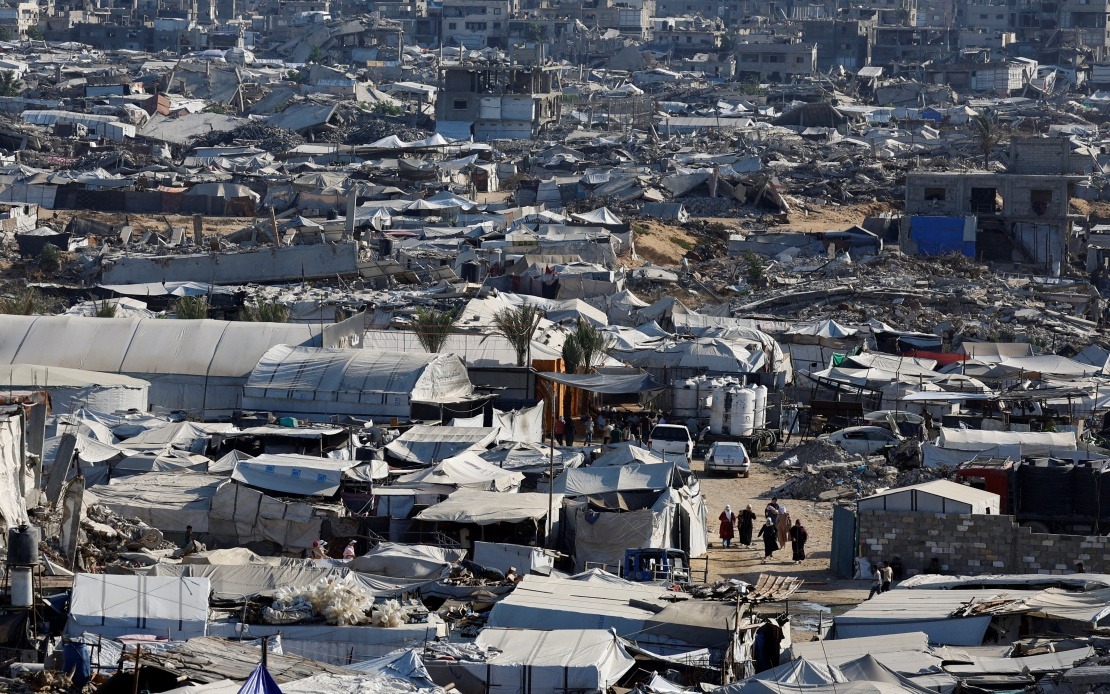
The broader humanitarian context intensifies the stakes for any peace initiative. Since the outbreak of large-scale conflict on October 8, 2023, Israeli military operations have resulted in more than 73,000 Palestinian deaths and over 174,000 injuries, while destroying approximately 90 percent of Gaza's critical infrastructure. This devastation has created a humanitarian catastrophe that complicates both the immediate security situation and the longer-term prospects for reconciliation and reconstruction.
For Malaysian policymakers and regional observers, the Trump administration's financial commitment to a Gaza stabilisation mechanism carries implications beyond the immediate Israeli-Palestinian context. The proposal suggests a renewed American willingness to invest directly in regional security architecture, potentially signalling shifts in how Washington approaches Middle Eastern conflicts more broadly. The International Stabilisation Force model, if successfully implemented, could establish precedents for multinational peacekeeping operations that might influence security discussions in Southeast Asia, particularly regarding disputed maritime territories and transnational security challenges.
The fundamental challenge confronting the Board of Peace lies in reconciling Netanyahu's insistence on absolute security guarantees through complete Hamas disarmament with the practical recognition that such disarmament may be impossible to verify or achieve through diplomatic means. Kushner's personal involvement and Trump's framing of the initiative as historic reflect the administration's desire to claim a significant foreign policy achievement, yet the deepening discord between Israel and the proposed plan's other elements suggests that diplomatic success remains elusive despite substantial American financial and political investment in the effort.

